Last year Katy had been working with Springfield Primary Academy alongside a group of 14 students from Years 4, 5, and 6 to make important decisions around this years tree planting. These 14 children make up the school’s Eco-Club.
Sparkhill has a relatively small tree canopy, and it is essential that young people are involved in conversations about their local area, as well as wider discussions around climate and green spaces.
Over the course of three workshops, the students took part in a species selection process, decided on locations for the trees, and then February of this year they planted the trees.
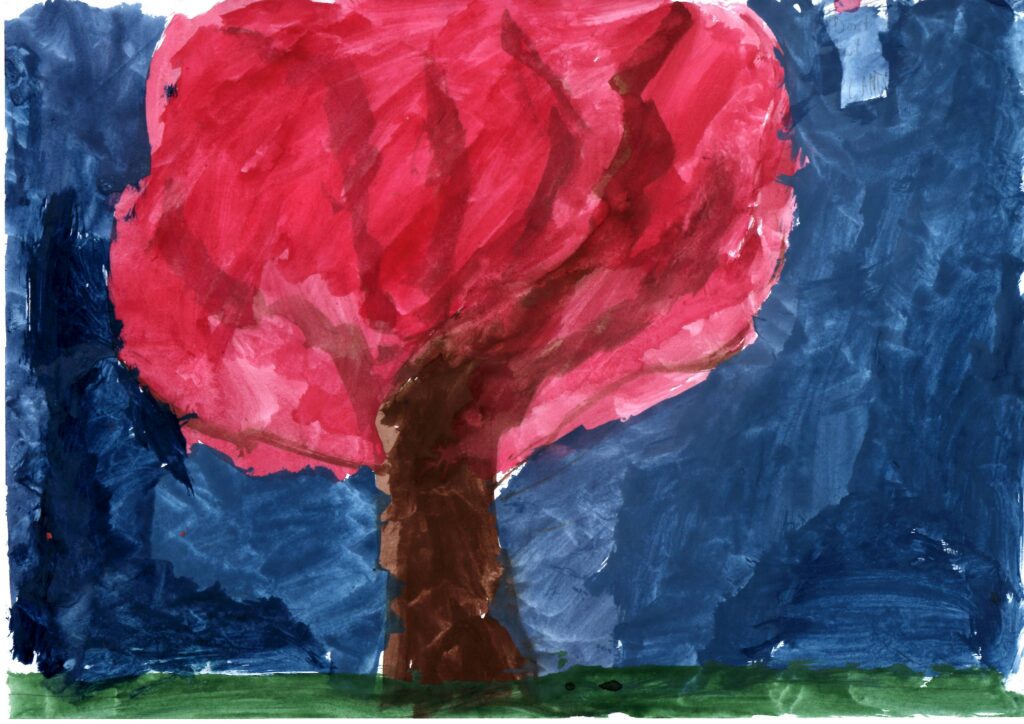
During the first workshop, Katy shared her knowledge on various tree species and tree care. Led by the students, the group collectively selected four different tree species to be planted around Sparkhill: Foxglove Tree, Sweetgum, Ginkgo, and Western Red Cedar.
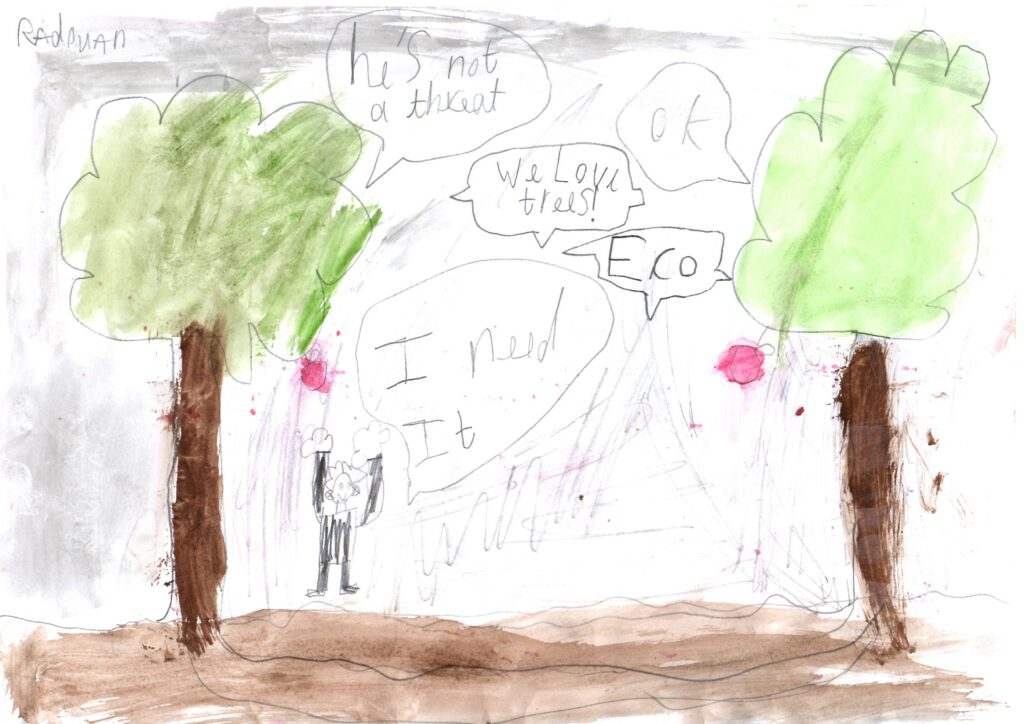
Decisions around species selection were based on key themes that emerged from wider community consultation, including air pollution, beautification, and mental health. Through creative workshops, students explored how these new trees could contribute to Sparkhill and where they would have the greatest impact. There were also many considered conversations about people’s relationships with trees and the similarities between humans and trees – that they are our neighbours in the same way people are neighbours to one another.
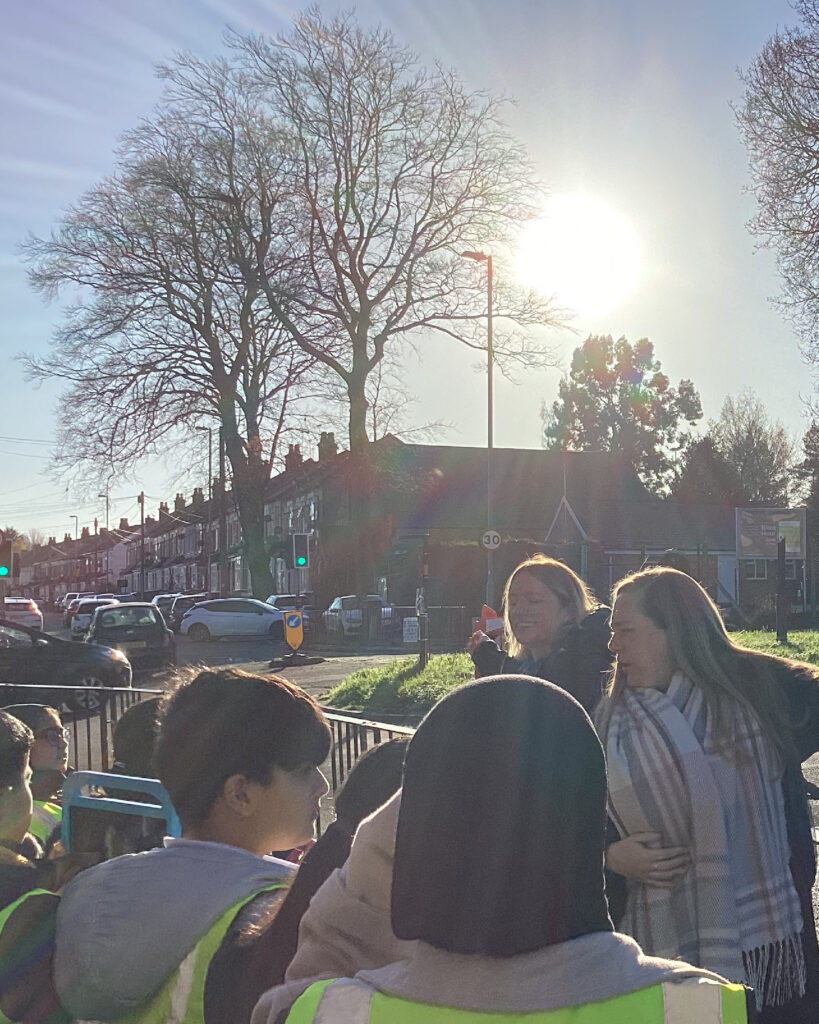
The second session involved the Eco-Club going on a walk around the local area with Katy to discuss and decide on appropriate locations tor new trees. This provided a valuable opportunity to reflect on how the trees could impact the surrounding landscape and what factors needed to be considered. The trees will be planted around the school.
The young people discussed the use of pavements and how tree planting could potentially make access more difficult for wheelchair users, people with pushchairs, or those using scooters. The group wanted to ensure the trees would create a positive environmental impact without causing inconvenience, and they carefully selected suitable locations around the school.
Potential locations. included a nearby roundabout, which was identified as a good spot for greenery and for helping to reduce road pollution. Another suggested location was next to a local health practice, taking into account the health and wellbeing benefits that trees can provide. The students also discussed issues of localised flooding in the area and noted that the flood resistant properties of the elder tree made it a good fit for planting near this problem area. This conversation also led to connections being made with the Sparkhill Flood Action Group.
The final of our three workshops with Springfield Primary Academy’s Eco-Club involved planting the five trees the pupils had carefully selected in the previous workshops around Sparkhill.
A small group of Year Six pupils planting the first tree together – a Paulownia tomentosa, or Foxglove tree – right in the centre of the roundabout next to their school. Everyone was really excited about this choice, the pupils spoke of how quickly this species grows and how much carbon dioxide they can absorb, making the Foxglove tree a brilliant environmental choice.
Plus, their striking purple flowers will beautifully fill this busy crossing
We guided the Year Sixes through the planting process, encouraging them to take the lead in supporting the younger pupils later that day as they planted the remaining four trees
in Sparkhill Park.
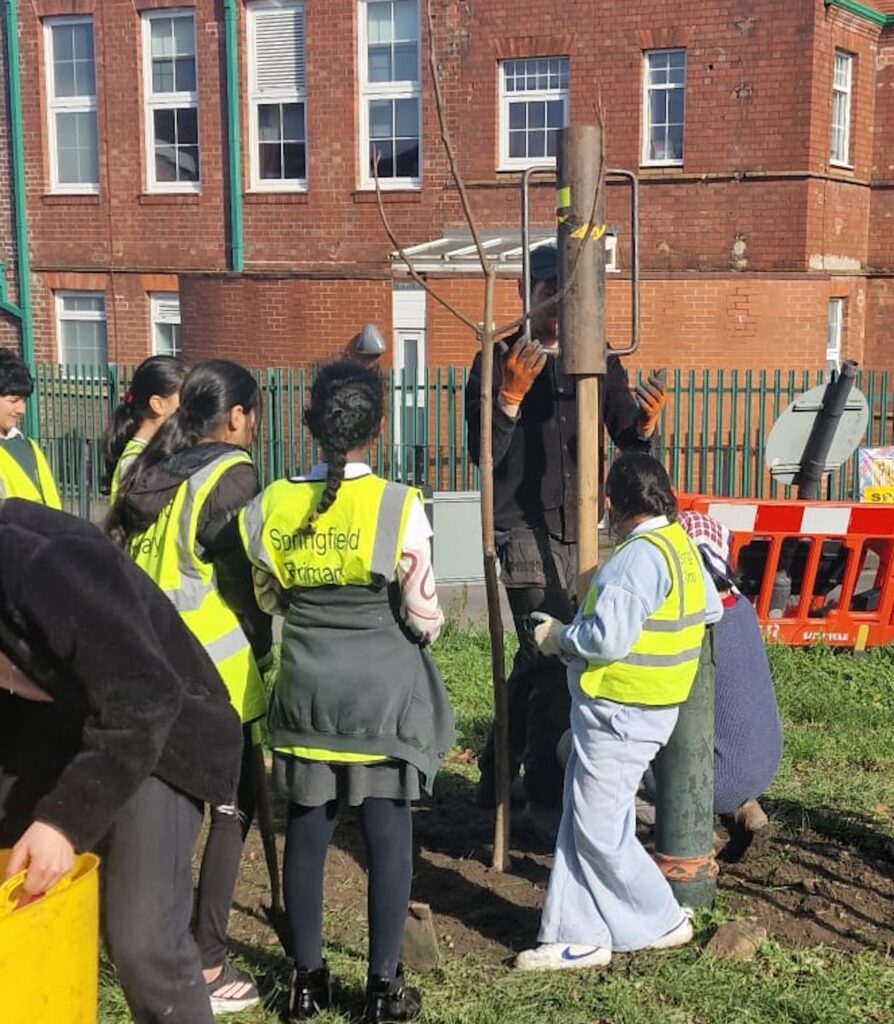
Their favourite tip: gently tickle the root ball before planting, encouraging the roots to reach out, explore their new surroundings, and quickly settle into their new home.
In Sparkhill Park, we were joined by the rest of the enthusiastic Eco-Club to plant two Ginkgos and two Western Red Cedars. The Ginkgo is often called the “dinosaur tree” – which the students learned about in the first workshop – having survived since the age of the dinosaurs, and they were chosen because of their resilience to pollution and their beautiful buttery-yellow autumn leaves.
The Western Red Cedars, with their rich foliage, will provide year-round colour, shelter, and habitat for wildlife.
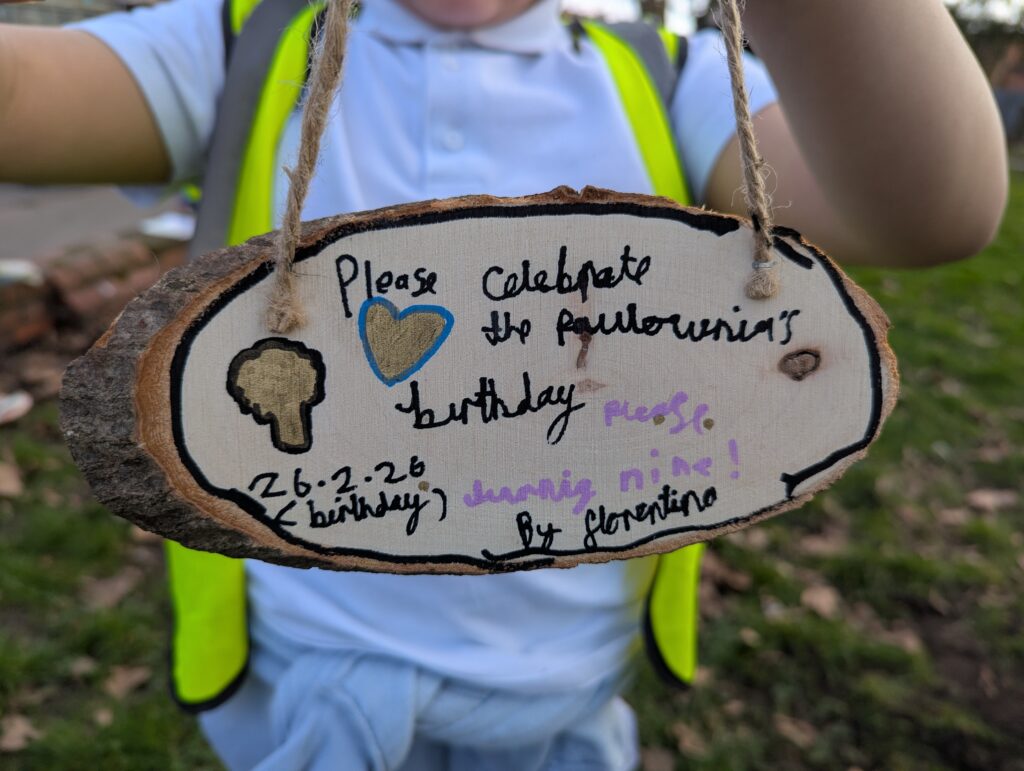
The pupils also decorated wooden signs to hang on the trees, adding names, birthdays, and fun facts, giving each tree its own story.