Earth Day

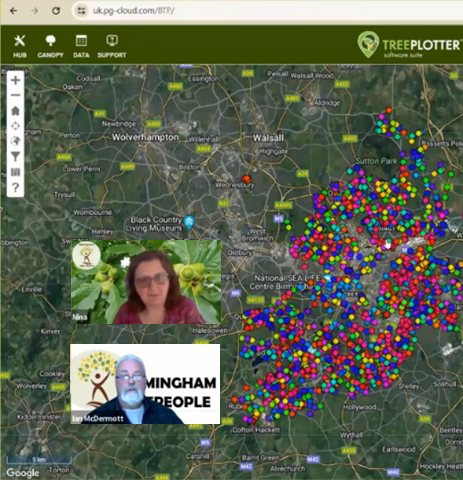
TreePlotter is our go-to software solution for many of our Urban Forestry projects. That’s why we were selected from across the planet, to present some of those projects to users and members of the public during a 12-hour online conference, featuring users from Europe, USA, and Australia!
For BTP’s section, Ian McDermott gave an overview of our non-profit organisation, and spoke briefly about our Tree Equity planting programme. This has become the leading project of its kind in the UK, where we use TreePlotter to identify, plot, and plant trees, along with a community engagement thread. See our TreePlotter here.
However, the main thrust of the presentation was delivered by Nina Griffiths, the BTP Trustee charged with running the citizen science project, looking at the success of newly planted street trees (please let us know if you’d still like to get involved with the ongoing survey). Nina gave a brief overview of the burgeoning project, that now has dozens of volunteers engaged, along with two placement research students.
The audience were incredibly engaged with the presentation, and we are expecting to be invited back to talk in more detail about this soon.
We wanted to thank the organisers of the conference for our invite, as it was a pleasure to present to groups and individuals around the world the hard work our TreePeople – our urban forest volunteers – have been doing for our city.
A copy of the entire conference can be found here and BTP’s presentation is here.
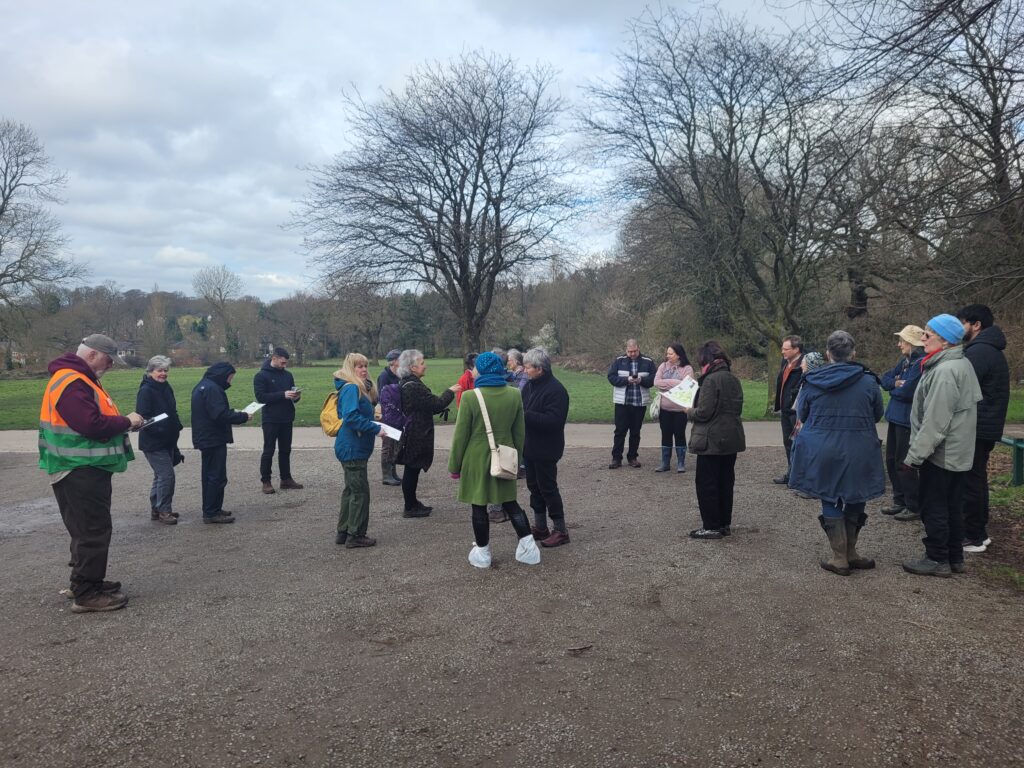
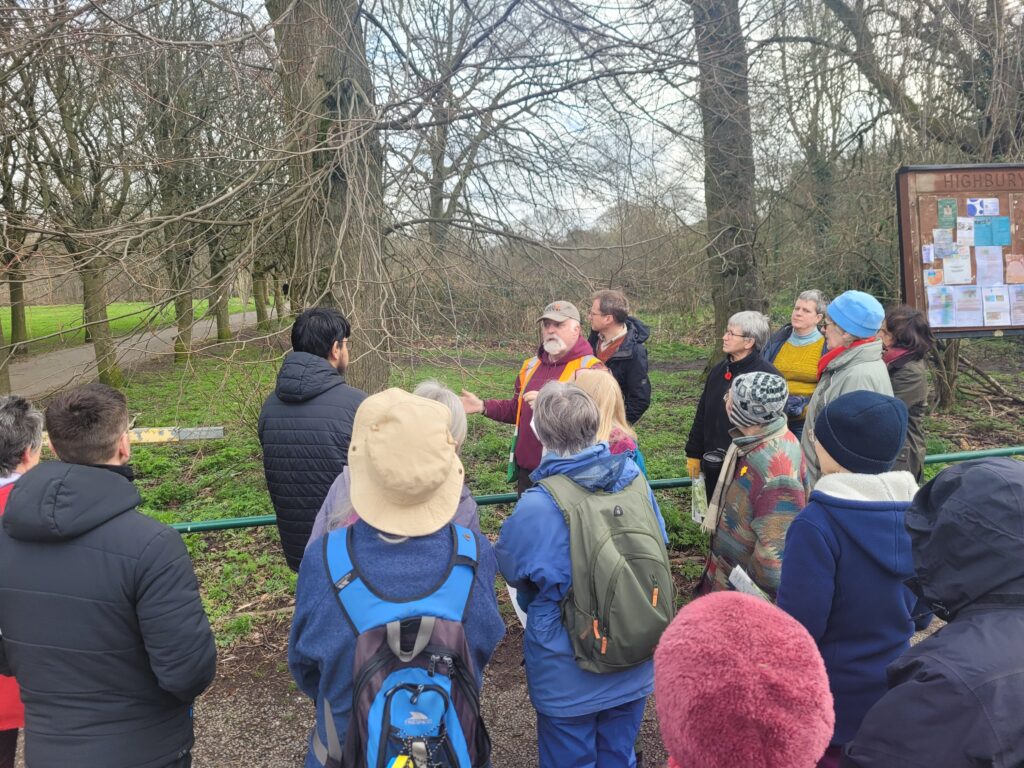
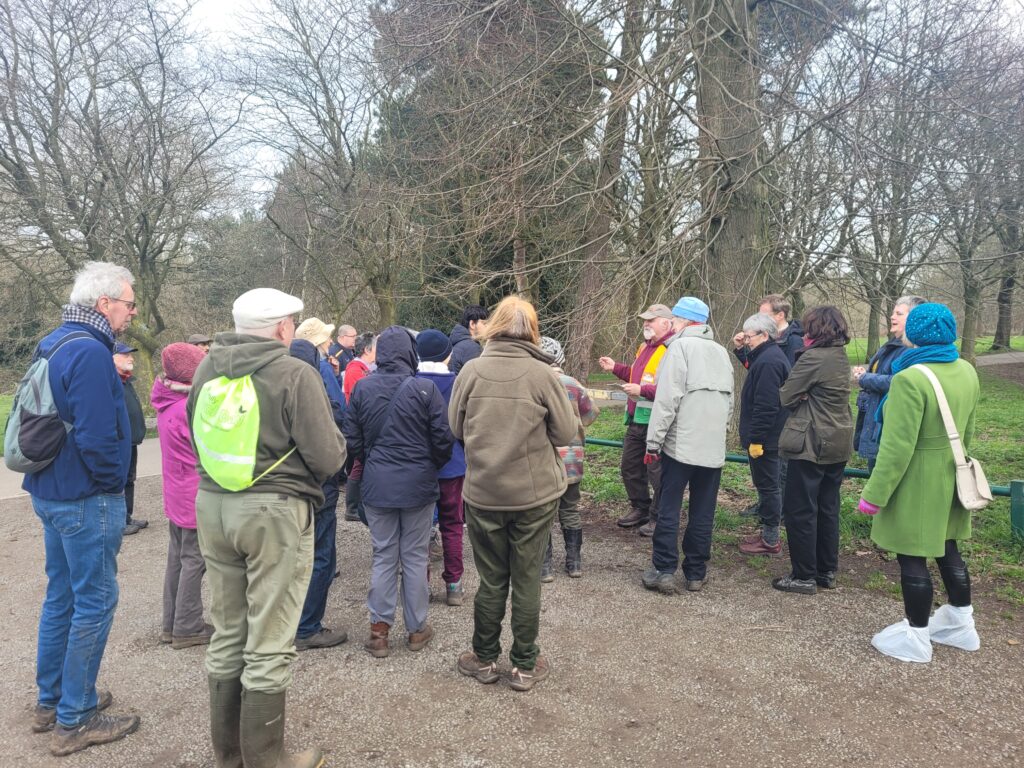
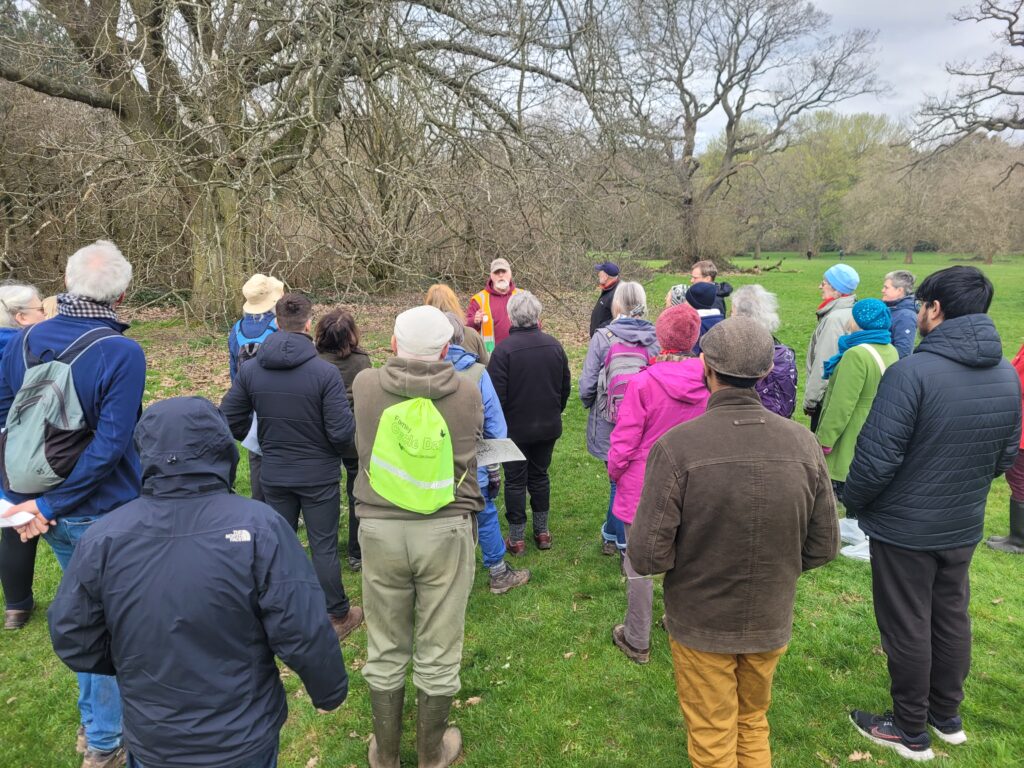
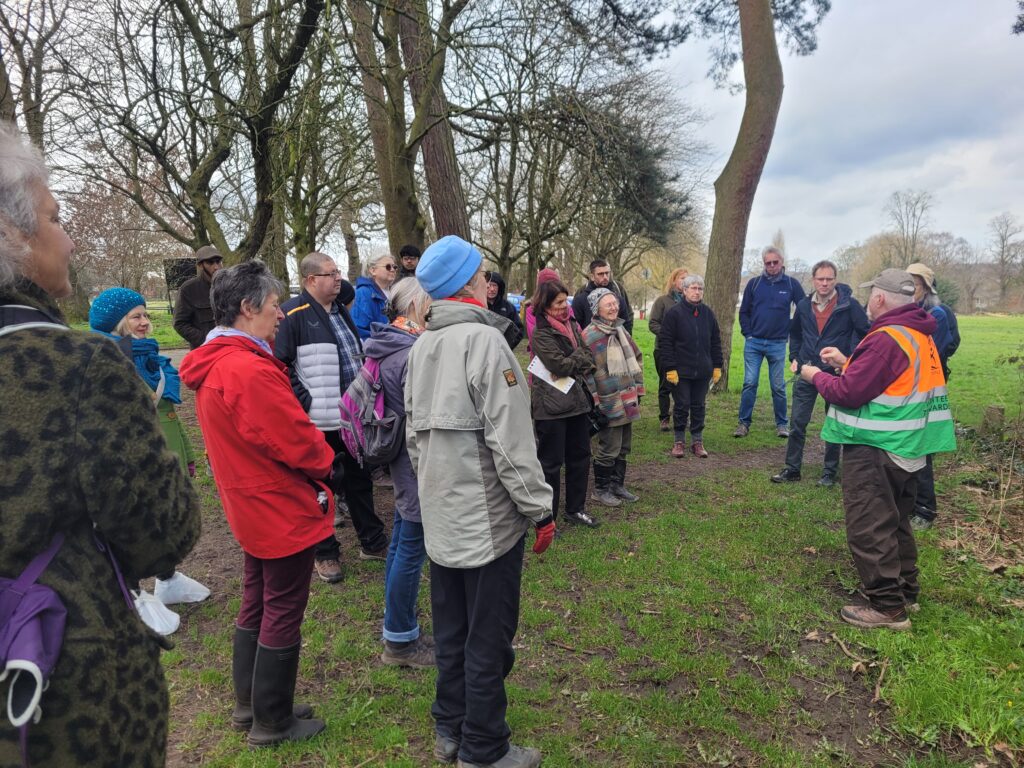
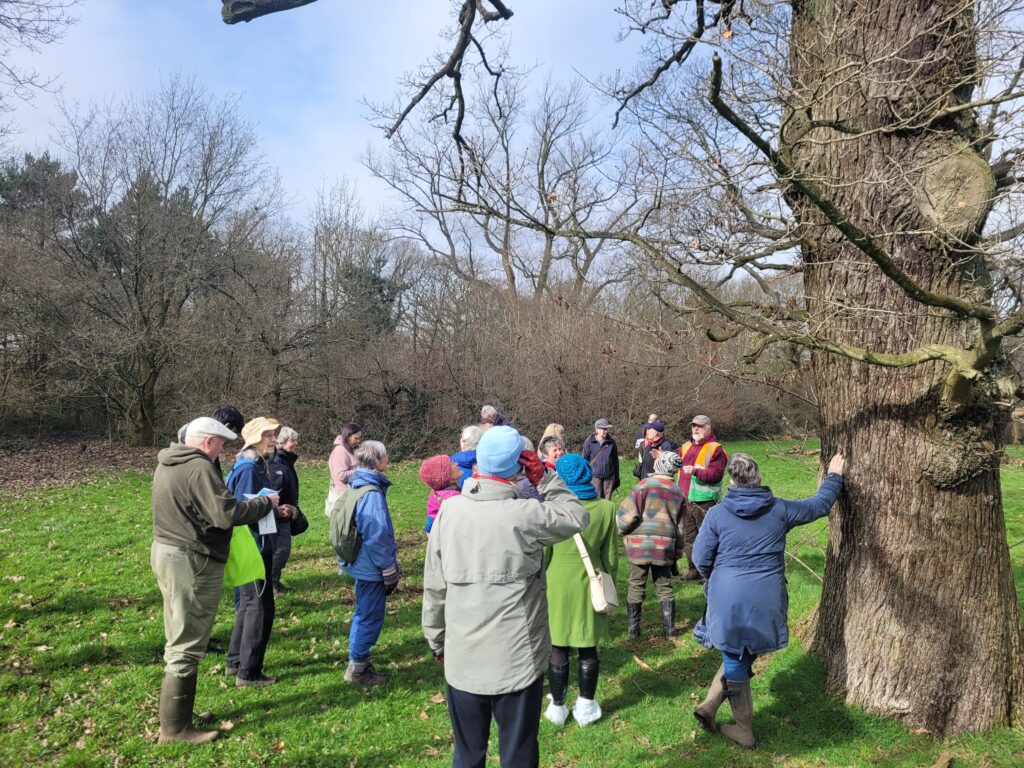
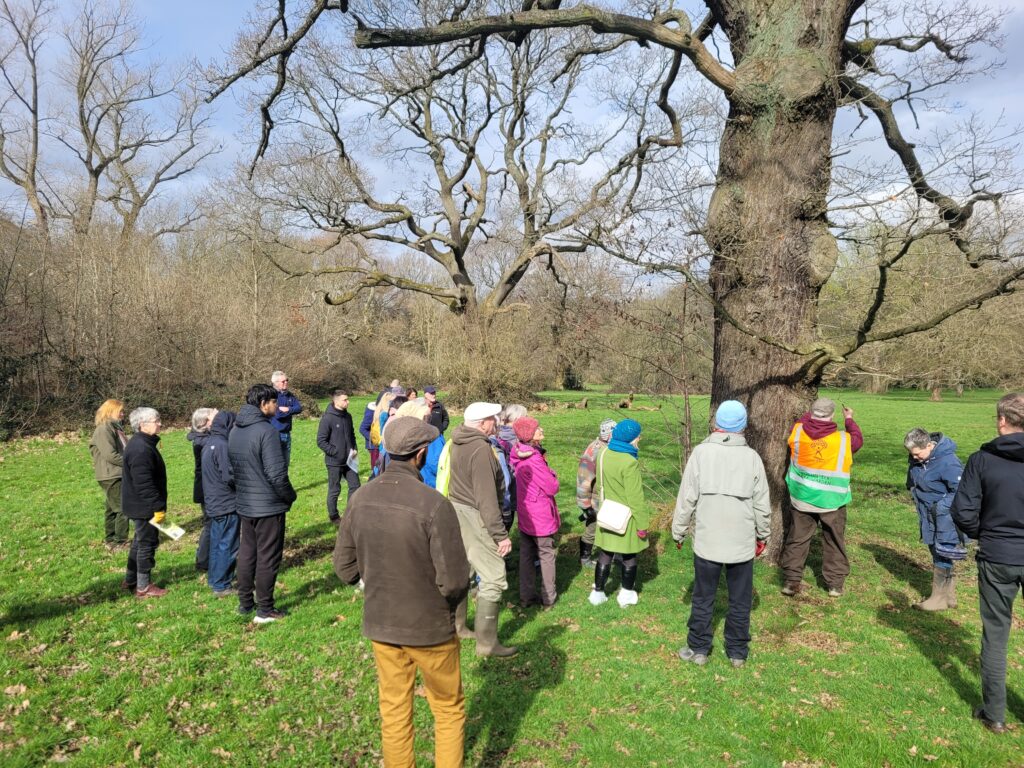
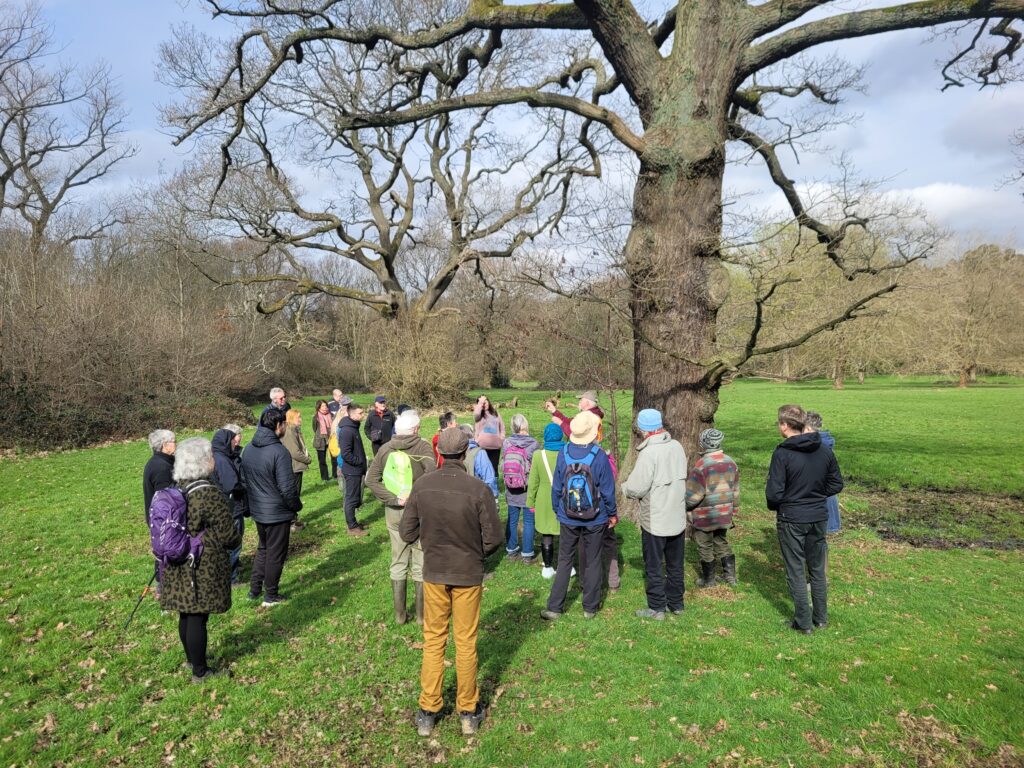
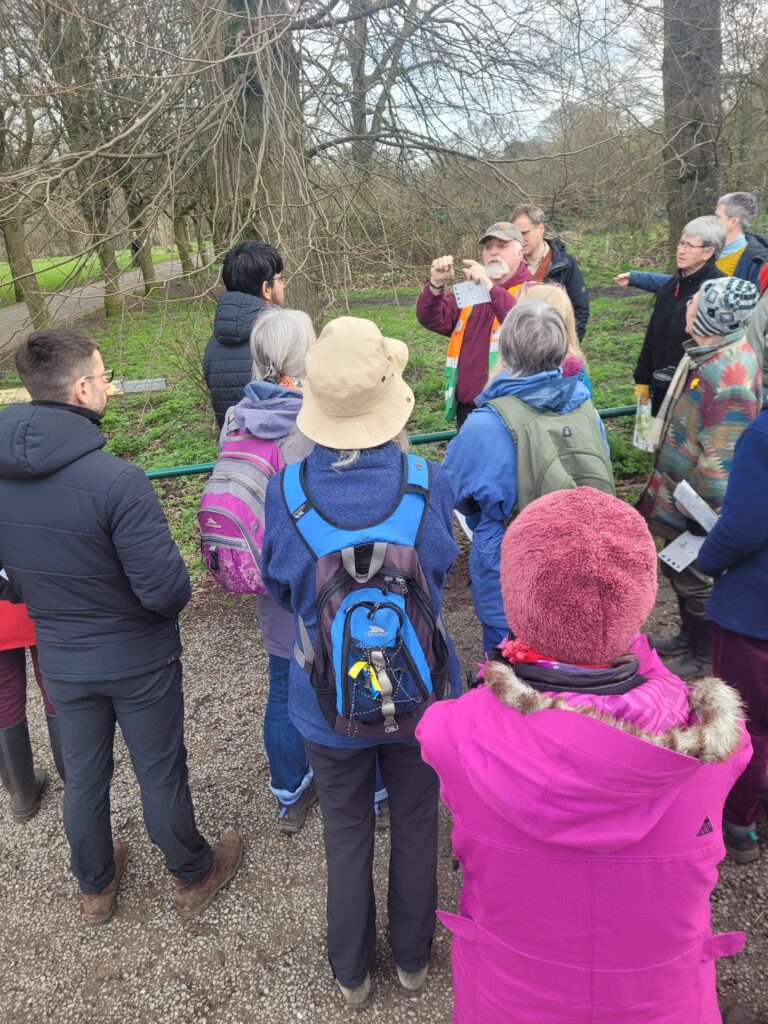
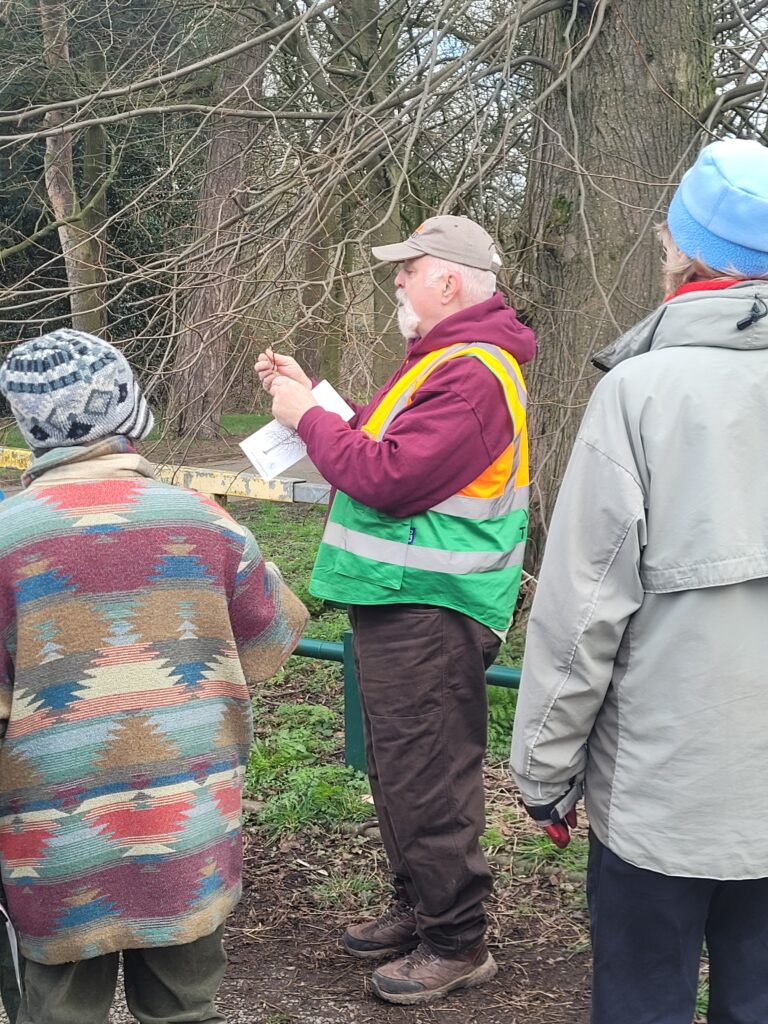
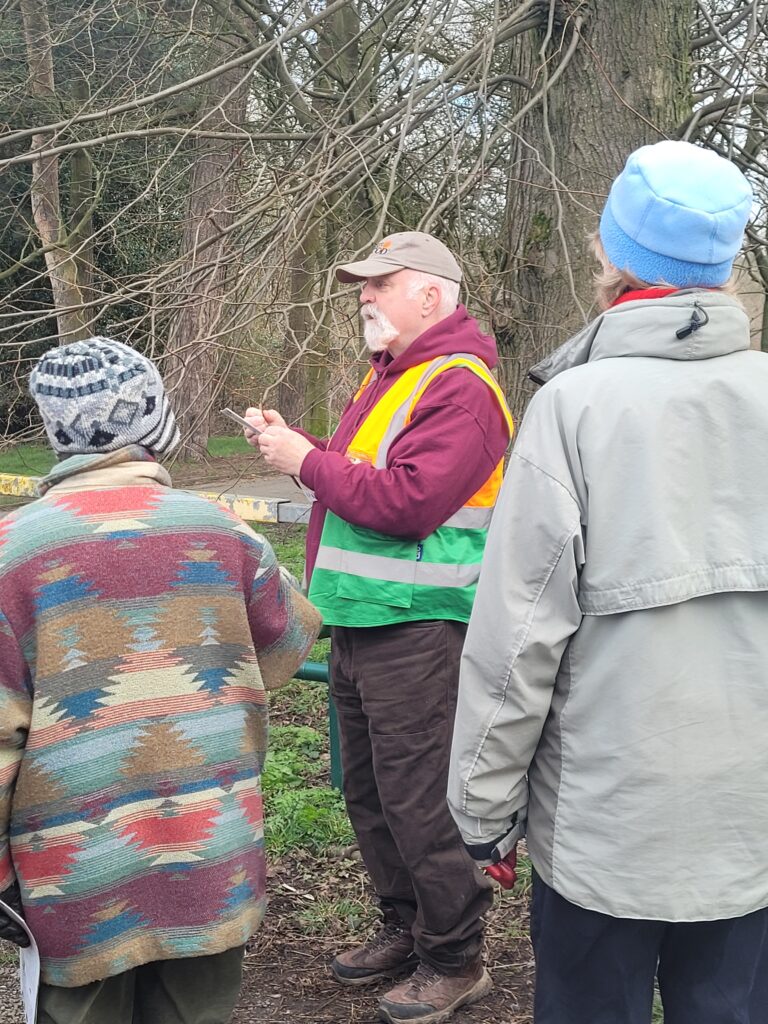
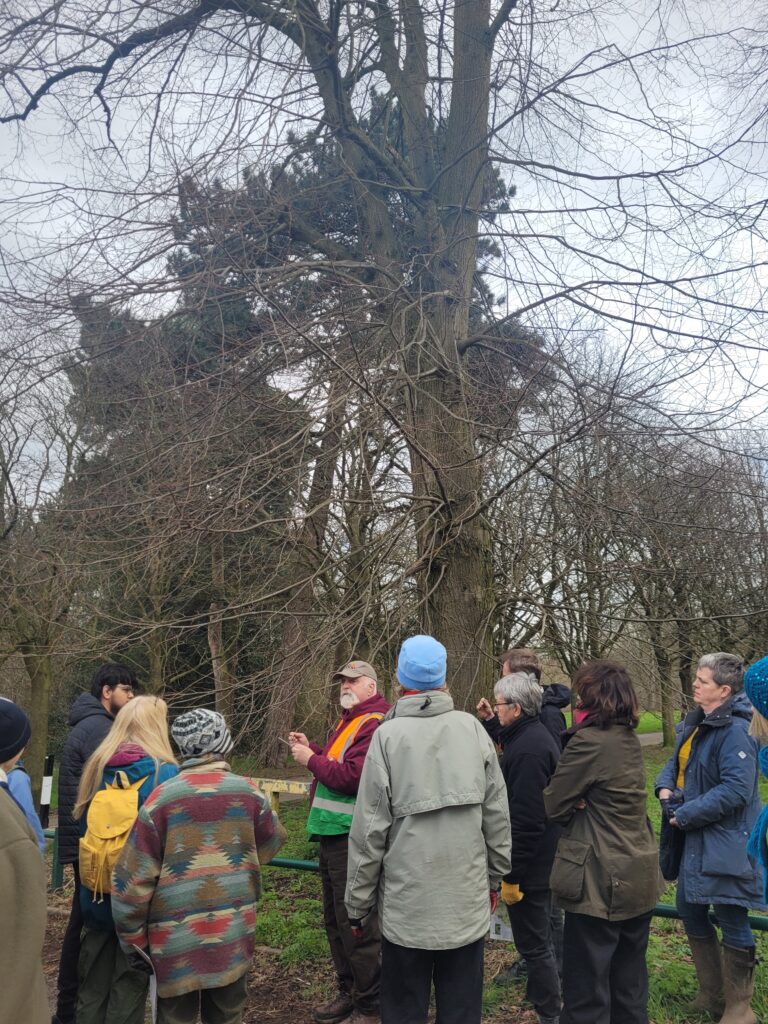
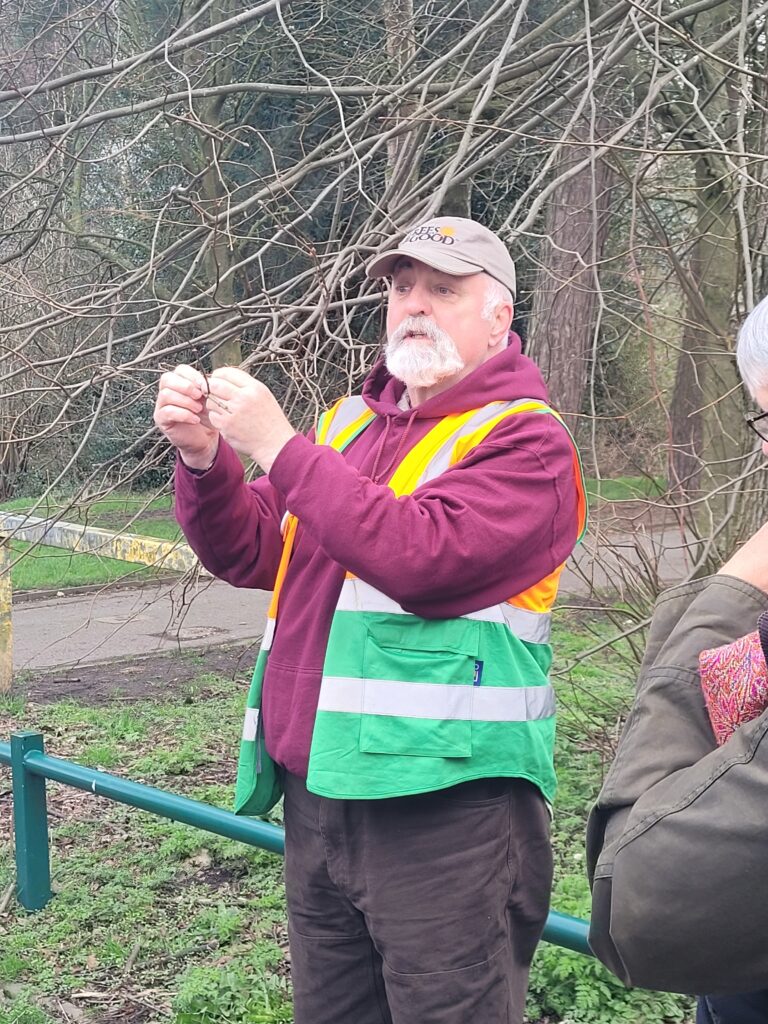
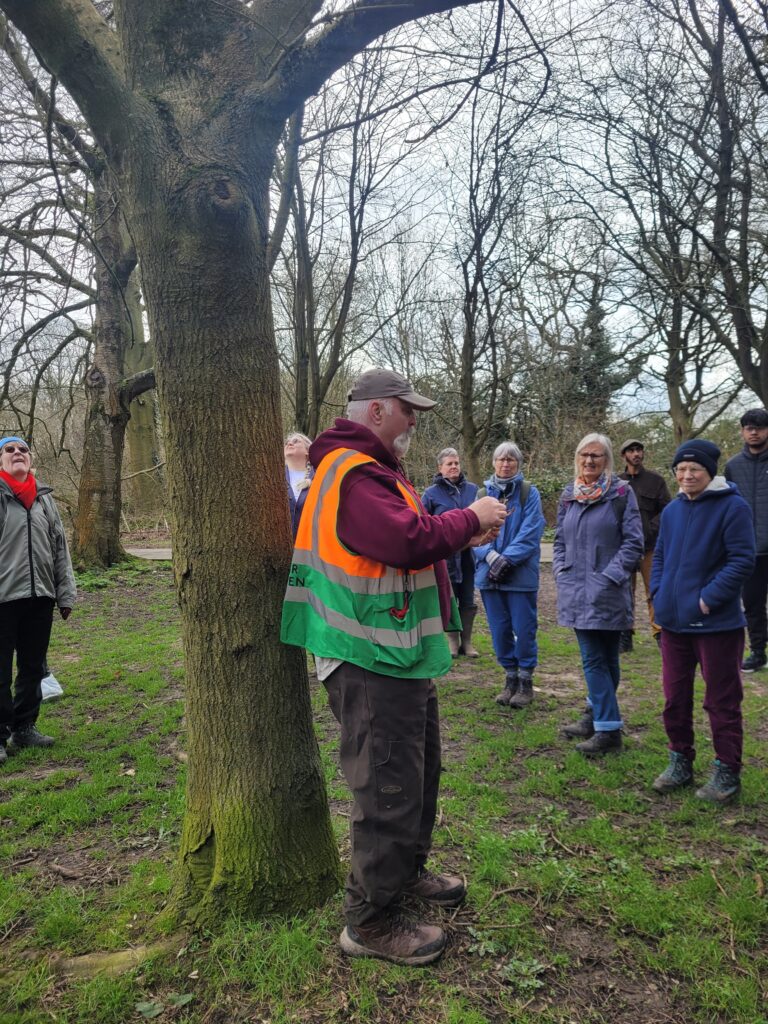
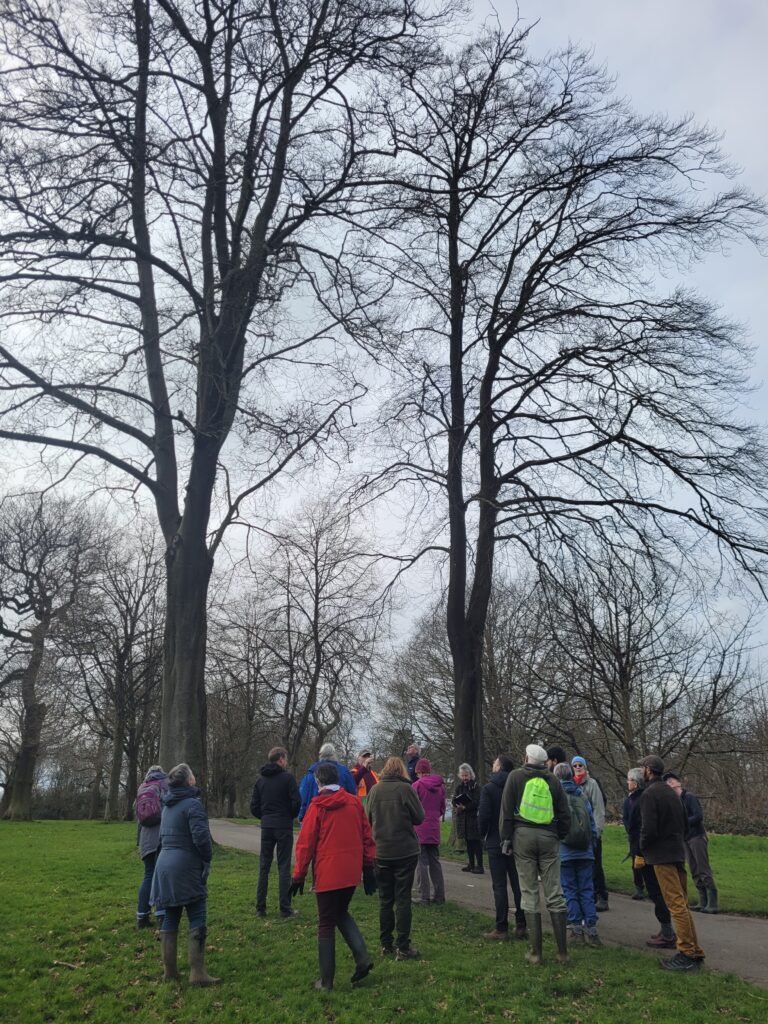
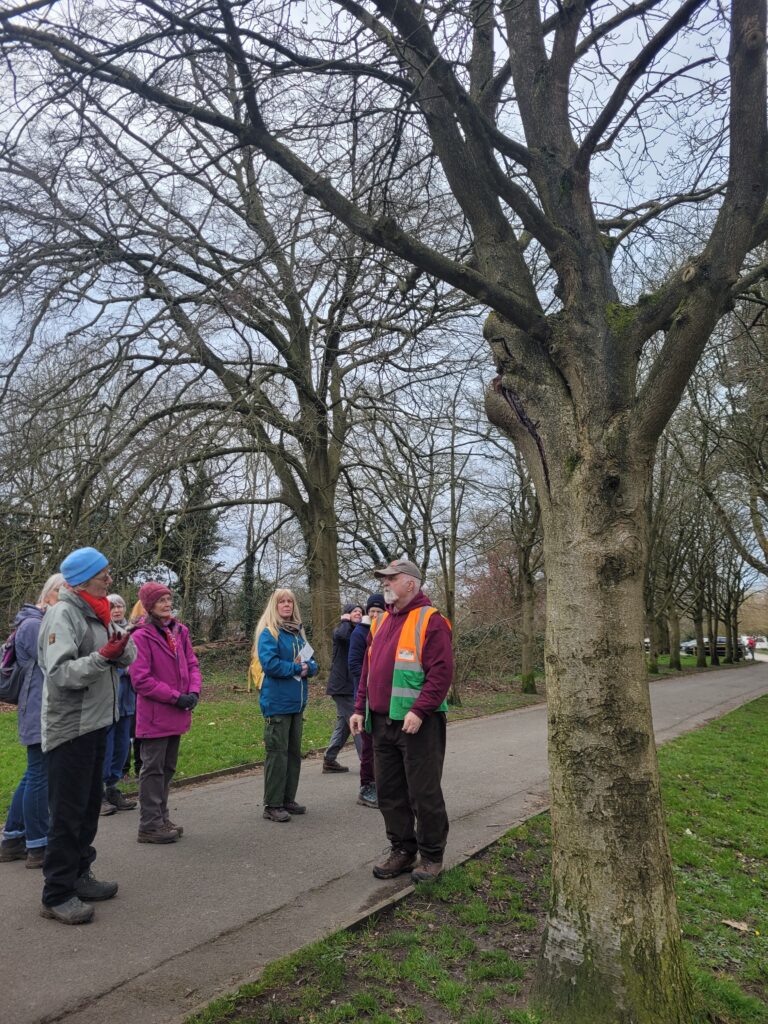
On Saturday 16 March, we gathered in Highbury Park, with Highbury Park Friends, to host a training session on winter tree identification. After the success of the previous session here in December 2023, this tree talk ran effortlessly, and was incredibly informative on the mostly native trees that dwell in this green space.
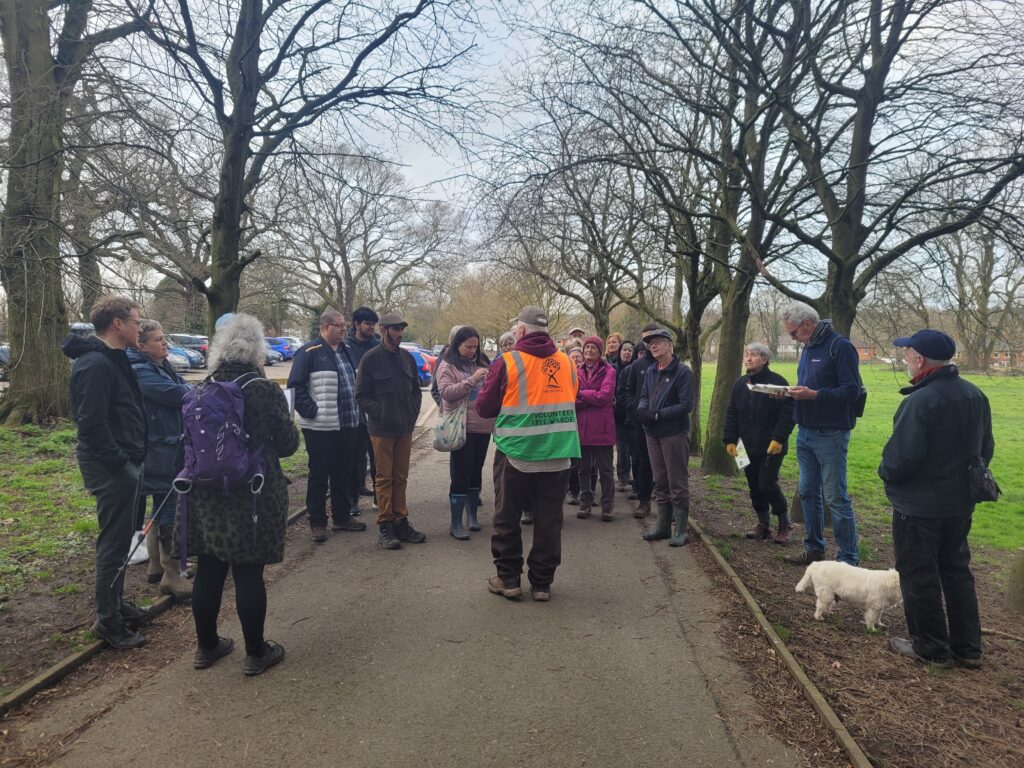
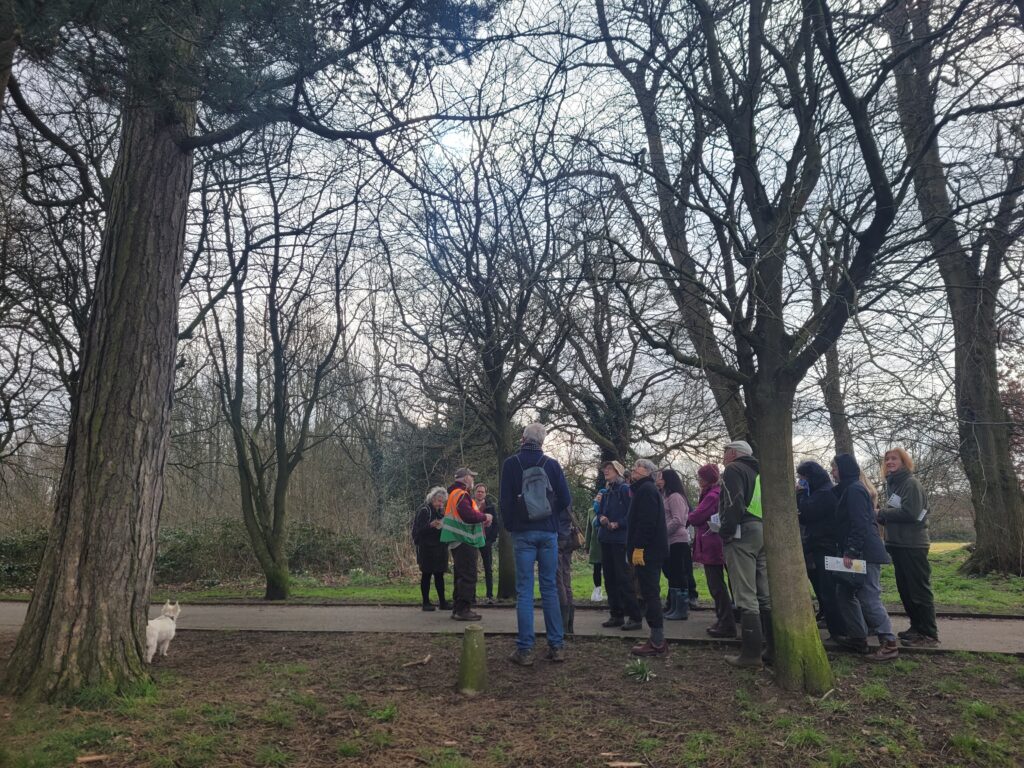
The joint group of thirty volunteers gathered to learn how to identify these trees, through bud formations and bark. Starting with our most common street tree, the Lime, Mac began the ident session by talking about the different kinds of buds. Silver Lime (a large, grafted tree), however, causes bees to starve!
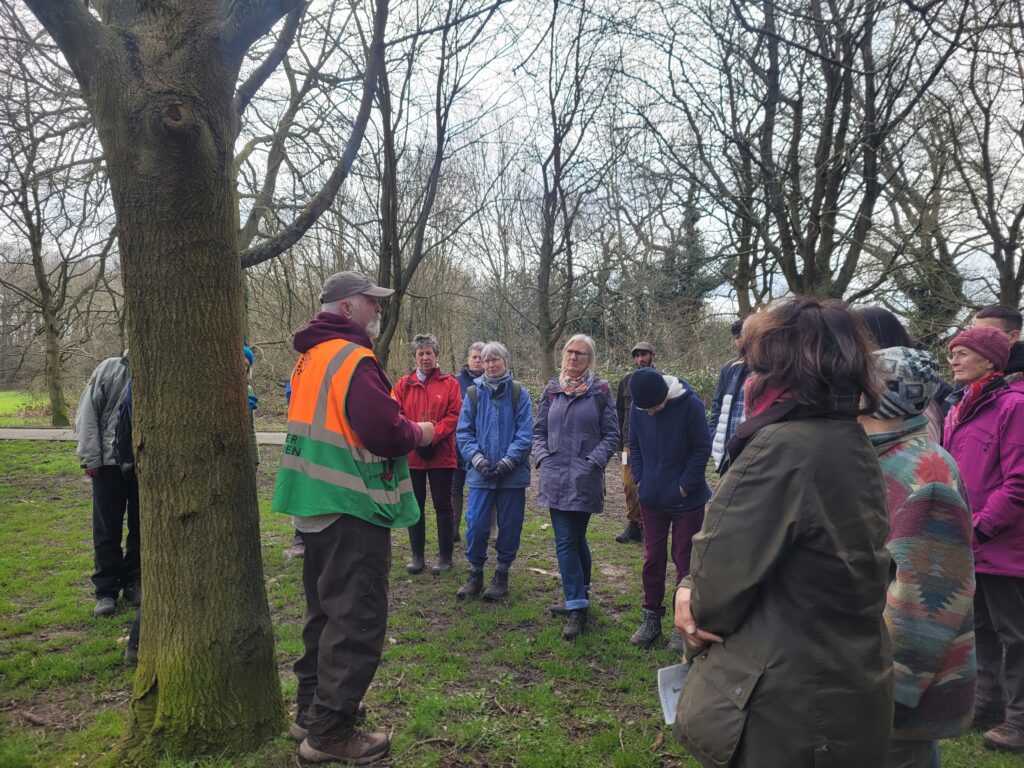
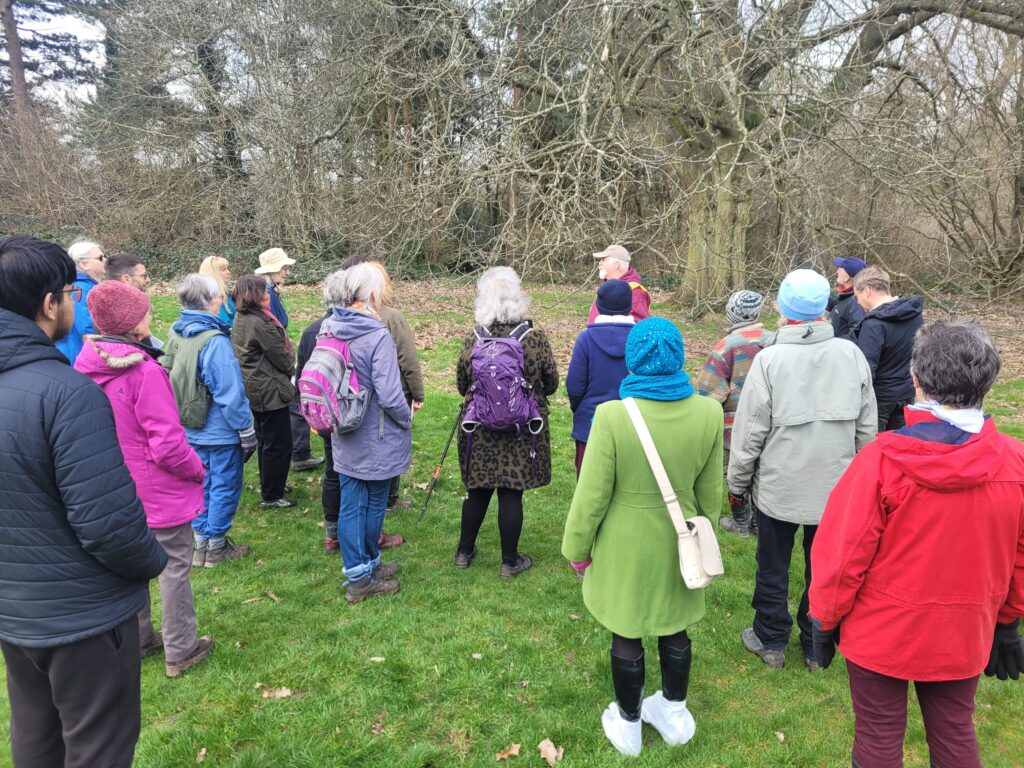
The Black and Scots pines can be identified through the shape and length of their needles; Black being typically twice the size of Scots.
Knowledgeable volunteers knew that the spiky leaves on Holly are a chemical response and defense mechanism to being eaten or defoliated; we can run, but the trees must stand and fight, so over time they develop the most spectacular ways of defending themselves from their predators.
Many of us will be aware of the effects of Ash die back, and we can identify this tree by their black terminal conical bud. The fungus, chalara, settles on the ground and the spores attack this brittle, native tree, to the point that they’re seeding prolifically as a near-death response. It is predicted we’ll lose 90% of the mainly woodland tree in the coming years.
The Sweet Chestnut’s bark is a key player in identification, and if the foot-long cluster leaves are present this becomes easier. Many Chestnut trees are grown straight by pruning side branches, known as ‘brashing’ or ‘crown lifting’, when these trees are grown for timber.
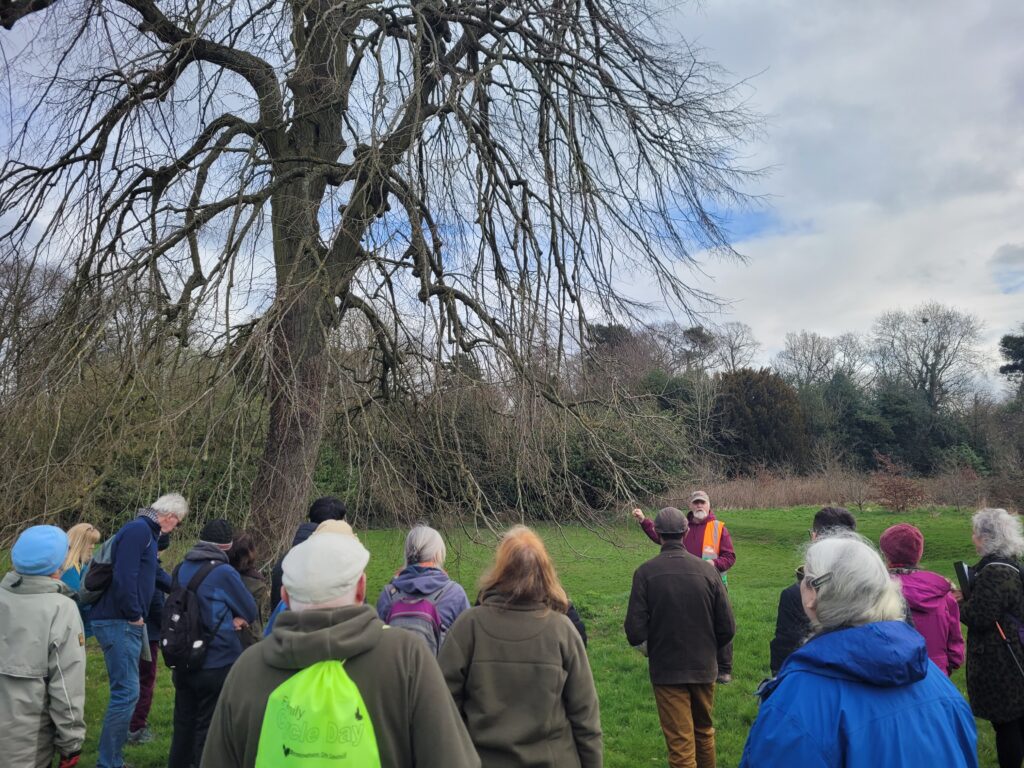
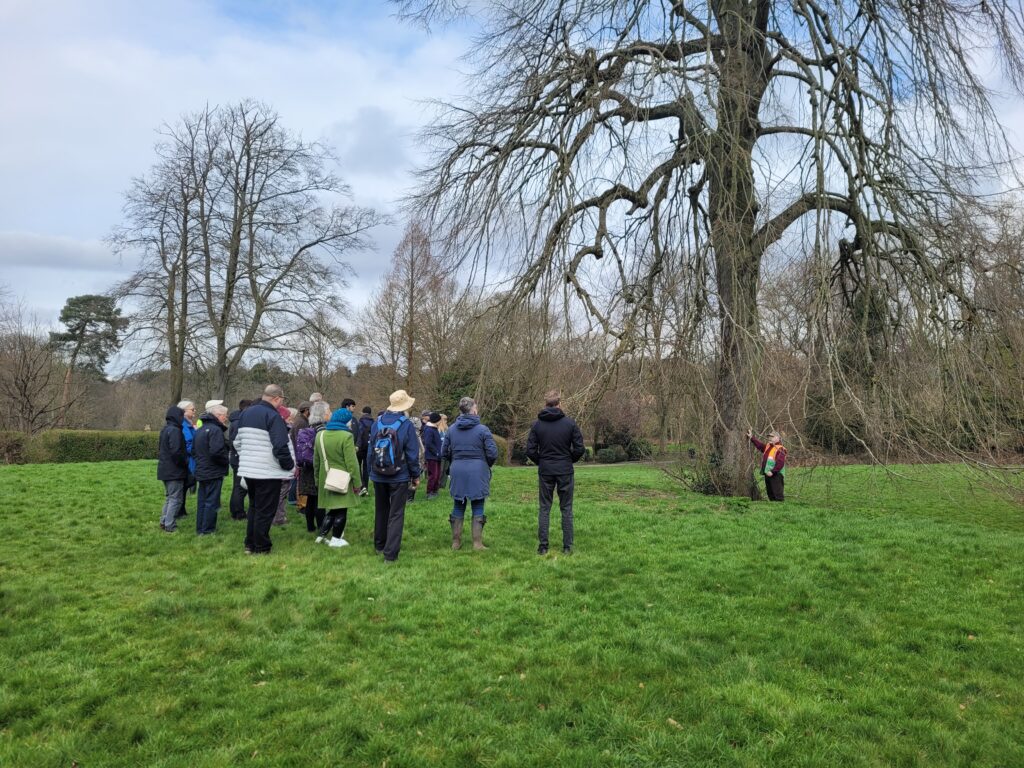
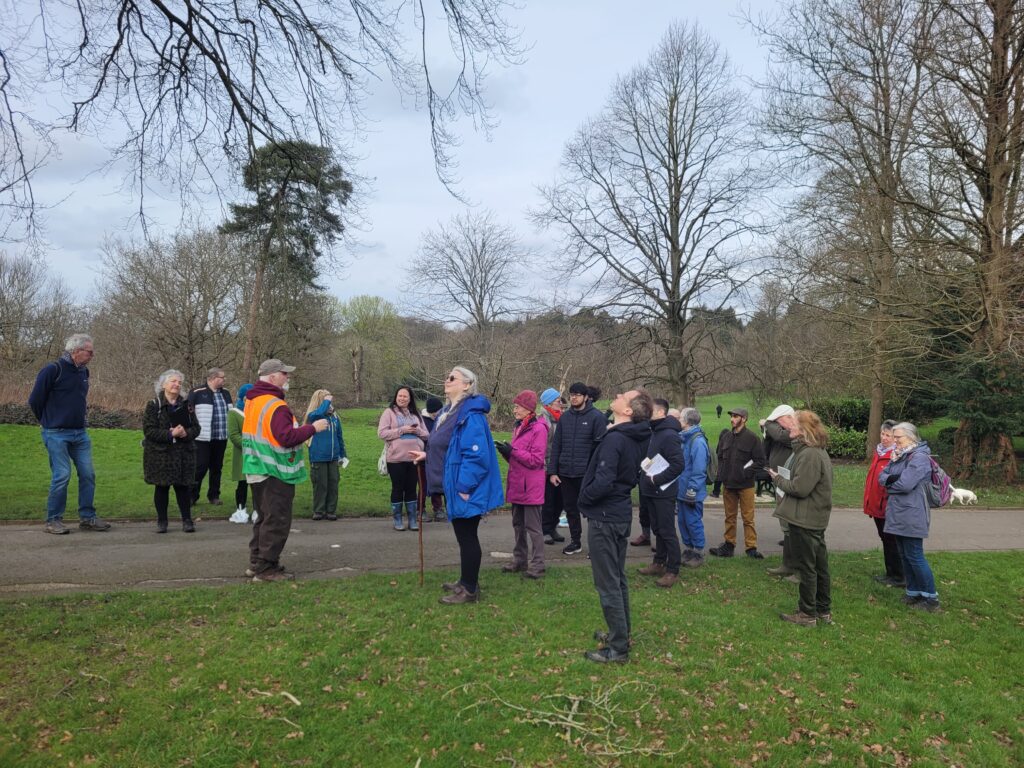
The red (non-native) and white (native) Oaks can be differentiated by their buds; red has alternate buds and we can use the terminal bud for ID, or their large leaves when they’re present, but white has a different bud arrangement.
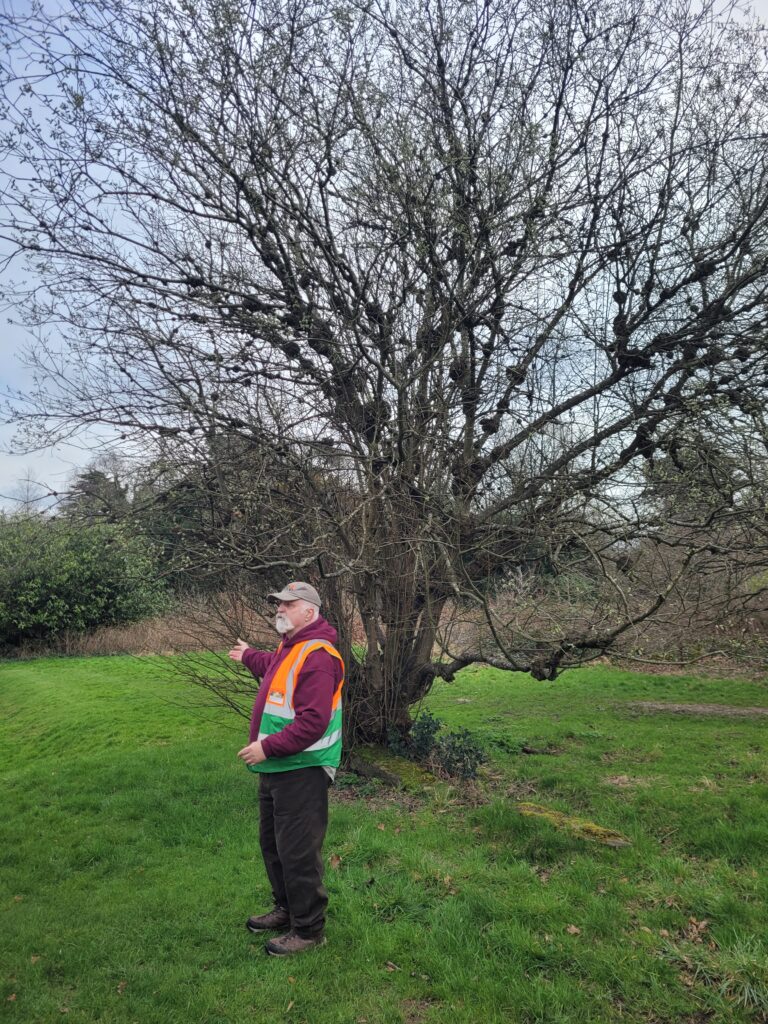
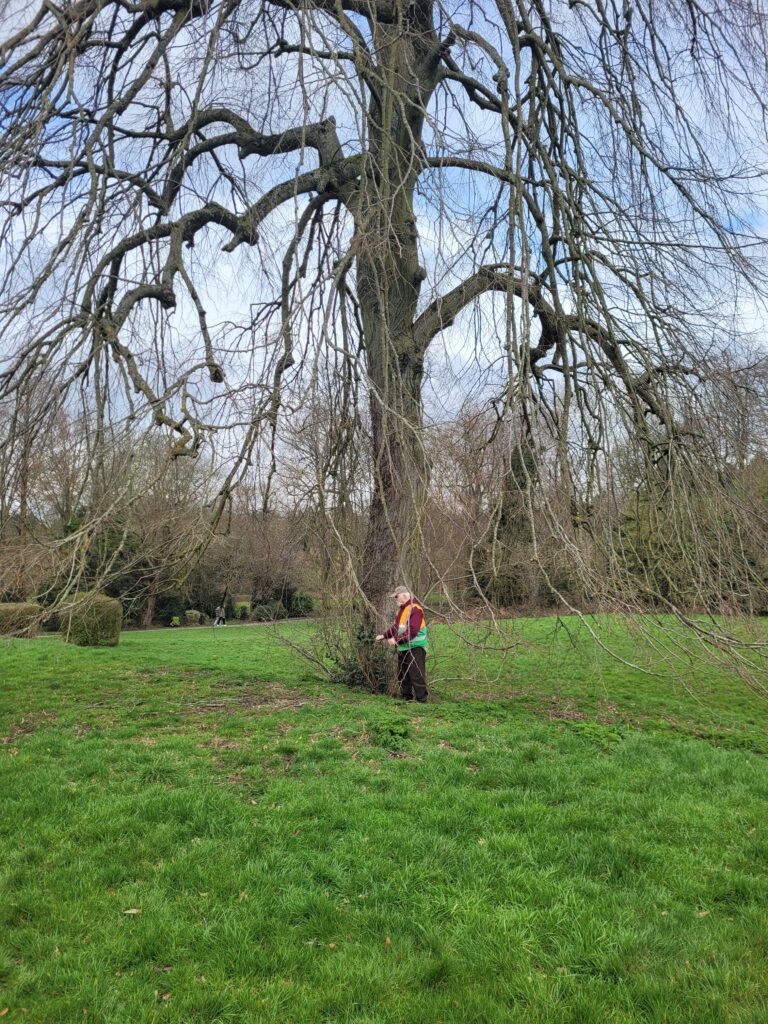
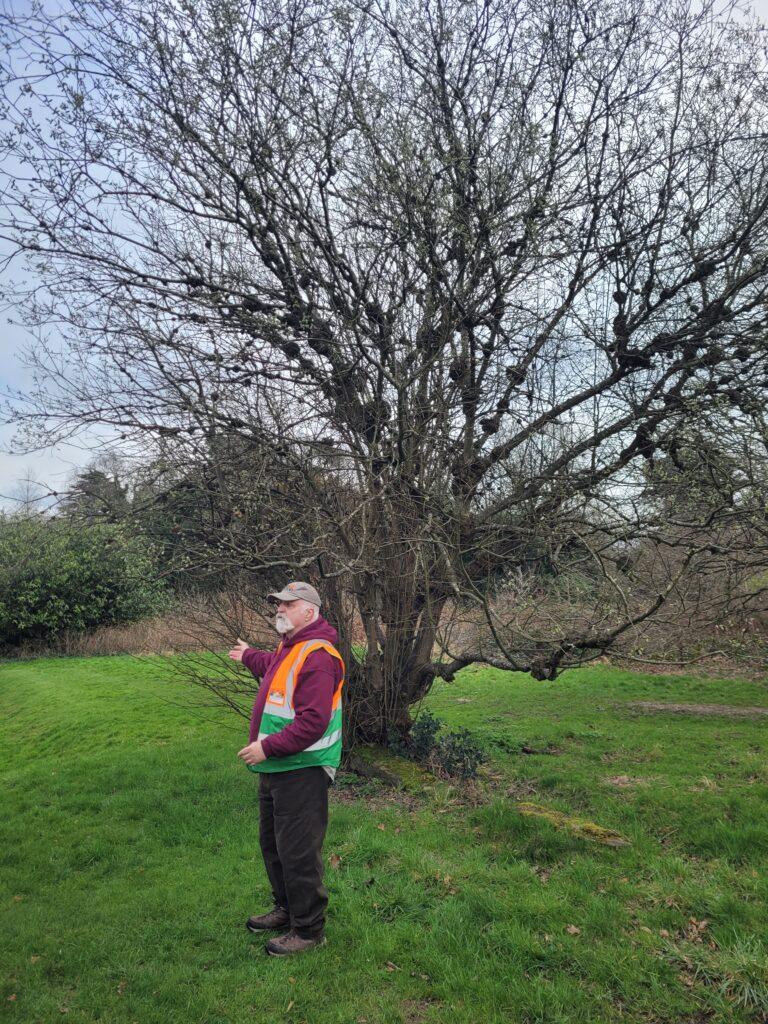
The Goat Willow, coexisting with the Goat Moth, had a bacterial canker that caused girdling of the branches, killing them over time. These trees are also a Phoenix tree, meaning if they fall on their side, they usually keep growing! Beeches however, in the same family as Oak, do not have deep, strong roots, so drought can easily kill them.
The Dawn Redwood has alternate opposite needles, tolerant of pollution and varying soil conditions, making for a great street tree. The park also boasts an irregular avenue of Whitebeams, but they don’t do too well with trunk damage, so we are going to work with the Friends group to replace the lost trees.
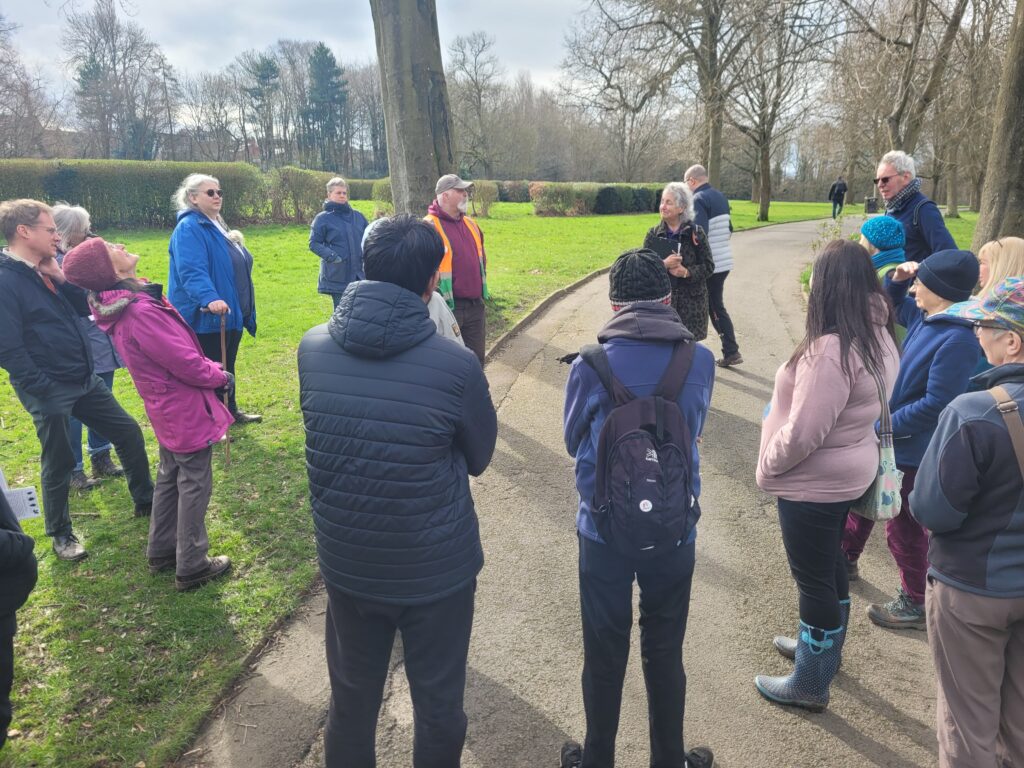
After discussing Cherry’s extra floral nectaries to attract the predators of their predators, we ended on the ancient Field Maple, whose leaves are like Liquidambar, therefore the opposite buds are key to identifying this tree.
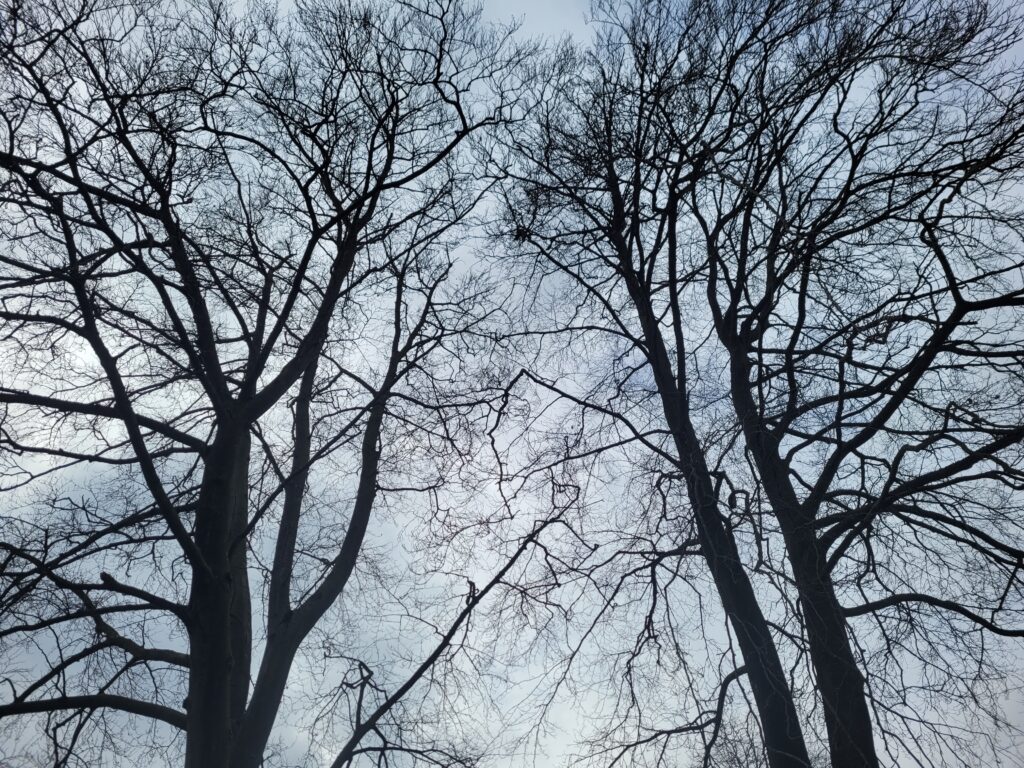
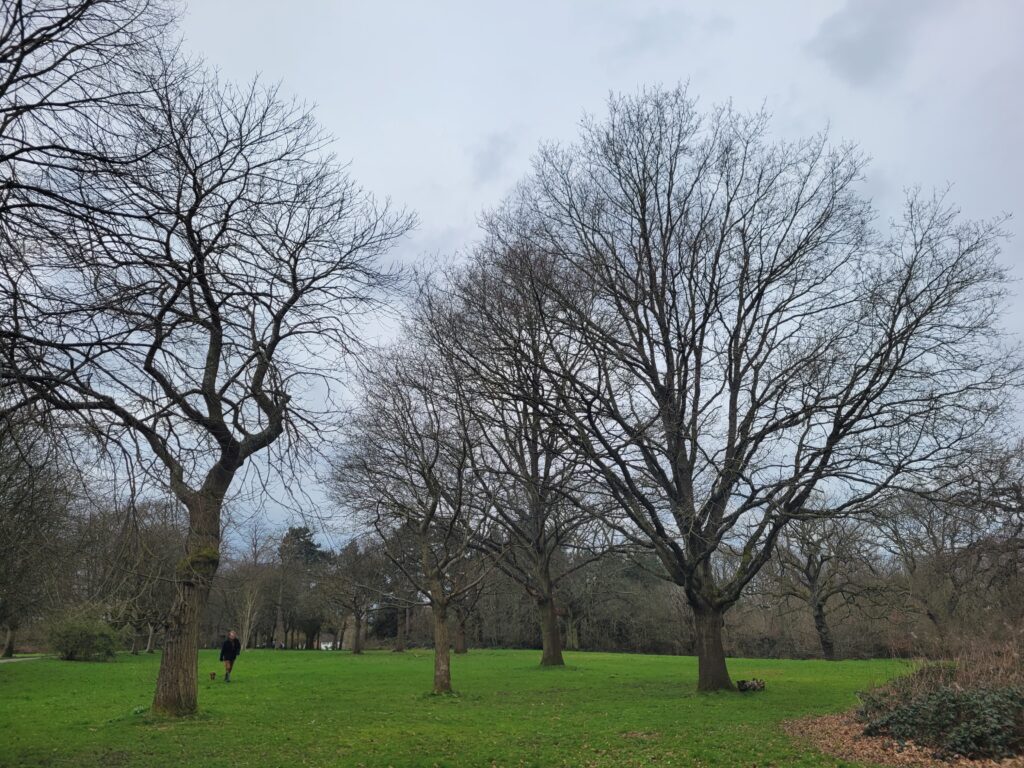
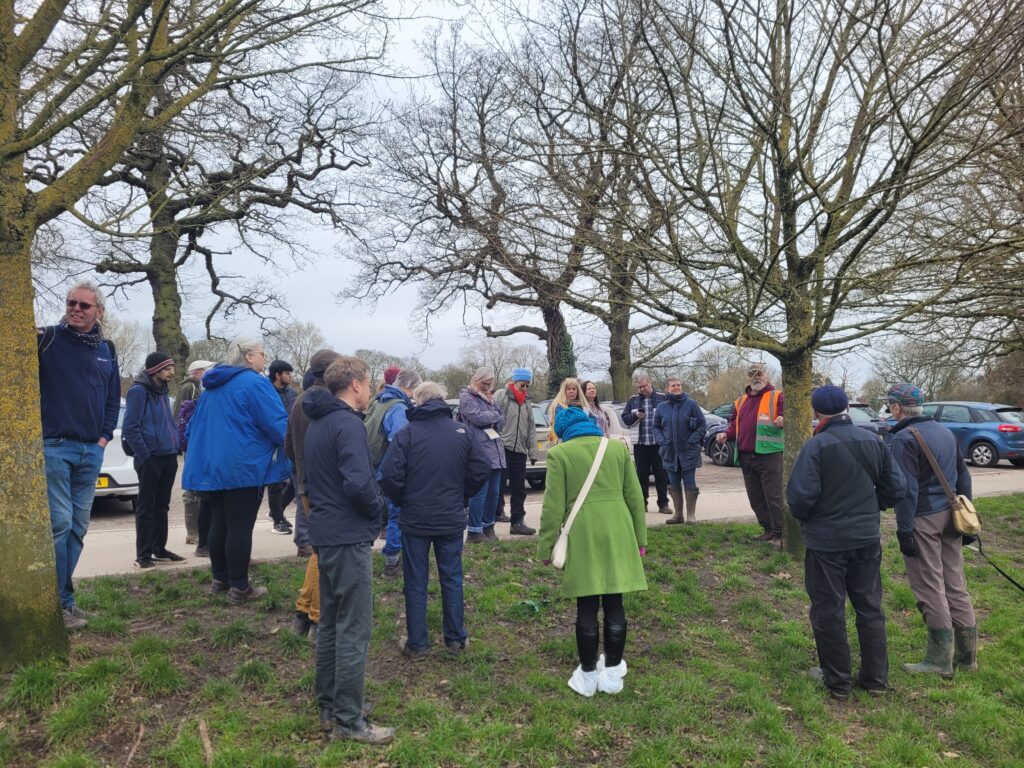
Huge thanks to all the volunteers who attended, and we look forward to the next one!
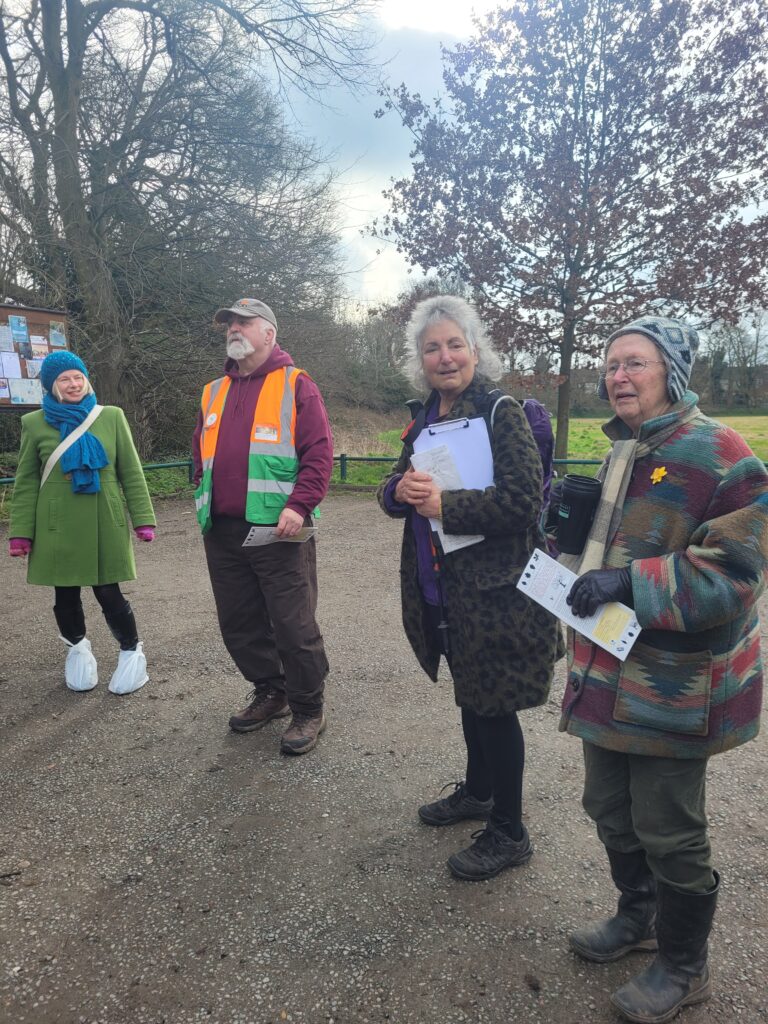
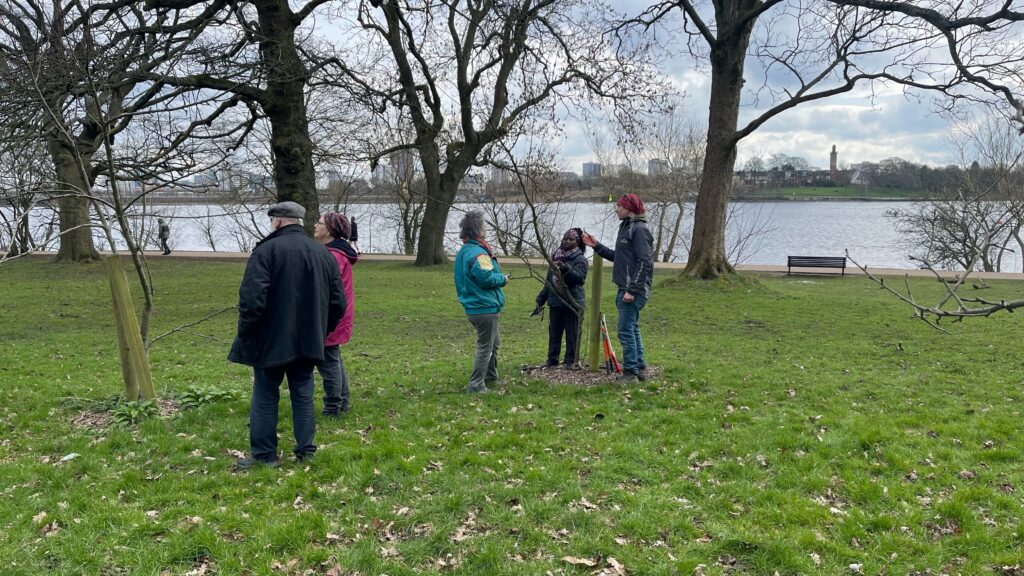
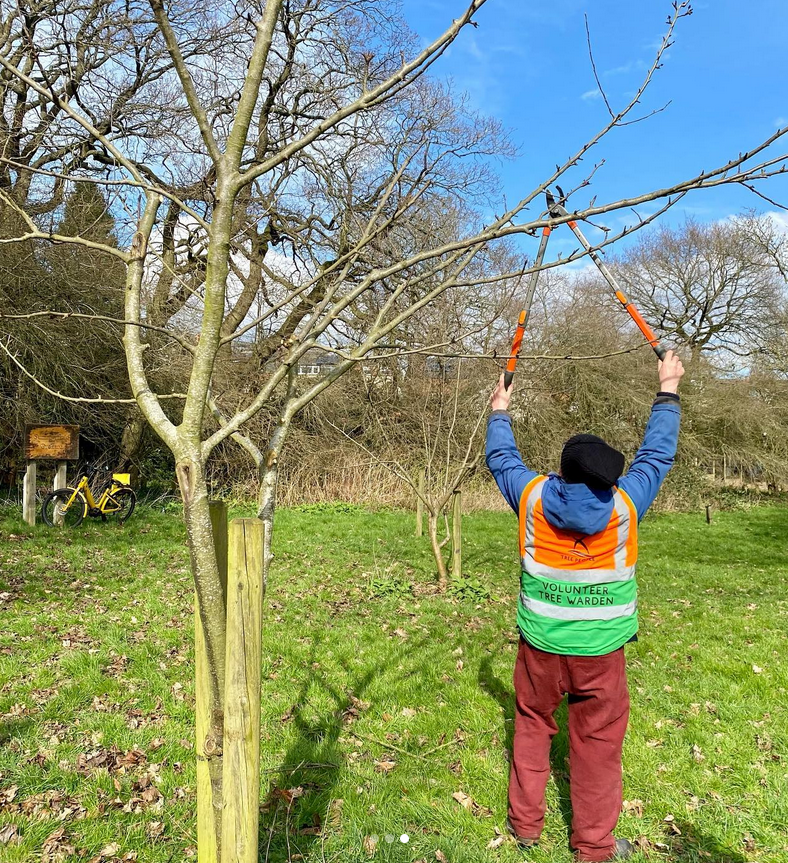
12 hosts and visitors pruned 16 apple trees, in the Summerfield Orchard, at Edgbaston Reservoir. The trees, planted in 2009, were eager for a haircut, which had not happened since COVID. Rob Tilling from Fruit & Nut Village provided the tuition and tools, supported by The Friends of Edgbaston Reservoir, Warm Earth, and BTP.
Steve Watson
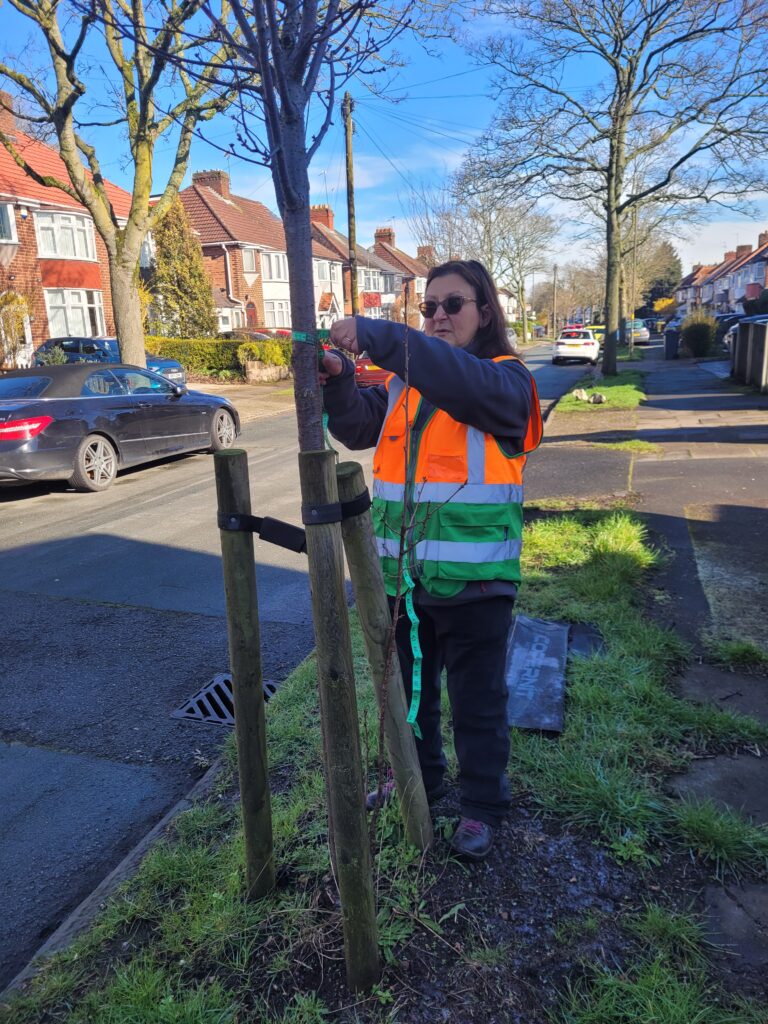
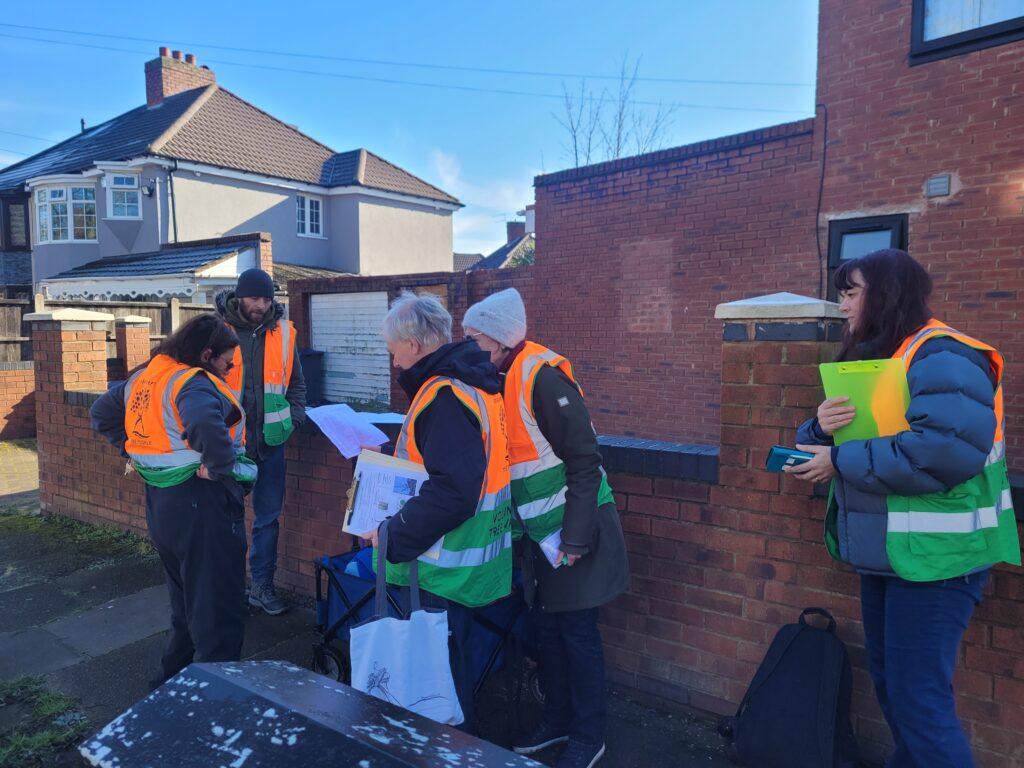
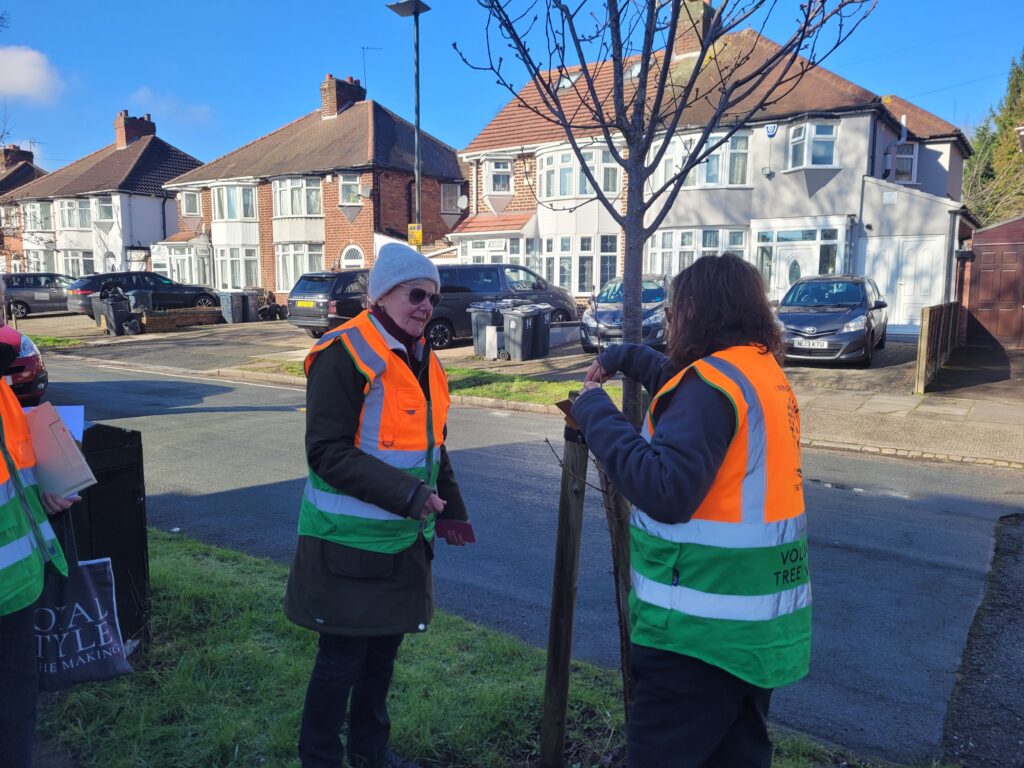
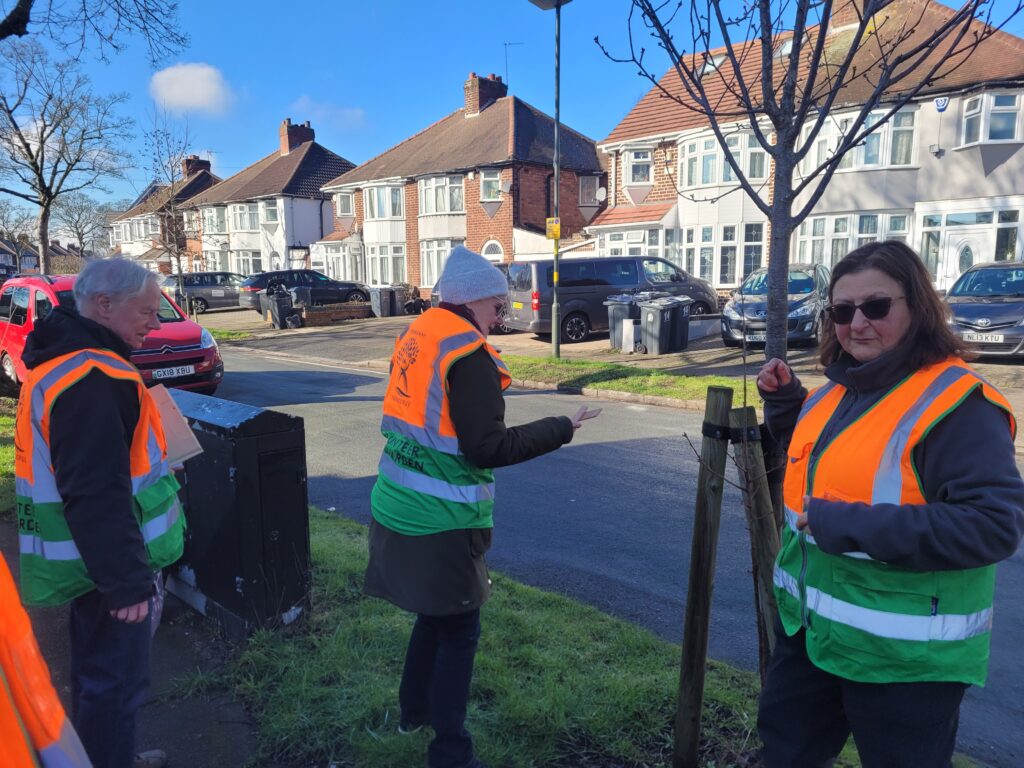
Nina Griffiths, BTP Trustee for the Street Tree Survey, held another survey session on Sunday 3rd March, split into two am and pm sessions. Deanne Brettle, BTP Trustee for Tree Trails, also assisted Nina and the urban forest volunteers during the training.
Martyn and his wife Cath signed up as urban forest volunteers last year, after Nina gave a demonstration of the street tree surveying during our Summer Social 2023. Thanks to our dedicated volunteers, and the new trainees Alex and Charley, the morning session went smoothly under the morning, winter sun.
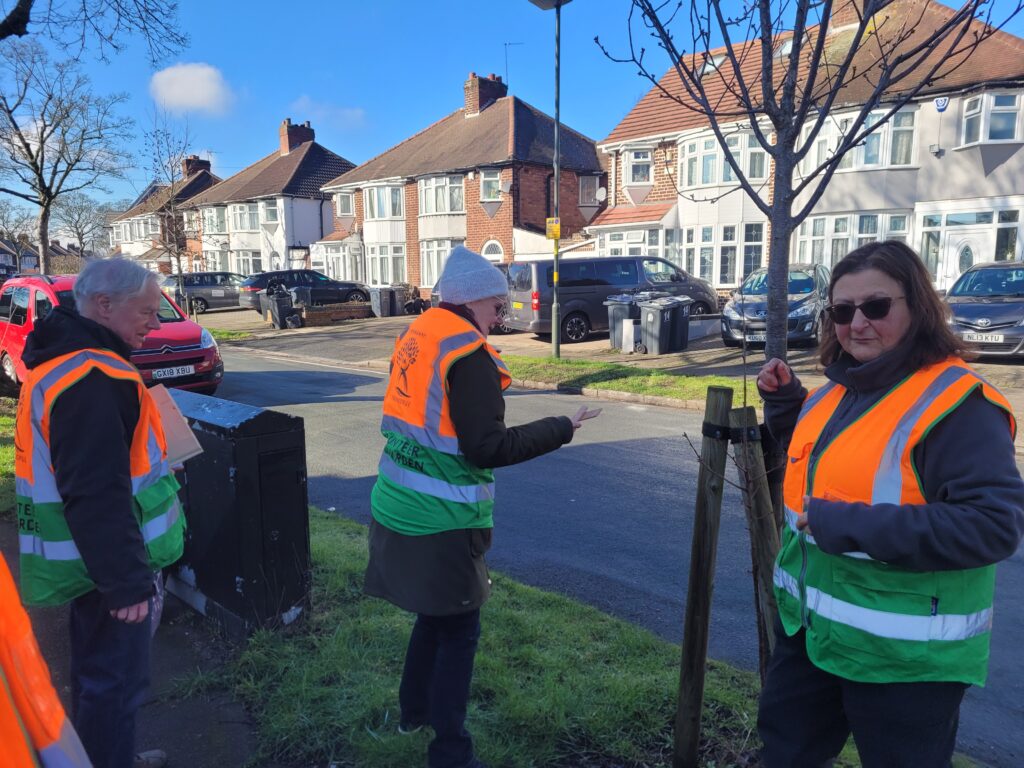
In the afternoon, long time volunteers Gig and Genny (the latter a member of our workshop partners FOHHC), as well as new surveyors Jitesh and Ruth, joined Nina and Dee to survey more trees around Hodge Hill.
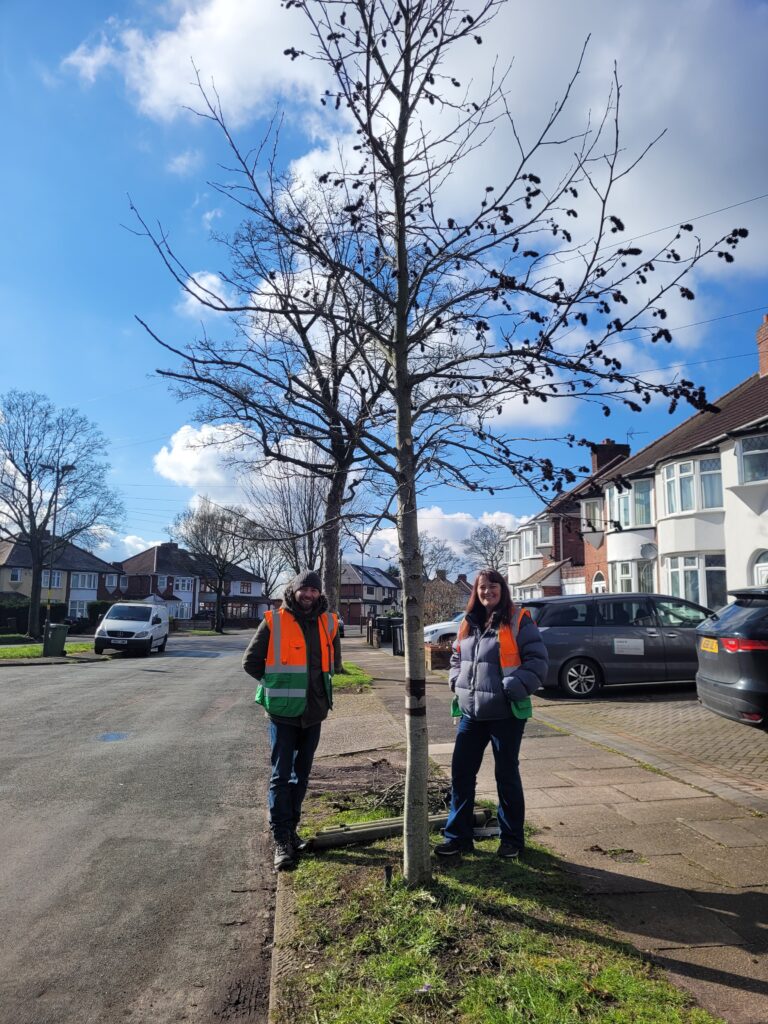
A big thanks to all the volunteers who attended and surveyed the street trees with the Trustees for this project, as our street trees are an essential part of our urban environment and are often overlooked.
That’s why our dedicated volunteers not only surveyed a total of 11 trees, but 3 extra trees that weren’t on the survey list were rescued from overly tight stake ties and other damage. Many trees were pruned correctly with on-the-job training, to rescue possible pedestrians and cars from damaged branches falling, as well as freeing the bases of several trees from suckers to relieve stress.
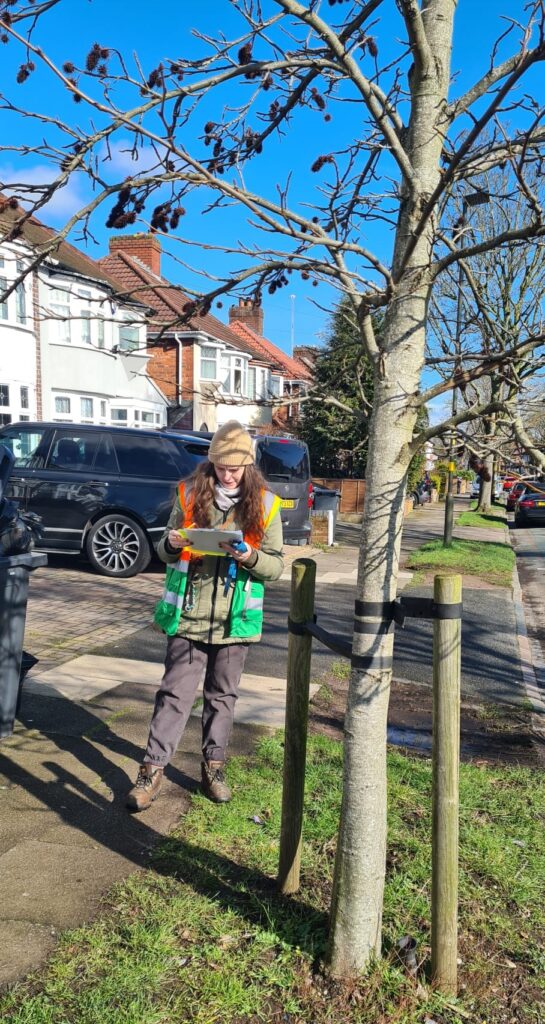
BTP want the neighbourhoods of their street trees to be able to take ownership of their maintenance and care, ensuring that they thrive. The aim of the survey is to inform tree planting through data driven citizen science, and the data collected is recorded using TreePlotter.
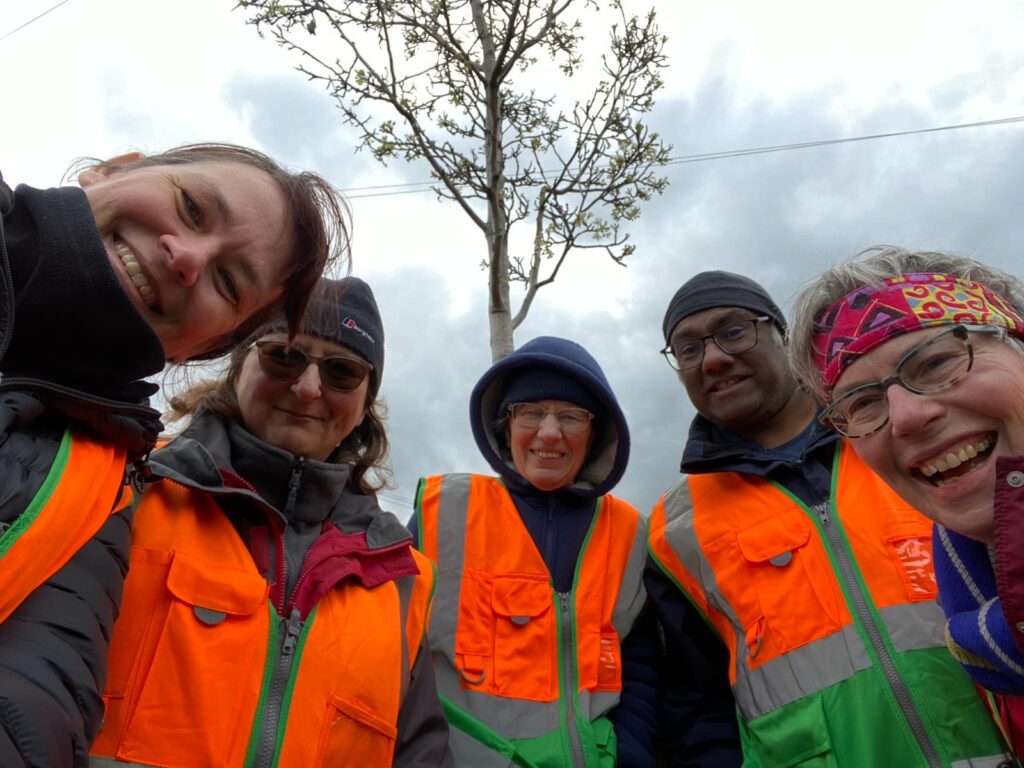
Birmingham TreePeople, for the first time and hopefully not the last, are hosting placement students, and from two different levels of education. Emily and Naya will be joining us for a while to help us survey street trees and crunch TreePlotter data!
University of Birmingham Geography student, Emily Kendall, joins us for her third-year BA student placement this month. She will be working with us until next May, and will spend time working on the urban Street Tree Survey With Nina Griffiths.
Emily says, “I chose this placement because I love being outside and getting involved in data collection. I will be participating in the street tree project, examining how tree outcomes, such as survival, growth, and condition, are related to other variables, including environmental and social factors, as well as management efforts. I look forward to analysing some of the TreePlotter data, learning more about trees, and understanding the work involved within BTP.”
We also have a PhD student from the same university, Naya Desai, who studies under Emma Ferranti in the Civil Engineering department.
She said, “I’m Naya, Emma’s PhD student! I’m currently working with the BTP data whereby I utilise data science approaches to understand patterns in the data. This includes, exploring the data through visualisations, unsupervised machine learning techniques such as k-means and I hope to build some prediction models using linear regression. My aim is to find interesting patterns in the data that can give us a better understanding of what trees are doing well and further see if we can make any useful predictions.”
This has propelled us forward with our research agenda concerning the street tree surveys, and makes us unique amongst tree warden and urban forest volunteer groups. We look forward to having these students learn and grow with BTP, and to the next one we host! If you are a student, or you know students that would like a placement, or you simply want to get involved in the street tree surveying (or volunteer in another area like the tree trails), just let us know!

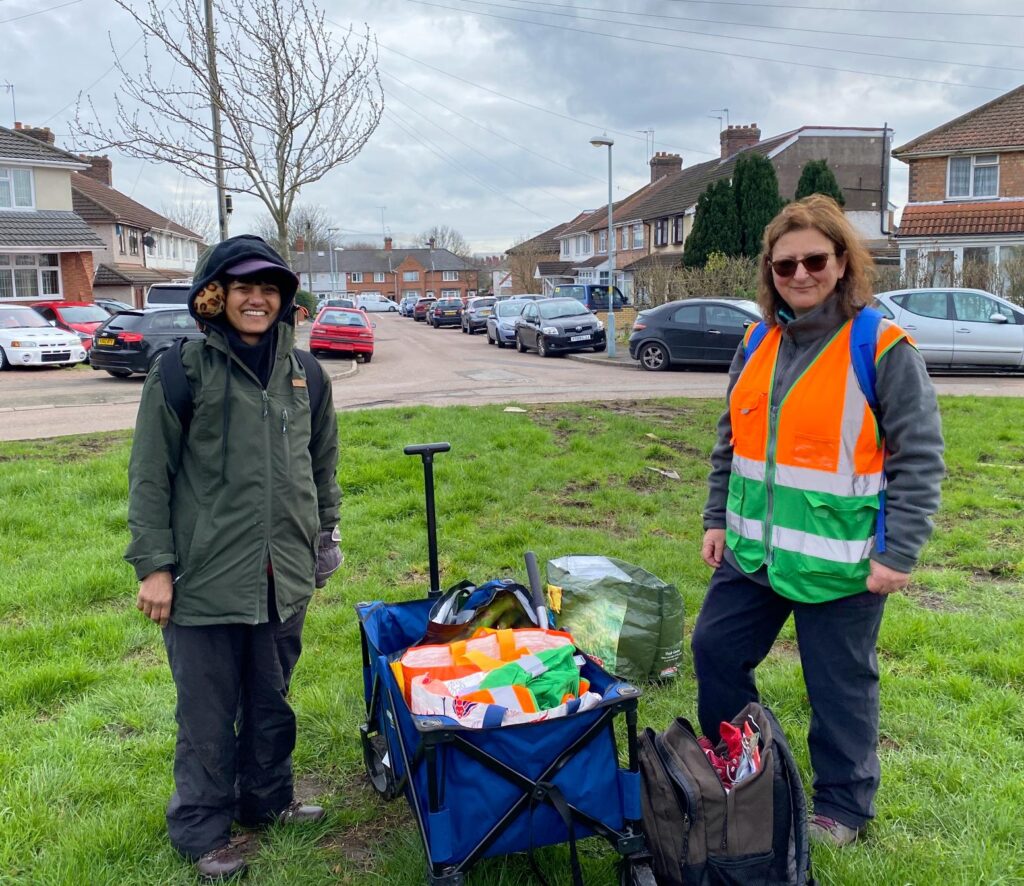
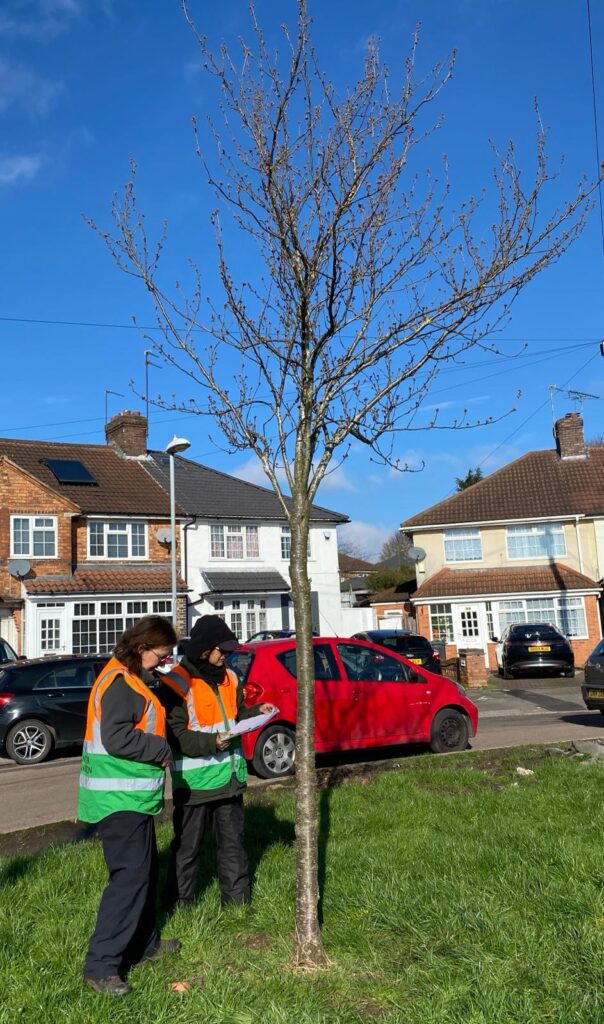
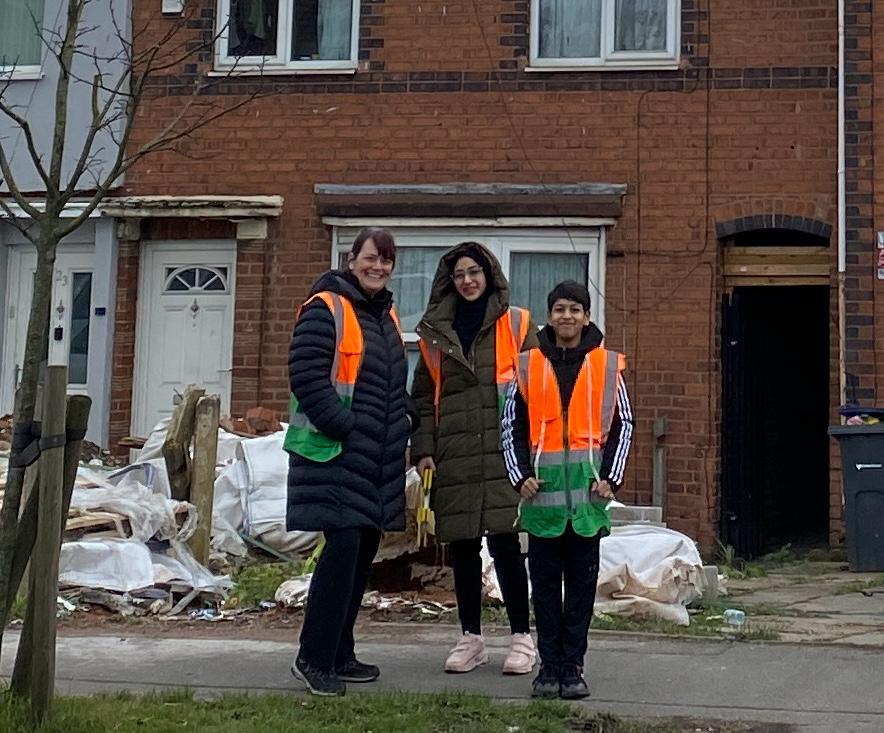
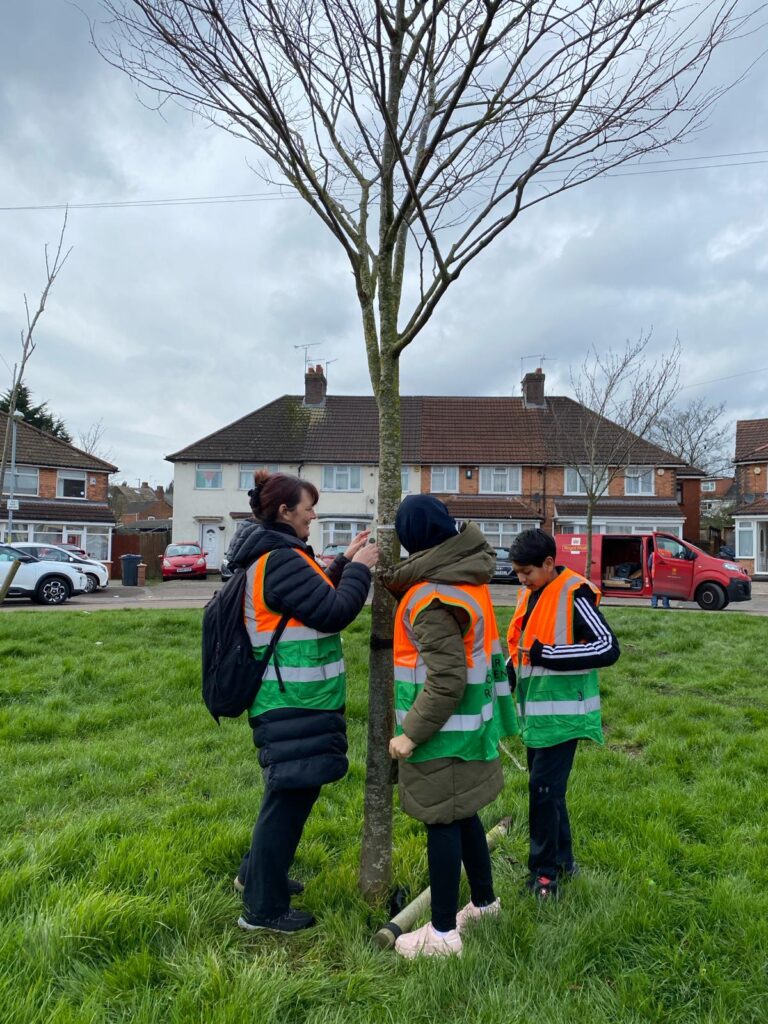
Over the weekend, Sunday 25th February, Nina Griffiths – BTP Trustee in charge of the Street Tree Survey – led the first street tree surveying training session, as well as some emergency tree care for some damaged trees.
The practical workshop in Bordesley Green followed an online introductory session to the theory of street trees and the surveying of them, before the superb group of old and new volunteers headed out to collect this year’s data.
New volunteers and enthusiasts included Meena, Jitesh Patel, Qurat al Ain, Abdul Mateen, and Ruth Tetlow (who recently applied and has now planted the first memorial tree with us, through our Treemembrance programme that Julianne Statham leads, in commemoration of Debt Justice).
As previously mentioned, two of the trees found were sick or damaged, so emergency tree care was administered by the heartwarming team. Even though it rather cold with February’s hint of frostiness, the fun was ever-present, and the dedicated team of urban forest volunteers managed to survey ten trees, and with the upcoming Sunday 3rd March session, there’ll be more to come!
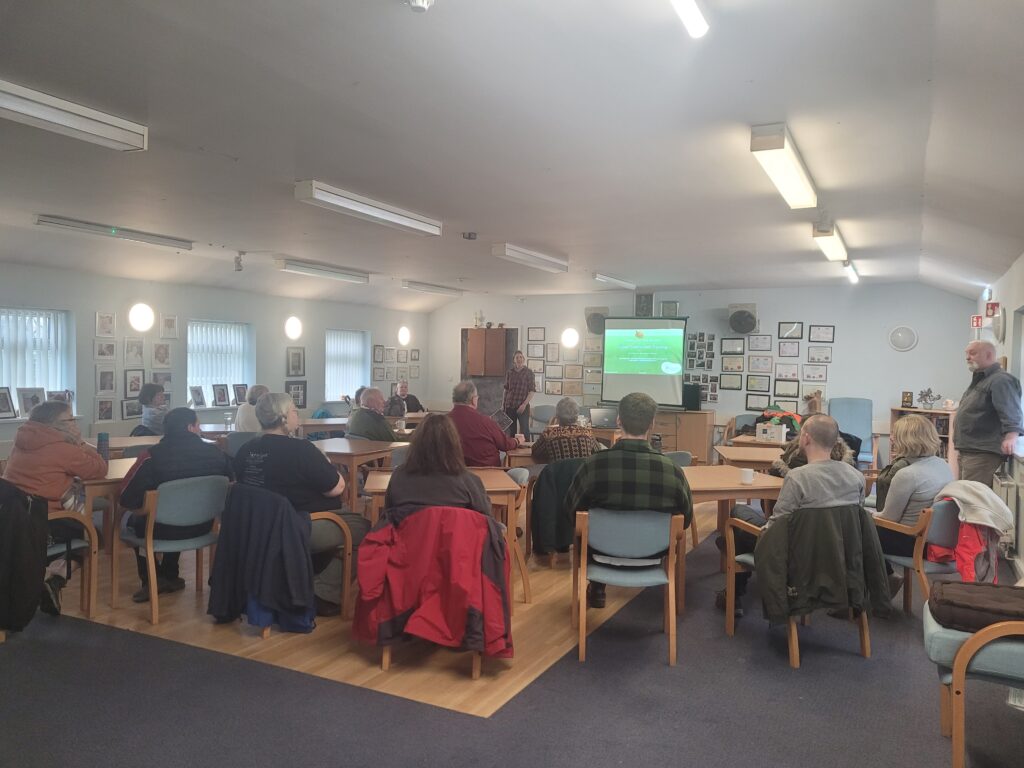
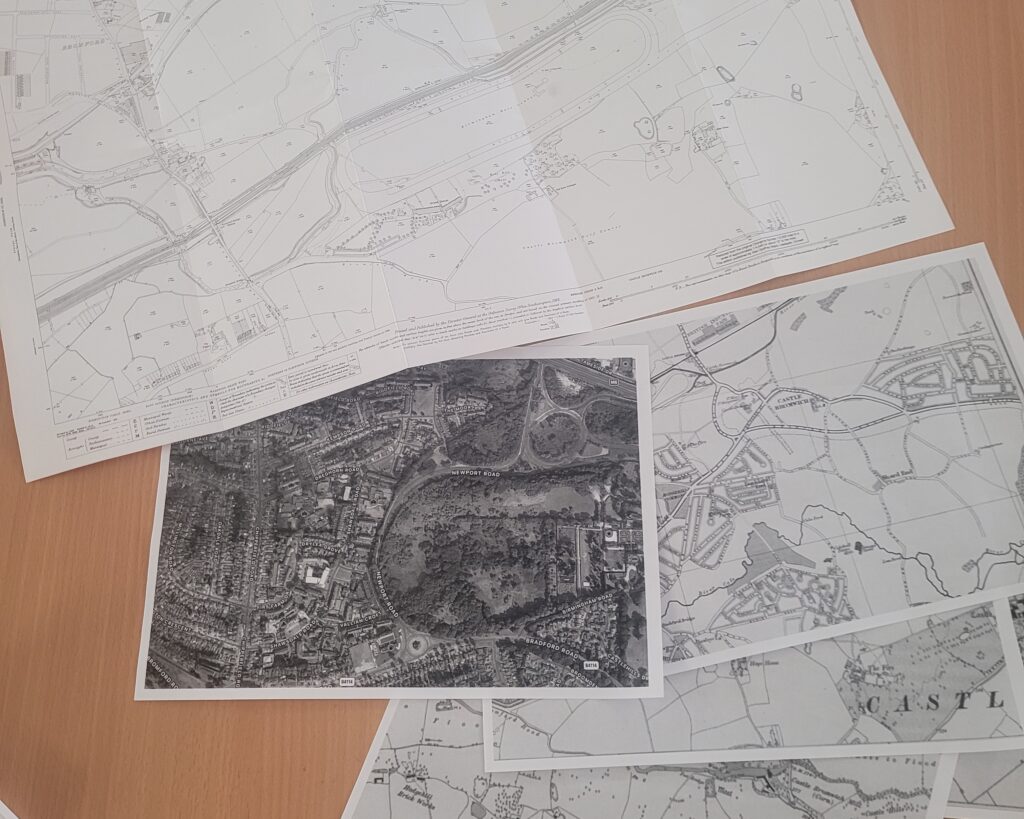
Cath Fletcher began the seminar by speaking to the group, of locals and TreePeople alike, about the backdrop the estate and its green space, one half still retaining relatively old trees like Bluebell Woods (where Genny Tunbridge took some members of the group after the session for a tree walk), but many were lost due to redevelopment over the years, and those that survive are over the border into Castle Bromwich. Some trees that were removed for works were replaced, but as the years unravel, the maps dating back to early 1900’s revealed the true losses of the trees.
Cath asked for introductions, and this proved that we had volunteers from all over Birmingham arrive today to talk about trees and orchards, showing the wider spread interest in nature.
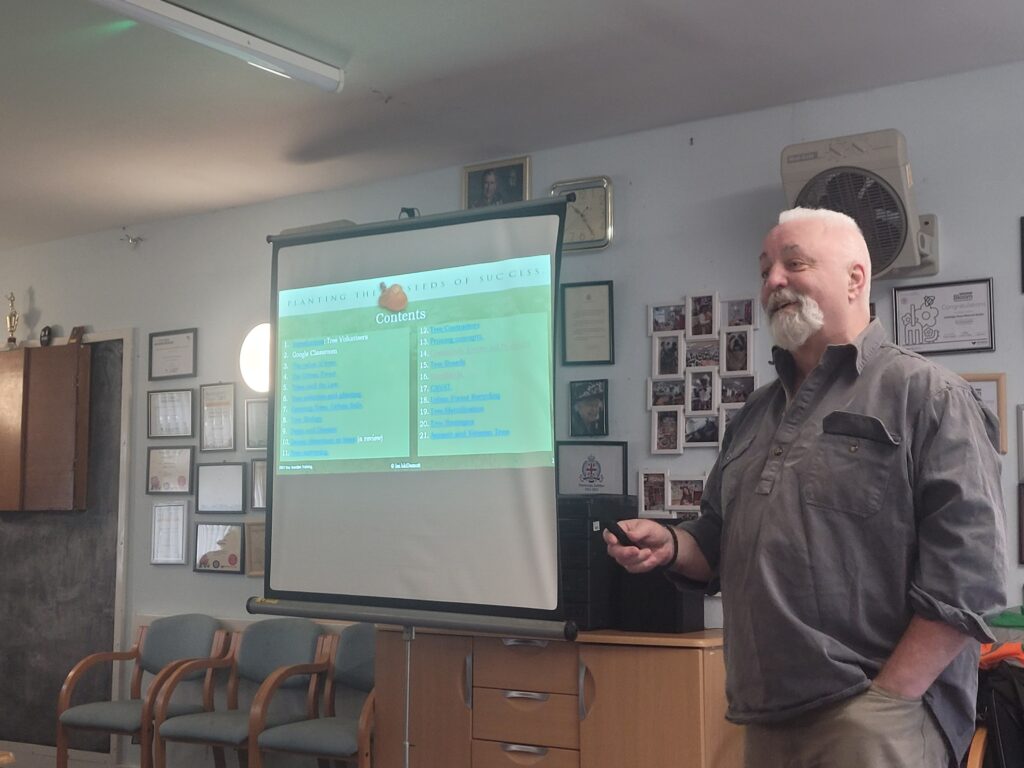
Ian McDermott followed on from Cath, by giving an Urban TreePeople© presentation about Trees in Our Towns and Cities, focusing on orchard trees in community orchards.
Planning is crucial for your orchard, as the harvesting must be decided – who, what, where, when, how, why? Who will pick them and who will eat them, what fruit species should be planted, where should the orchard be placed in the community, when does it begin and when does pruning take place, how will it be carried out, and WHY are you doing it? Why is crucial: the right tree, the right place, the right reason. Is it for fruit, juicing, greening, or the carbon ‘fruitprint’©? That’s a lot of questions to answer.
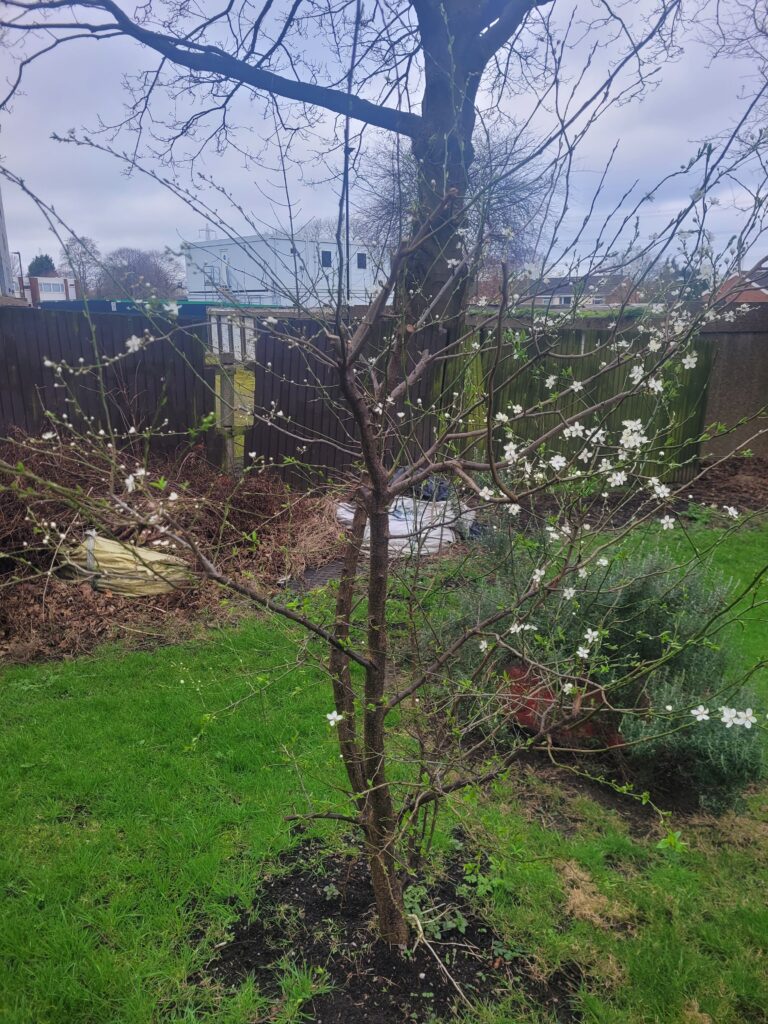
Mac used examples from his time with Walsall Council, planting a fenced and fruit-hedged orchard in the Arboretum, and an example of an edible garden seen in Phoenix, Arizona, focusing on the orchard’s design needing the ‘greatest amount of everything’. That means sunlight (like the street tree 5-faces rule), space, diversity, etc. An avenue of chestnuts was also installed in the former to encourage foraging. Horticulture considerations should always include encouraging pollinating insects, as many trees needs fertilising for the fruit to form.
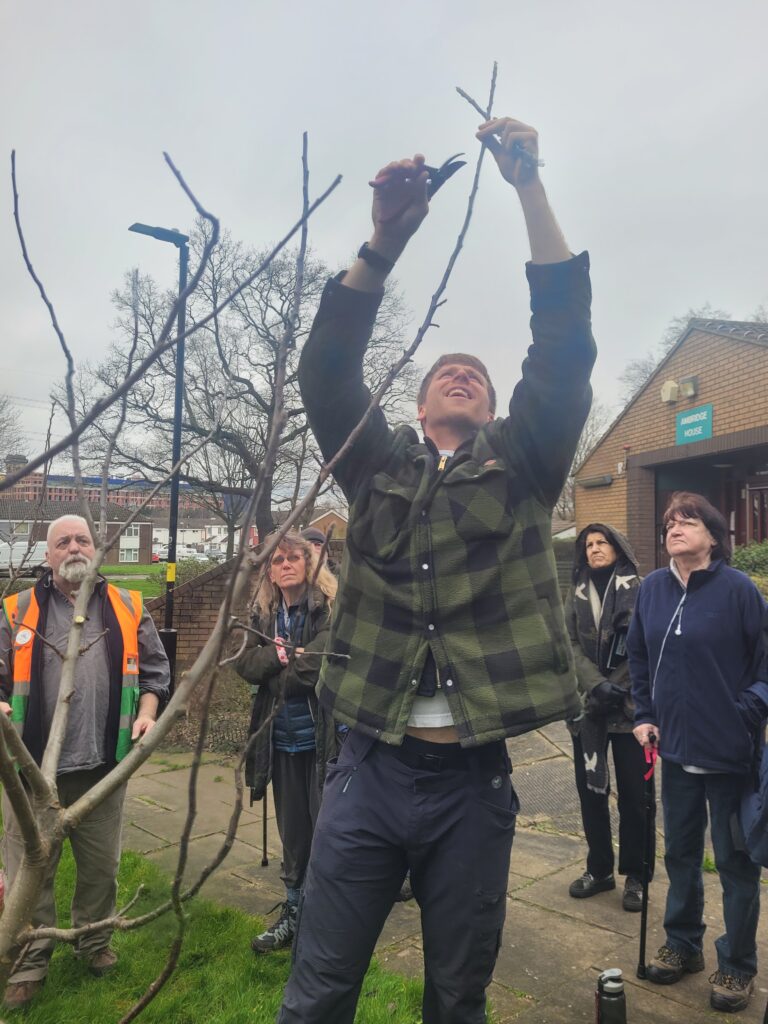
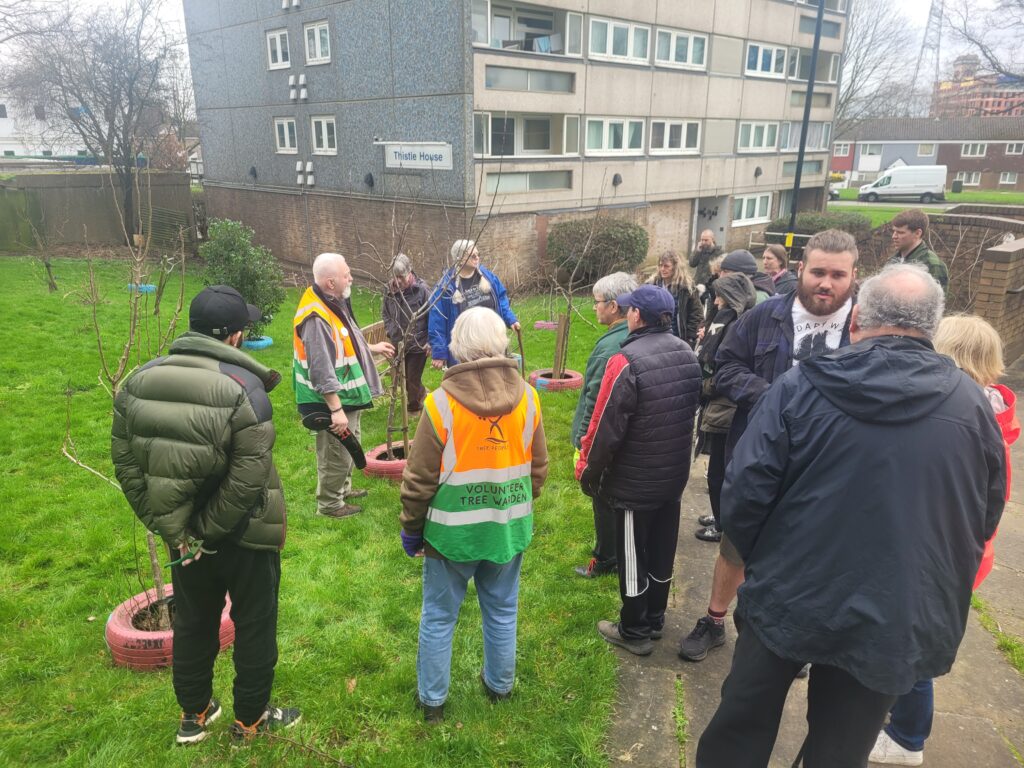
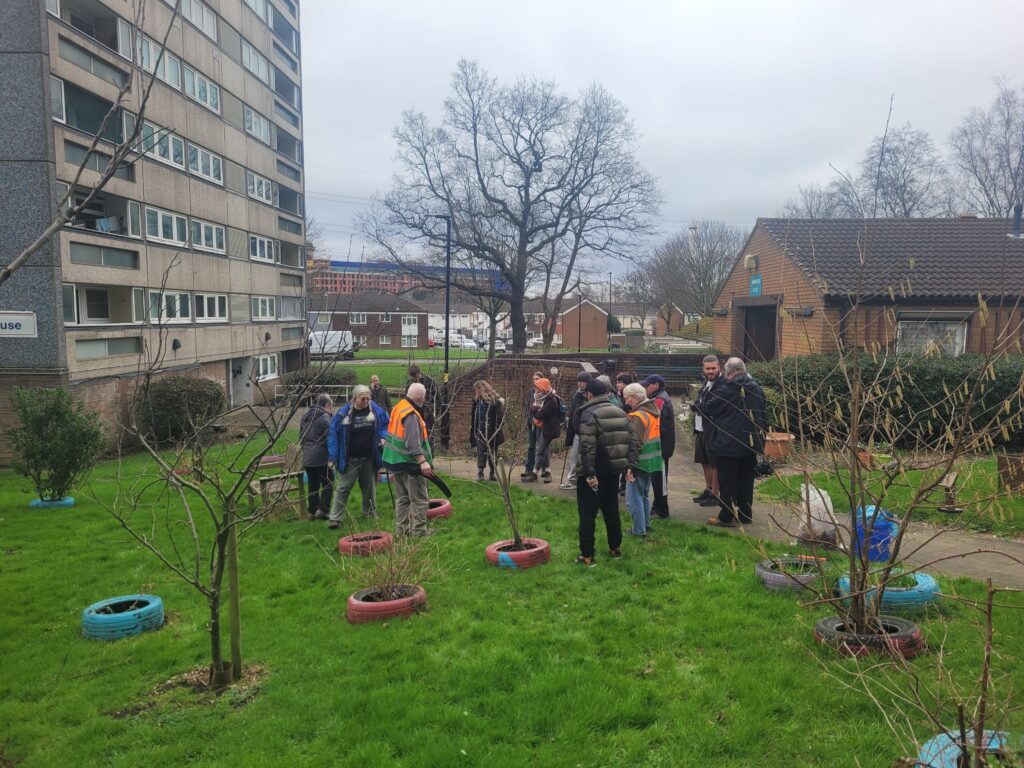
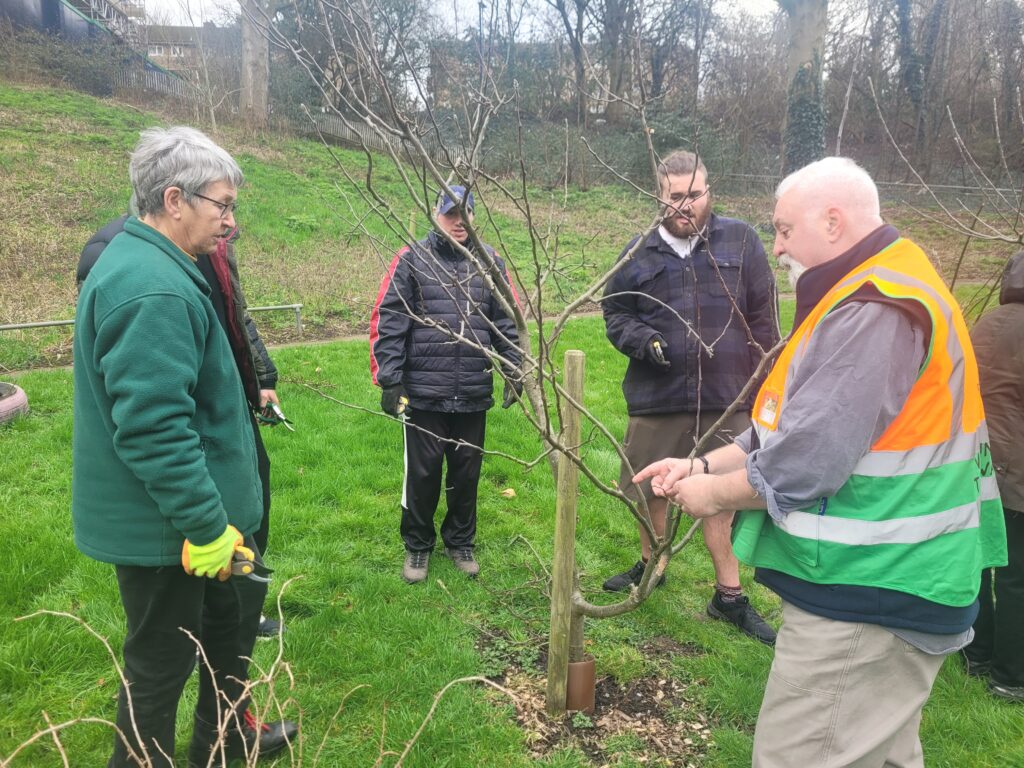
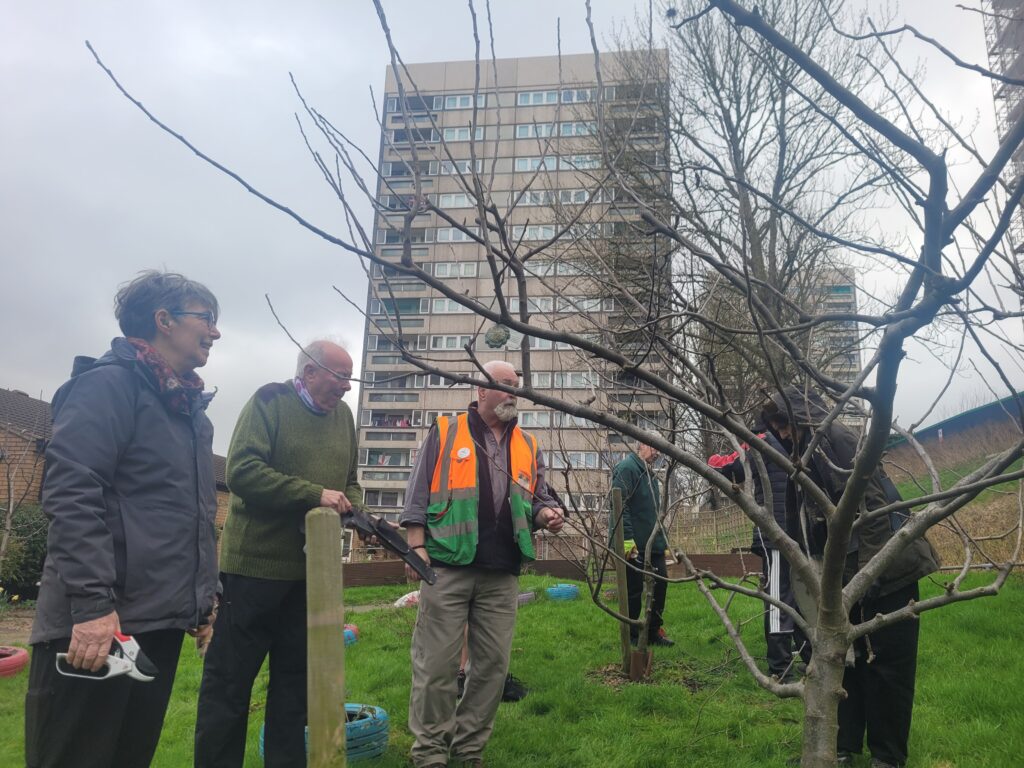
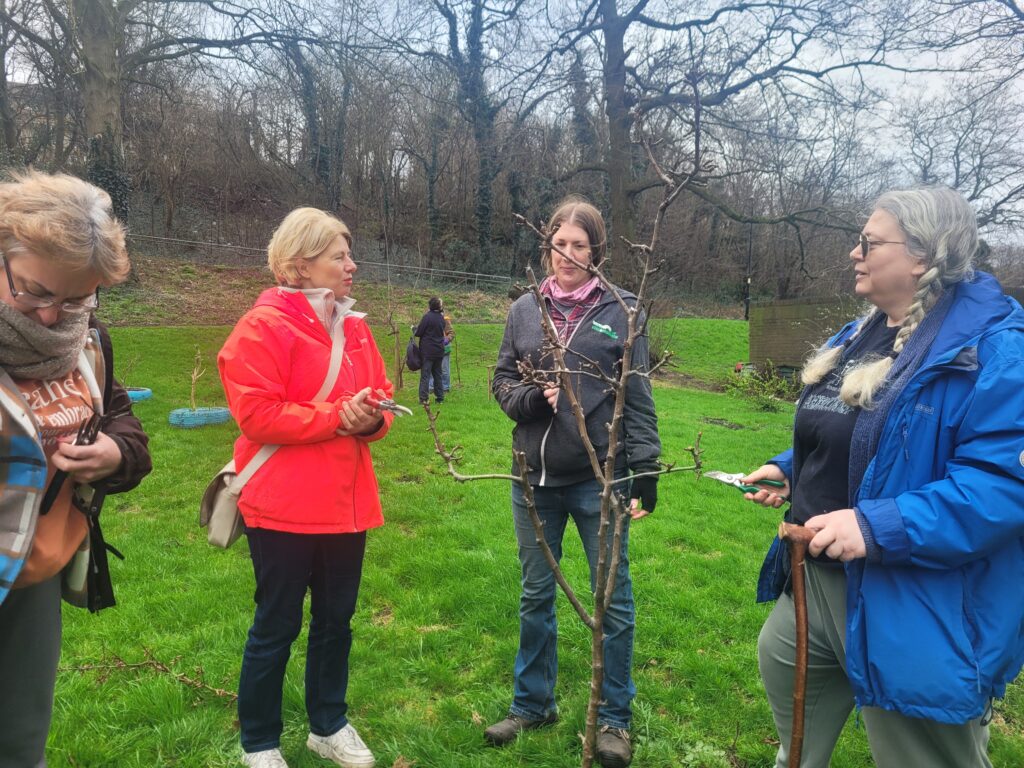
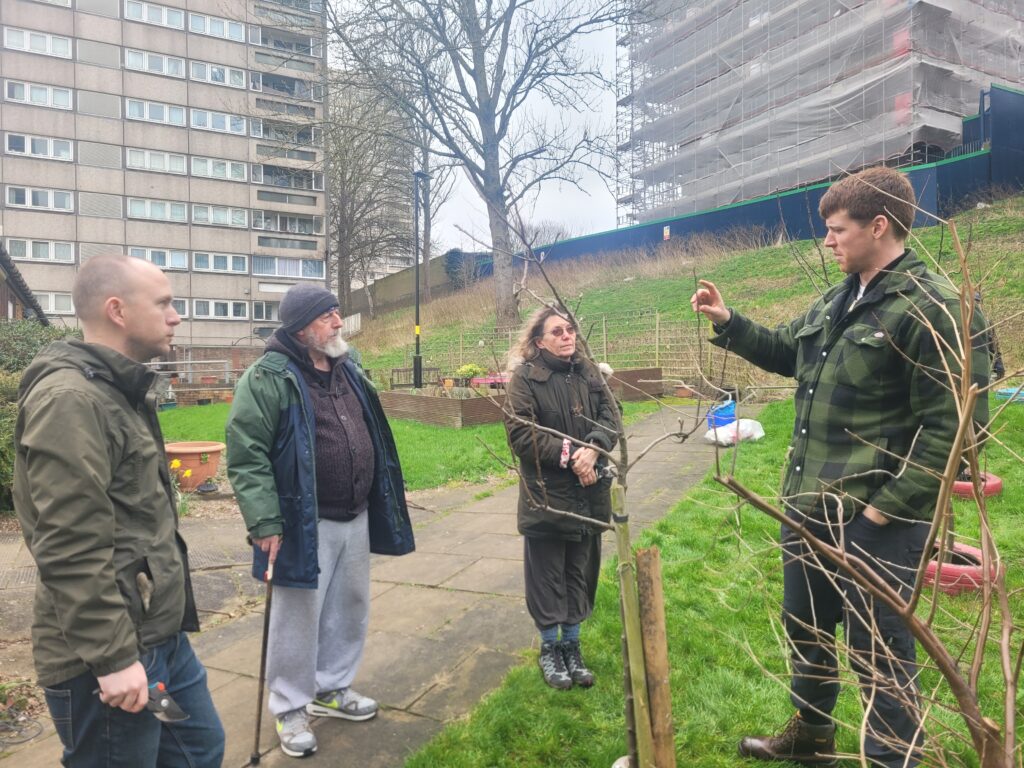
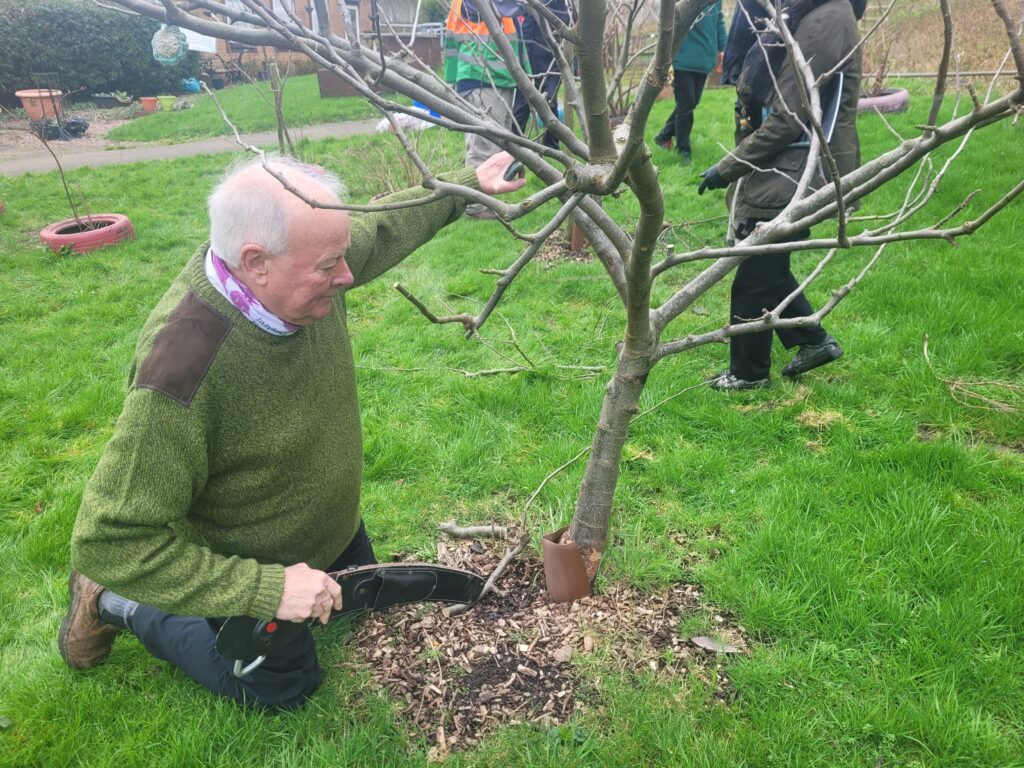
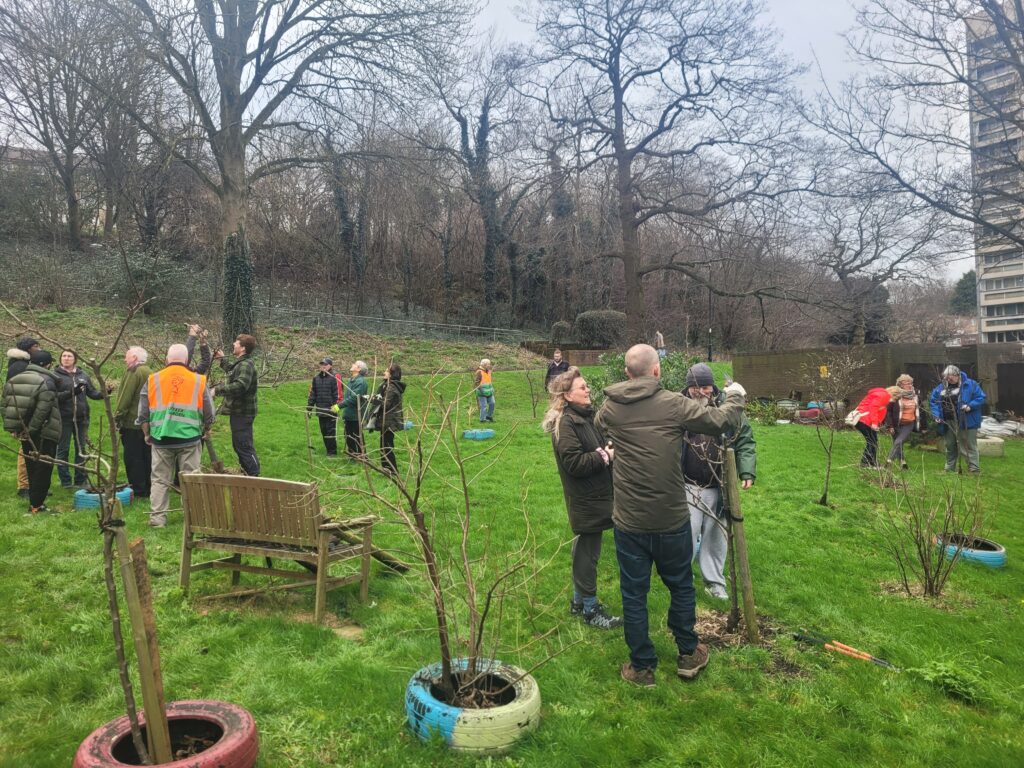
After the presentation, Mac led the practical pruning workshop on the orchard trees outside the community centre, where everyone split into groups to have a go at pruning. Our newest BTP Trustee, Lawrence Weston, also assisted the group by giving a Winter pruning demonstration, which was a terrific way to introduce himself and the skills he brings to the TreePeople.
The sense of community that orchards can bring, no matter what purpose, is ever-present and important to remember. We wanted to thank Cath and Open Door for hosting this session with us today, and all those who attended (Including FOHHC, FOPP, FOCHP); we look forward to future collaborations!
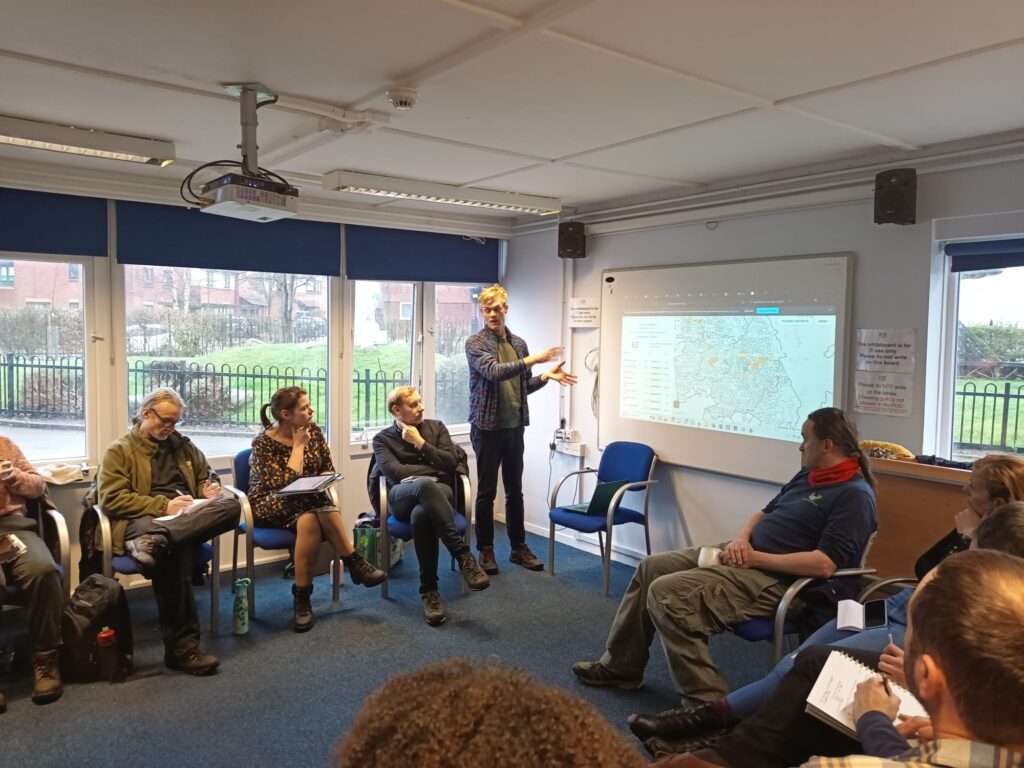
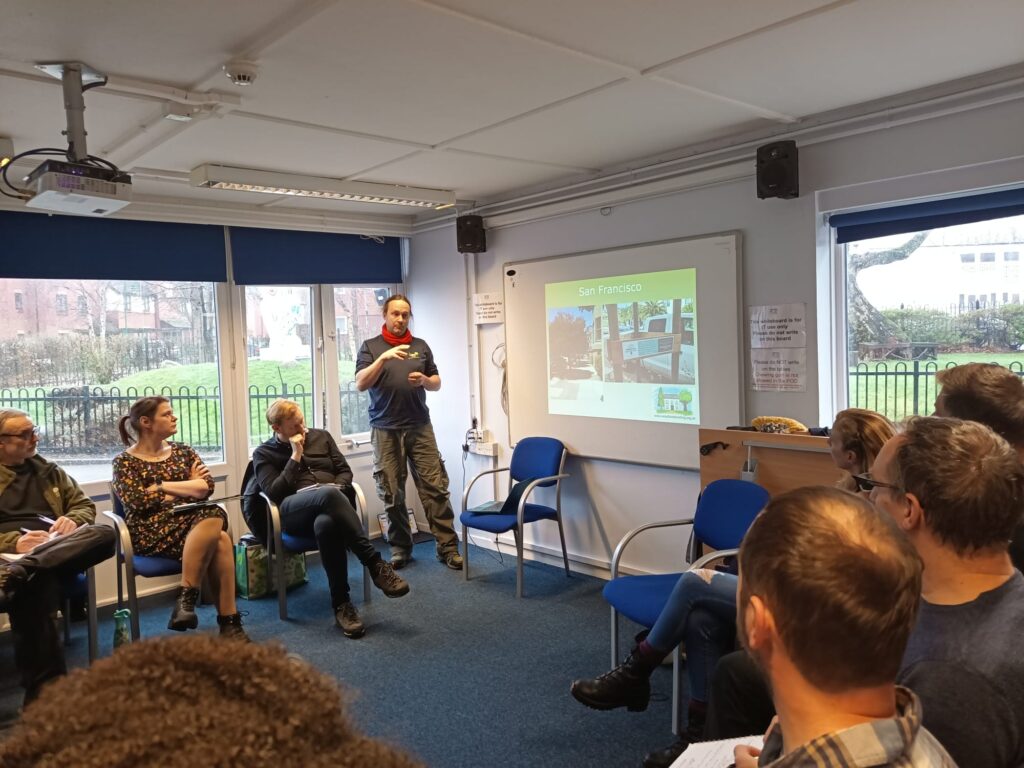
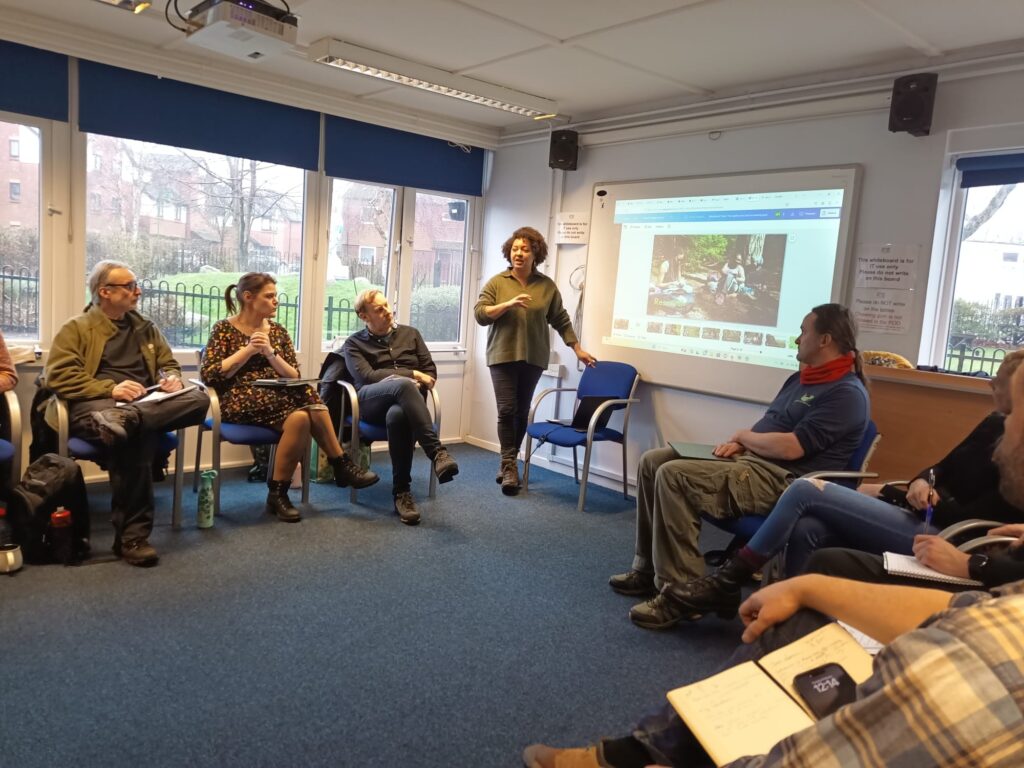
After working with The Woodland Trust previously on their Tree Equity Score, BTP were invited to attend and present at their internal Tree Equity seminar 8th February, to display the fantastic work that was done last year for National Tree Week 2023. We gathered at Nechells POD, one of our partners for last year’s planting, in one of the very wards we went onto talk about.
Through our Urban Forest Masterplan, and the Urban Forest Accelerator programme, increasing canopy cover in the priority wards has been equity focused. Tree Equity means that everyone has equal access to trees, so that’s why we planted in our chosen areas during this planting season, to raise the tree equity in those areas.
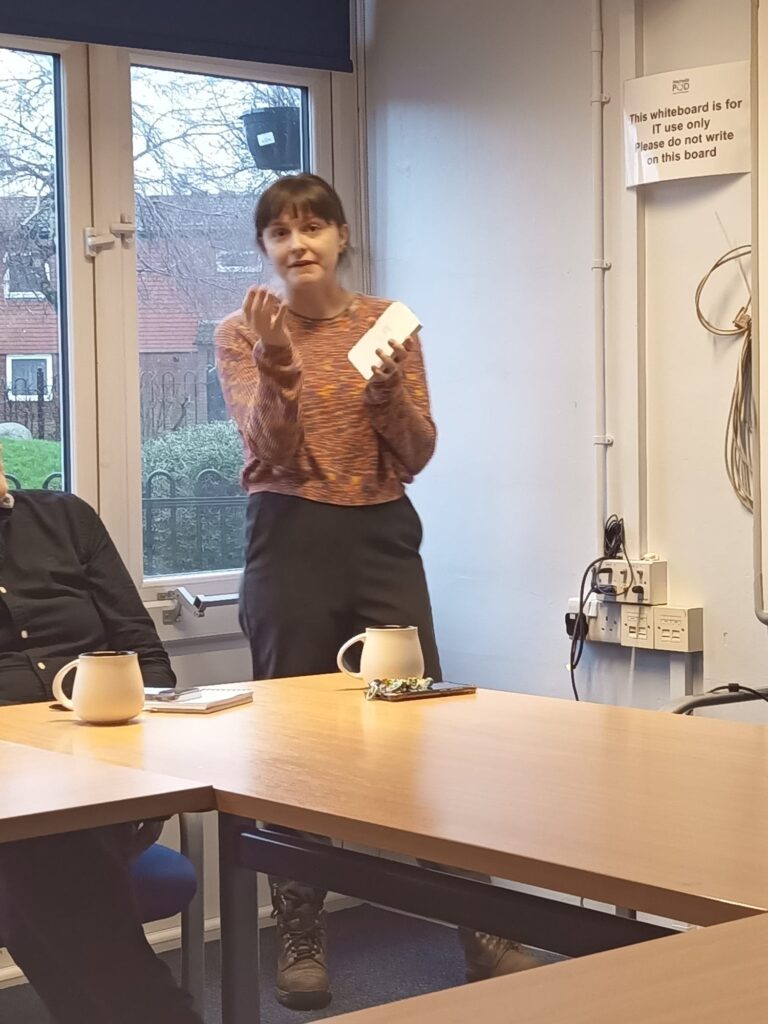
Charlotte McDermott, BTP Communications Officer, and Ian McDermott, BTP Trainer and Arboriculturalist, attended the morning seminar, where Charley kicked off the day with an interactive and humorous presentation about the successes and struggles of Tree Week. She also planned an extensive walk around Nechells, to show The Woodland Trust team some of the nearby tree planting locations and talk about them, that was only mildly inconvenienced by the wonderful British weather and Google Maps…
Other presenters included Russell Horsey, Director and Urban Forestry Consultant for Goetre Villa Ltd, who talked about his inspiring and fruitful community engagement work with BristolTrees, and Beth Collier, Founder of Wild in the City, a non-profit that supports people of colour’s well-being through connecting with nature. Both delivered absorbing talks about their valuable, in-depth, public work.
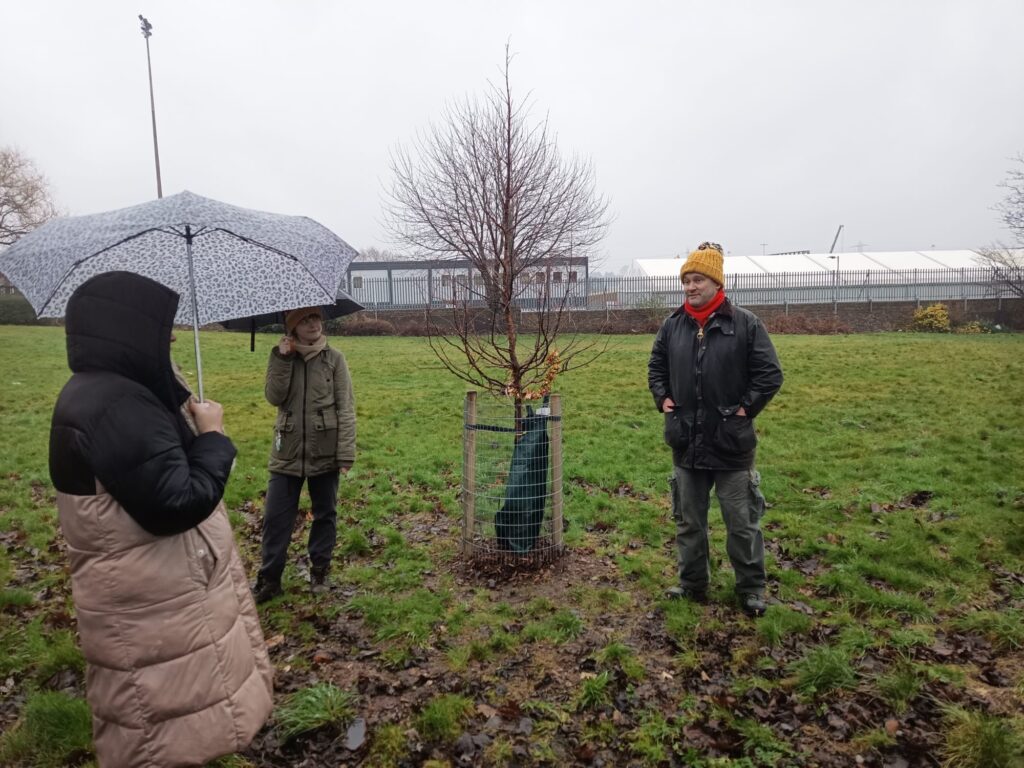
We wanted to warmly thank Woodland Trust for being so welcoming, and inviting us to the interesting seminar, highlighting the importance, value, and practicalities of tree equity. Also Nechells POD for hosting us, and continuing our good relationship from the tree planting last year.

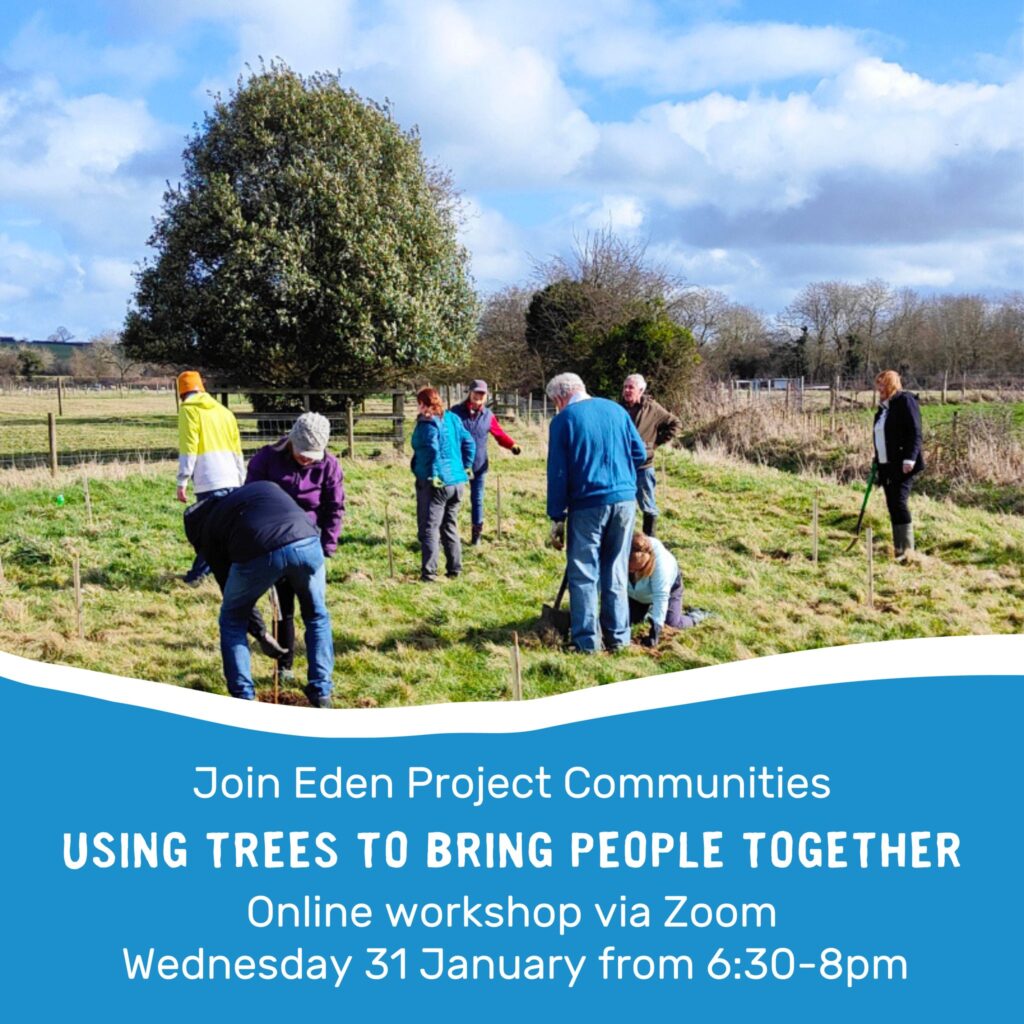
Tonia Clark, Trustee and BTP Chair, was delighted to be invited again on 31st January, to talk about organising tree activities, as part of Eden Project Communities’ Winter Warmer programme.
She talked about how to organise a winter tree walk, that you don’t need to have a park nearby, and you can observe street trees, trees in front gardens, and even hedges. The group shared ideas for activities with native trees, including art like Andrew Goldsworthy, and the Ogham tree alphabet.
There was a lot of sharing in the break-out rooms, and participants agreed to run tree activities which we look forward to hearing all about. Thank you Eden Project Communities for the invite and we look forward to the next online event!
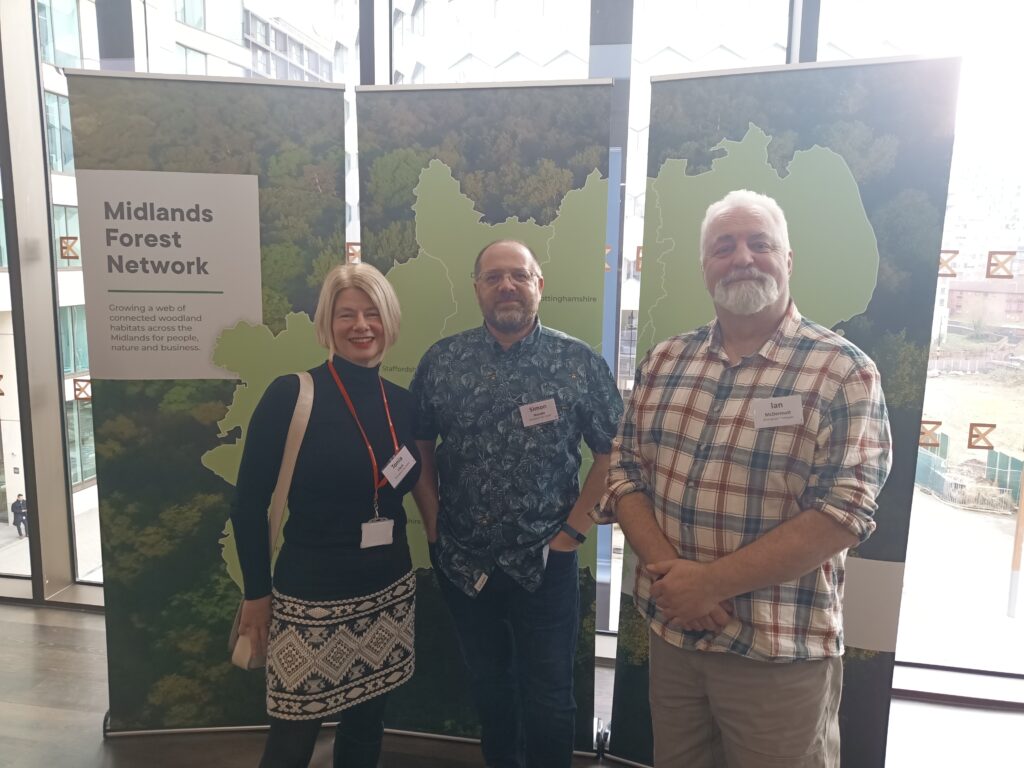
Four years ago, we submitted a proposal paper to the West Midlands Combined Authority, suggesting a “Midlands Forest” project would be a fantastic idea to rival the great work on the Northern Forest.
Wednesday 7th February, three Trustees – Tonia Clark, Simon Needle, and Ian McDermott – were invited to attend the formal launch of the Midlands Forest Network at The Exchange in Birmingham. A packed room heard from various VIP’s from the Woodland Trust, Midlands Engine, DEFRA, and others that the two-year formal scoping phase of this project is now live.
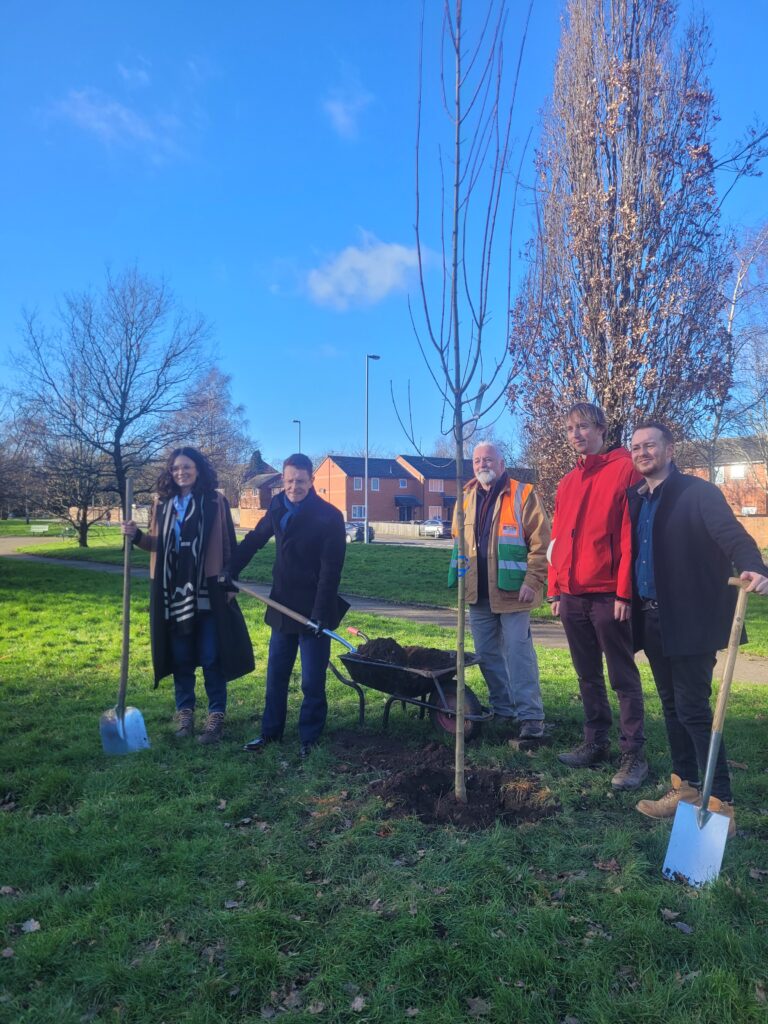
We gathered in Loxton Park, 26th January 2024, to plant three trees to celebrate the success of the iTree Eco Survey of 2023. The survey was commissioned by West Midlands Combined Authority and carried out in partnership between BTP, Treeconomics, Barton Hyett, and Forest Research. The Mayor of West Midlands, Andy Street, joined us to plant the tree that the wonderful Parks Team from Birmingham City Council prepared, taking part in this momentous occasion with us.
The survey collected data from 1,000 sample plots across Birmingham, Solihul, and Coventry, the former being BTP’s focus. Thanks to our fantastic and growing network of urban forest volunteers, like Krish Kumar who came along that morning after being a staple volunteer during the surveying, the survey was completed in an unbelievable two weeks! We will be posting more about the results very soon.
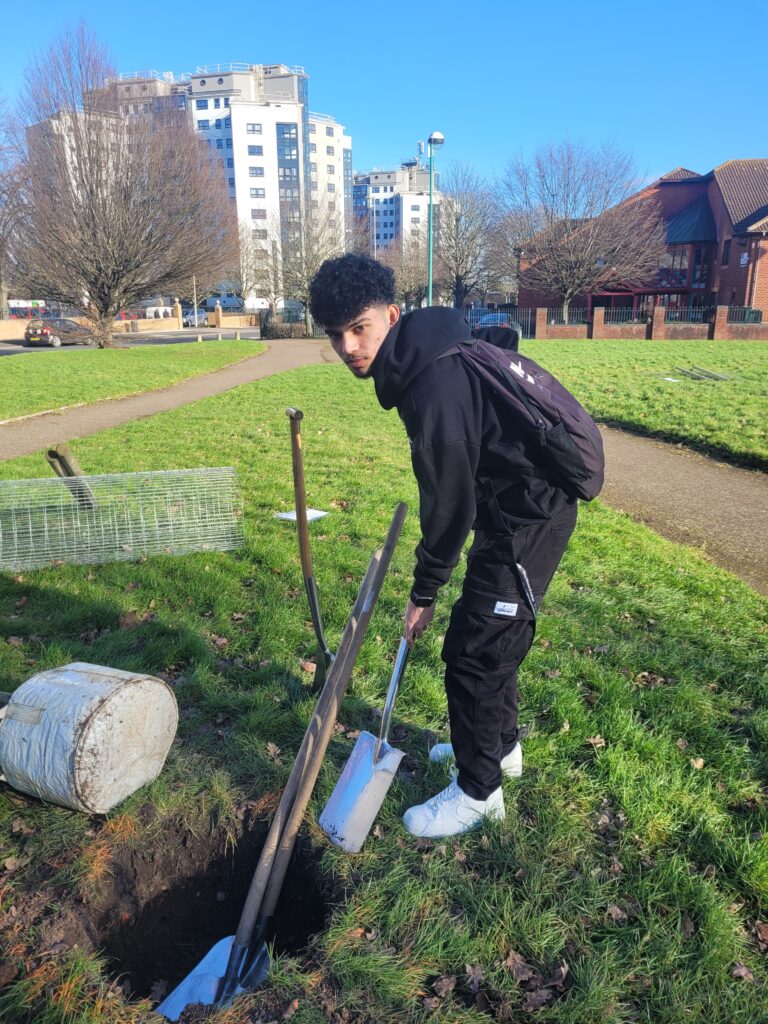
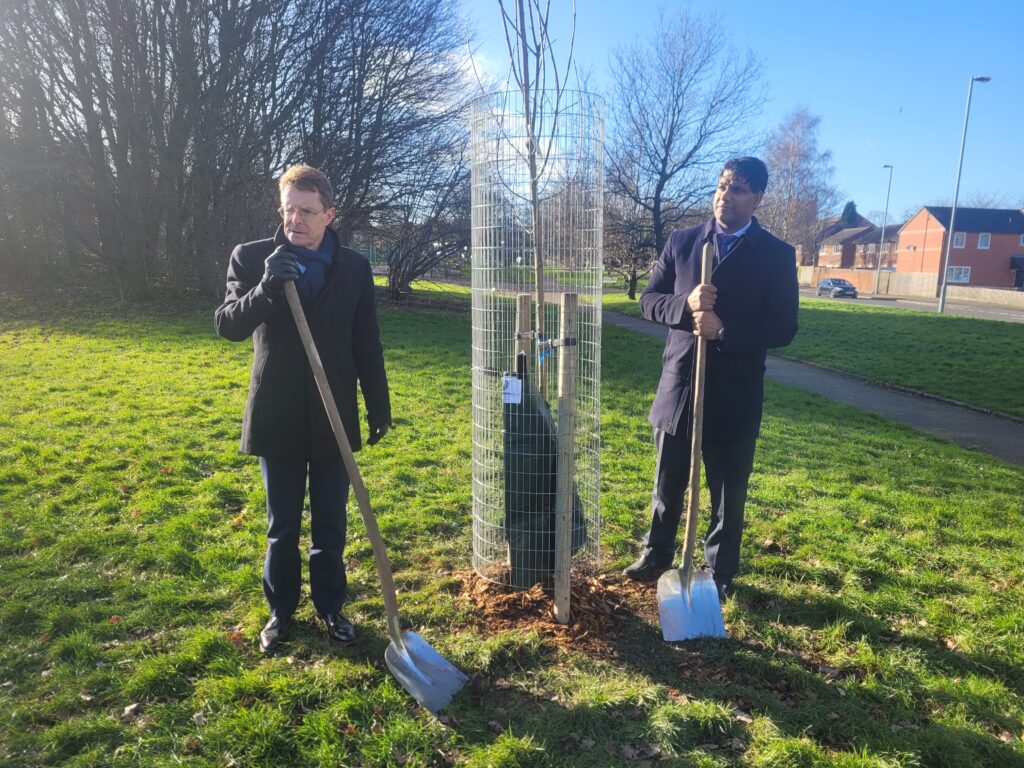
Representatives from the Mayor’s Office, WMCA, Treeconomics, Amazon, Birmingham City Council (including the Parks Team, who have helped us throughout our planting) were all in attendance for this wonderful event. The Mayor learned how to plant a tree first-hand! The Cabinet Member for the Environment and Councillor for Bromford and Hodge Hill, Majid Mahmood, arrived after afternoon prayers to show his advocacy for the tree planting and iTree initiatives, but he is already a planting-pro after helping BTP throughout Tree Week 2023.
We have been humbled and truly welcome all the warm support and assistance we have received with these citizen science projects. Placing community and its people at the forefront of the programmes, what we have achieved together as a result is something incredible and worthy of praise. Thank you to everyone involved this day, and every other day, that made the iTree Eco Survey a great experience.
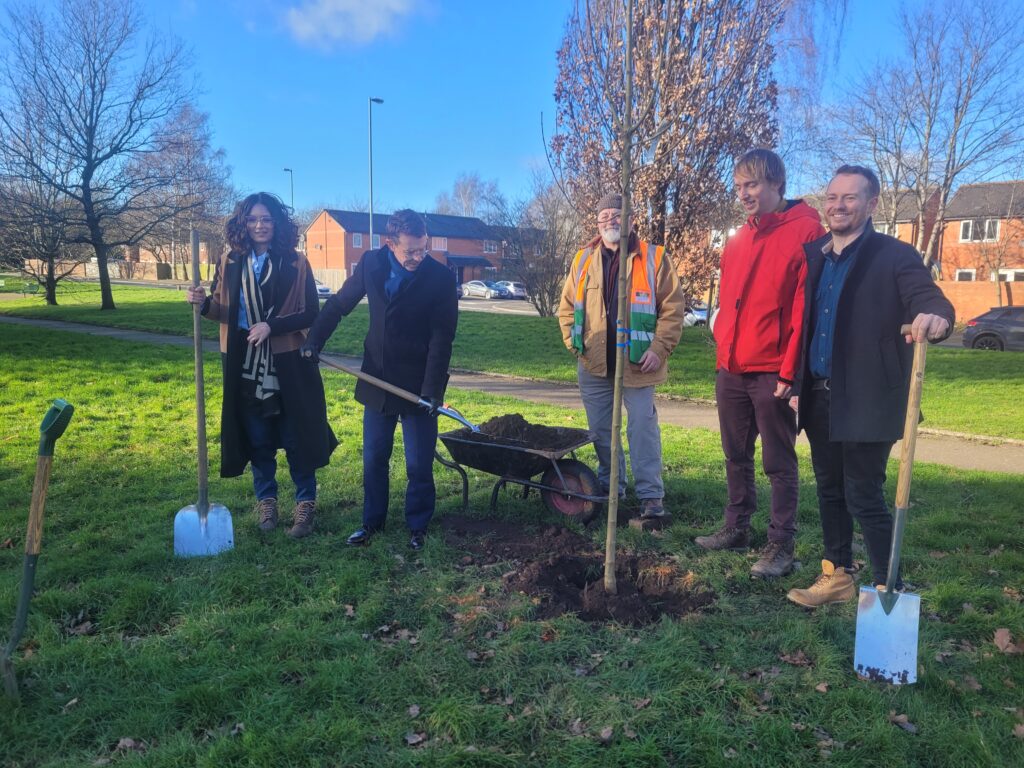
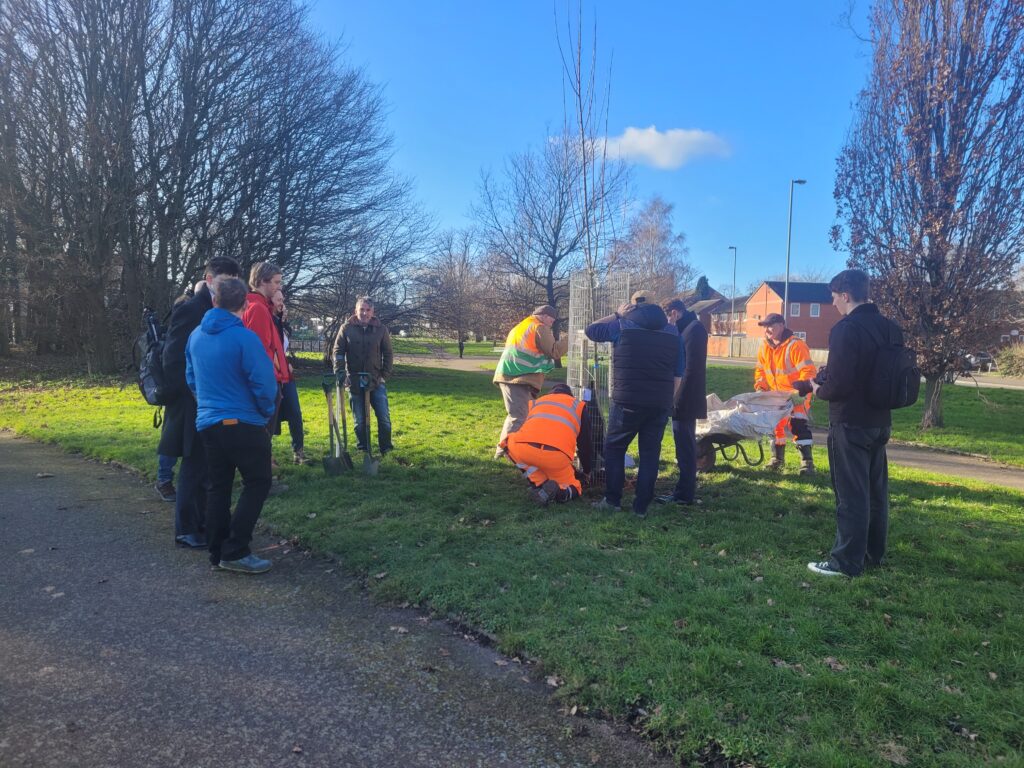
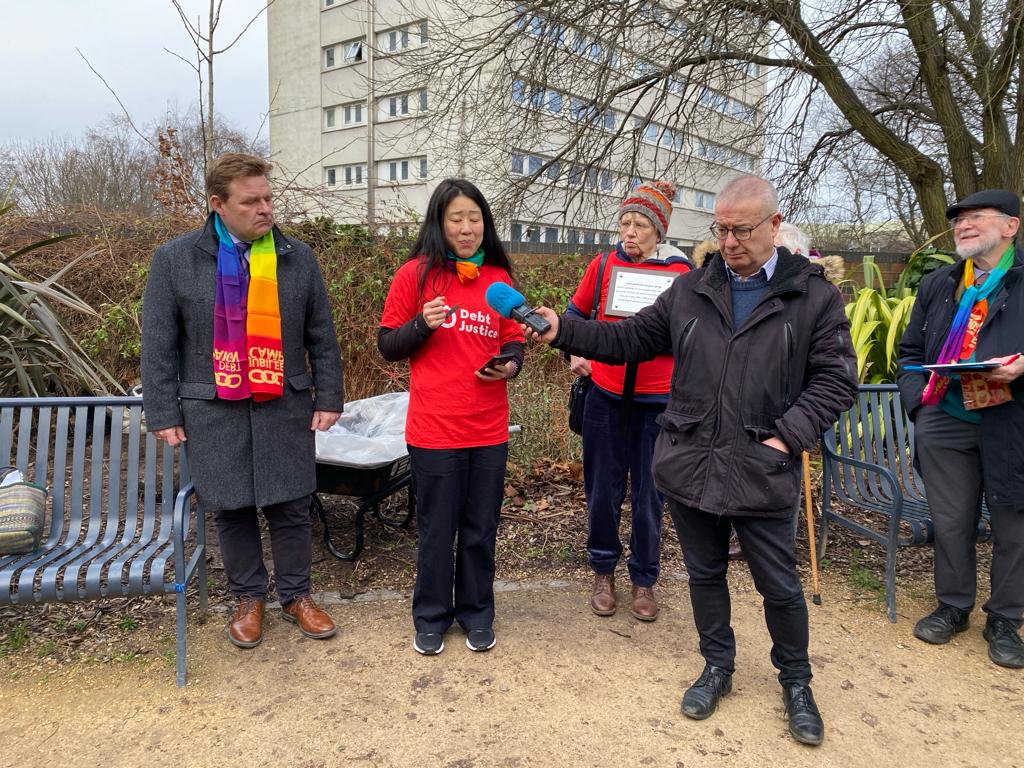
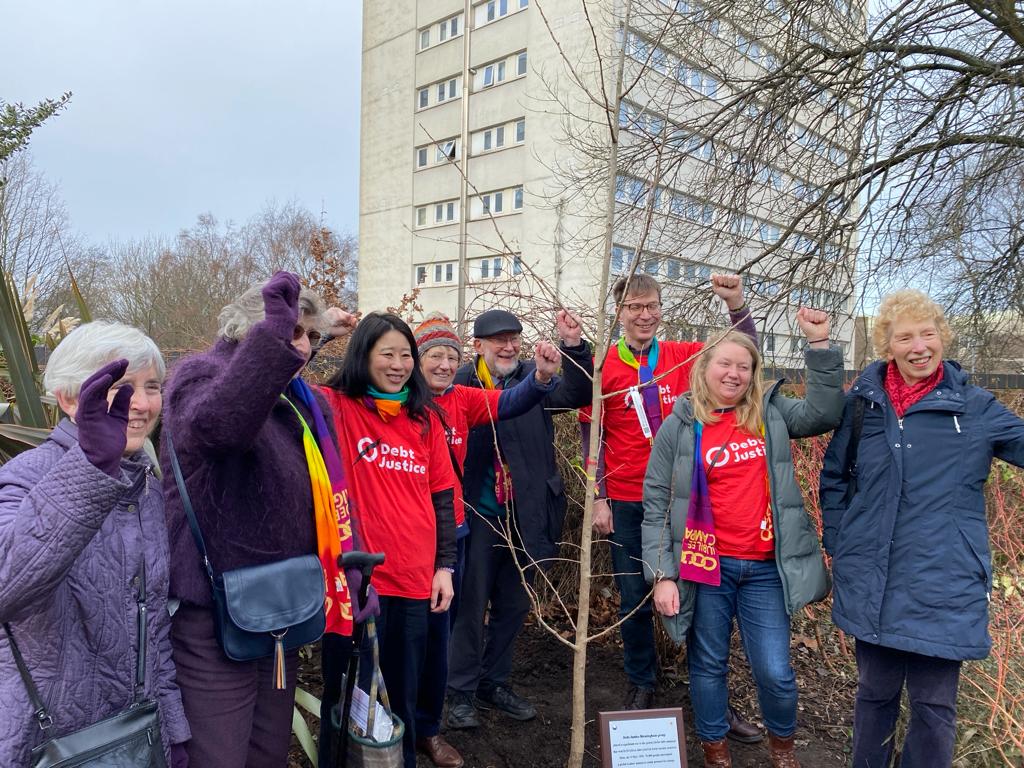
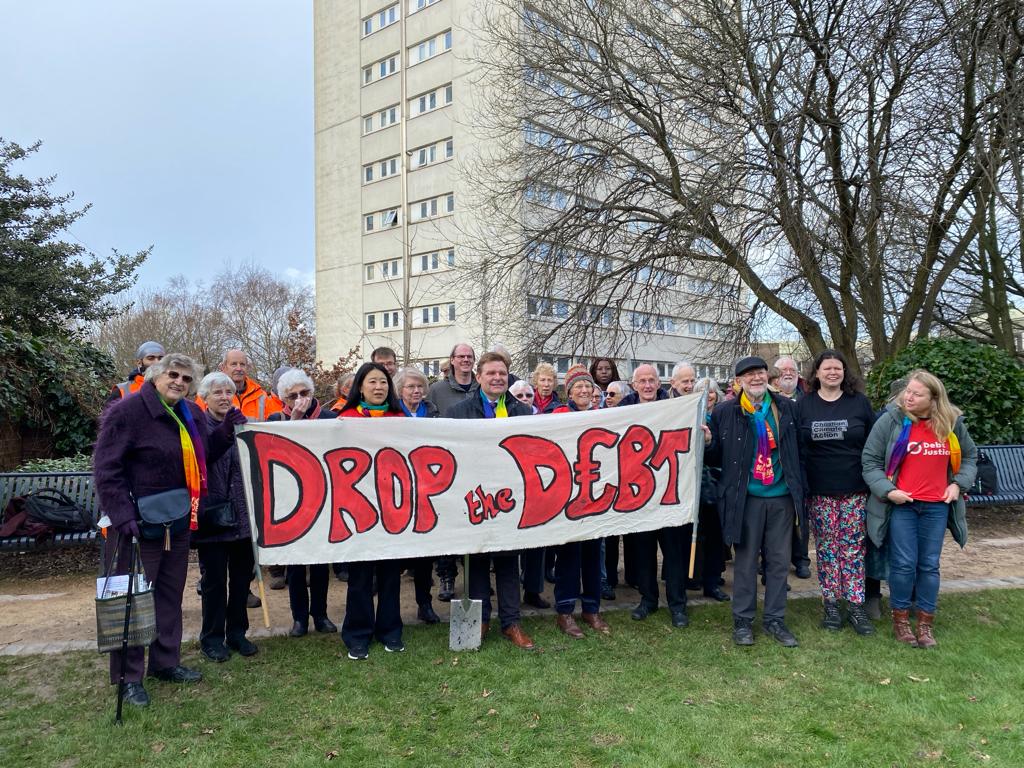
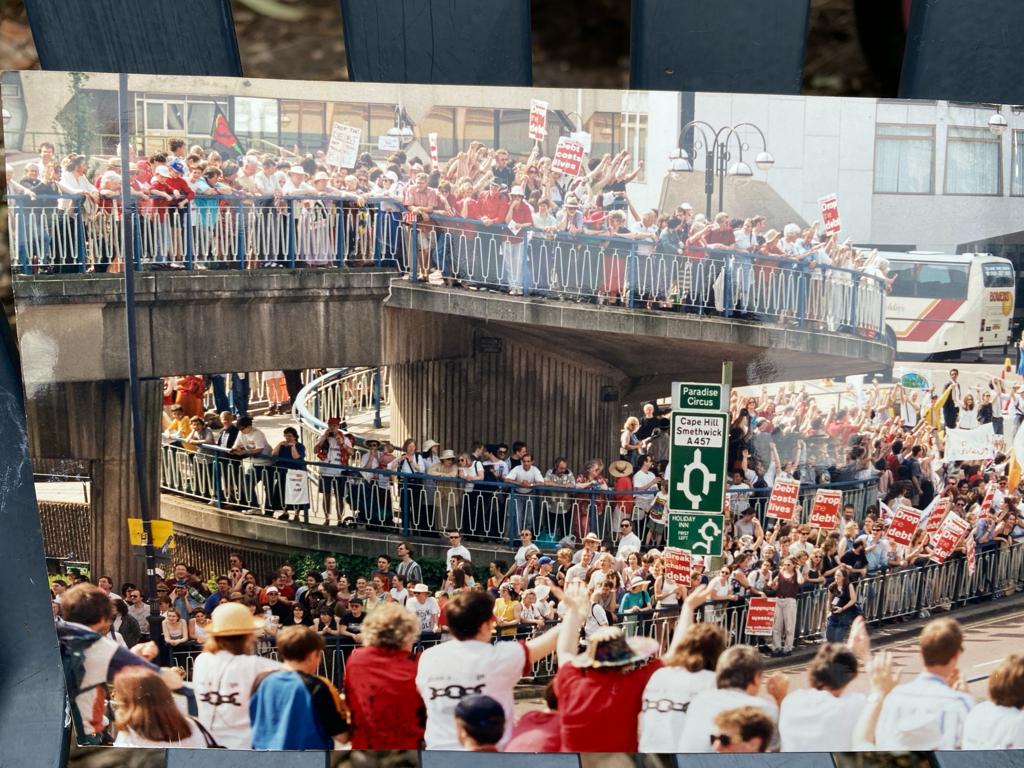
A special Gingko Biloba tree was planted today, in the City Centre Gardens, to celebrate the 11-mile-long human chain that circled Birmingham on 16th May 1998, organised by the Debt Justice Coalition. 70,000 people changed the world, as $130 billion of debt was cancelled because of this mass protest, with buses bringing campaigners from Europe.
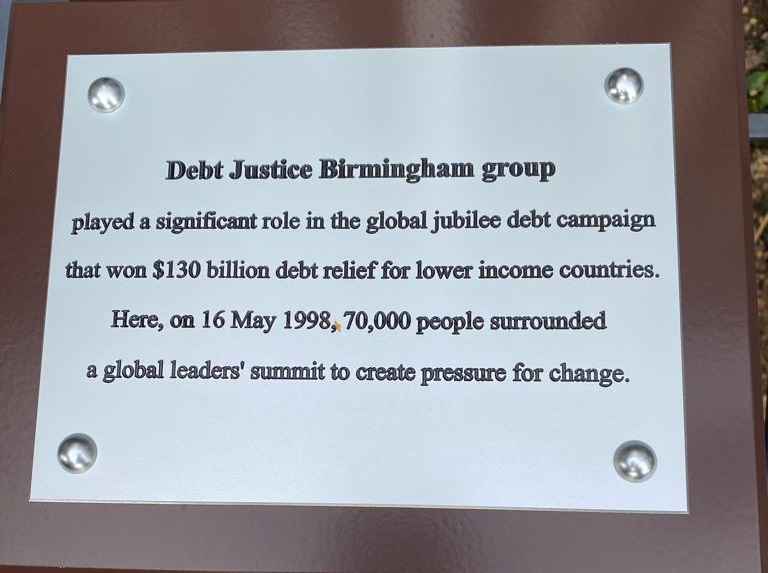
The commemorative plaque* reads: “Debt Justice Birmingham group played a significant role in the golden jubilee debt campaign that won $130 billion debt relief for lower income countries. Here, on 16 May 1998, 70,000 people surrounded a global leaders’ summit to create pressure for change.”
*Please note, we no longer offer the option of commemorative plaques or tree tags with Treemembrance plantings
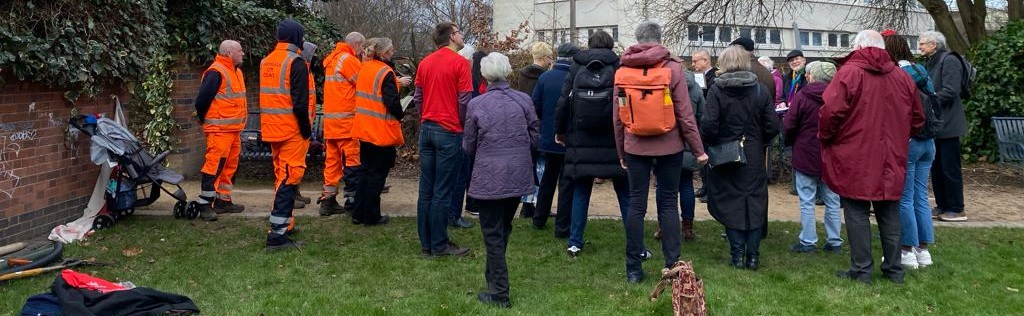
Ruth (original member) and Richard Tetlow, part of the organisation, liaised with Birmingham TreePeople to plant a commemorative tree under the Treemembrance programme, to honour that day and the greatness that was achieved. Rachel Stevens, a 90-year-old campaigner was in attendance, along with Matt Gardener of Debt Justice current staff, John Nightingale who raised £2,000 for the campaign and the current Birmingham branch Chair, David Nicholls also of Debt Justice and a Smethwick Labour Councillor, Izzy Knowles local Councillor for Moseley, John Cotton (who participated in 1998) of Birmingham City Council who planted the tree, Heidi Chow the current Head of the Debt Justice Campaign, and many others up towards 50 people in attendance!
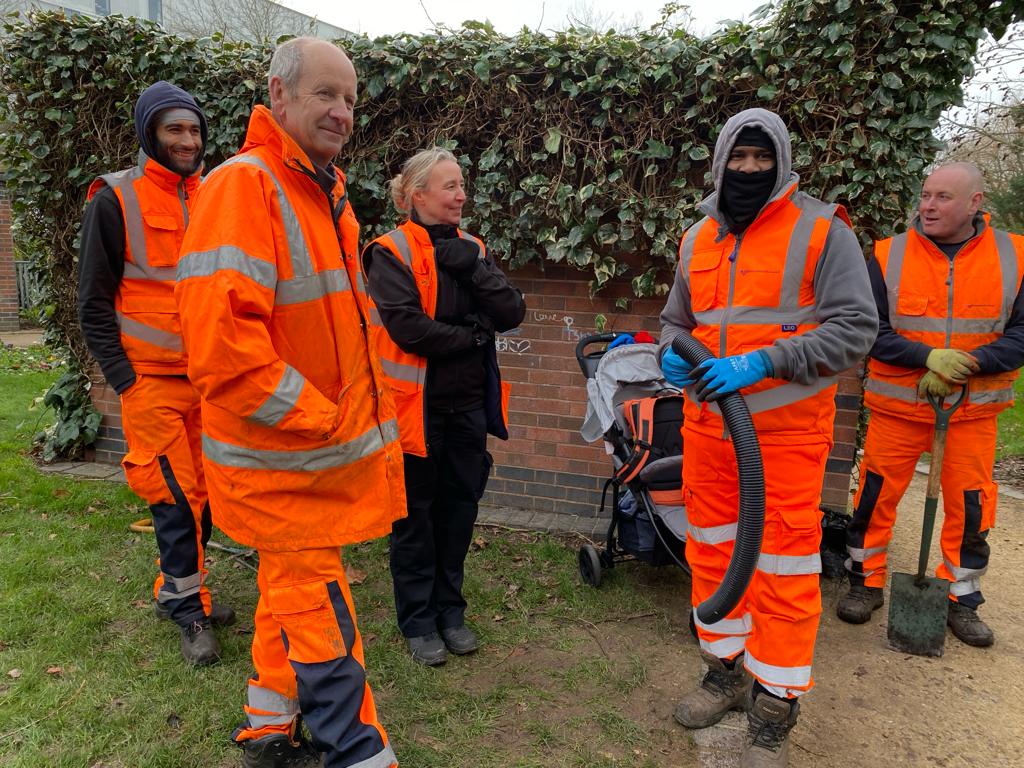
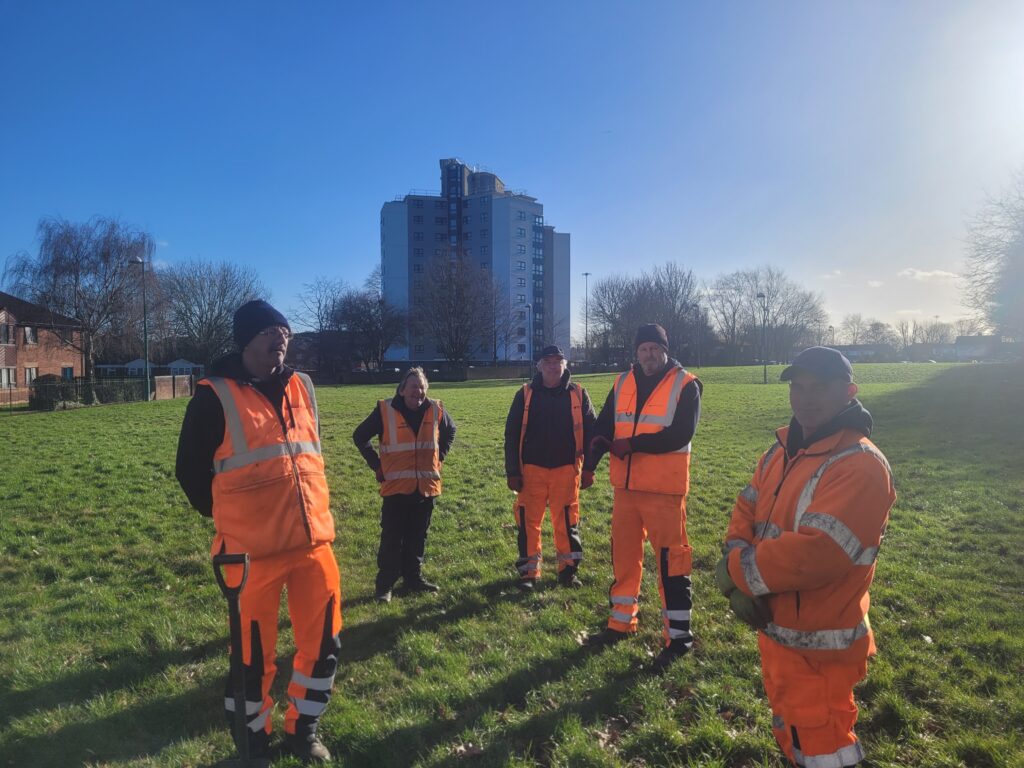
Let’s not forget the crew that helped organise the logistics of the event! Julianne Statham BTP Trustee for Treemembrance, and Ian McDermott BTP Trustee and Trainer. Emma McAuliffe of BCC, the digging and planting team Jez and Kam. As well as everyone behind the scenes who pulled together to make this day a truly fantastic celebration.
Julianne, who provided the images and captions, said,
“With the Gingko’s reputation for long living, it will serve as a lasting memorial to the power of ordinary people, to be able to change the world.”
Originally assisting The Woodland Trust as consultants during the preliminary phase, Birmingham TreePeople contributed towards the launch of WT’s Tree Equity Score, by demonstrating and explaining some of the work we have already been doing in the City of Birmingham, with the Urban Forest Masterplan.
BTP’s relationship with WT has developed further, as both charities are contributing towards the Urban Forest Accelerator, where our joint focus on tree equity is a prominent feature of the project. BTP have been planting in the wards we have due to those areas having low tree equity. So, what exactly is Tree Equity, and why does it matter to us?
Low tree equity means that an area is lacking in trees, and an area with high tree equity has most benefits of green spaces. That’s why our priority wards targeted areas with lower canopy cover, to raise the tree equity. WT says on their new page: ‘Tree equity is the idea that all communities have equitable access to the benefits of trees where they live. While some urban areas enjoy abundant greenery and tree cover, others lack these essential natural assets.’
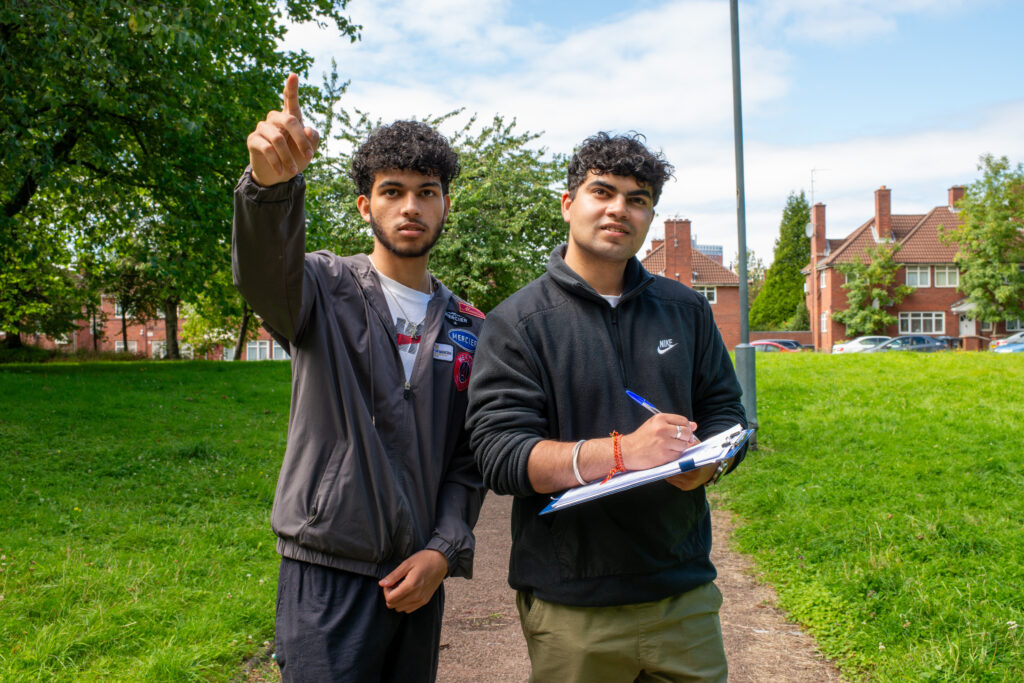
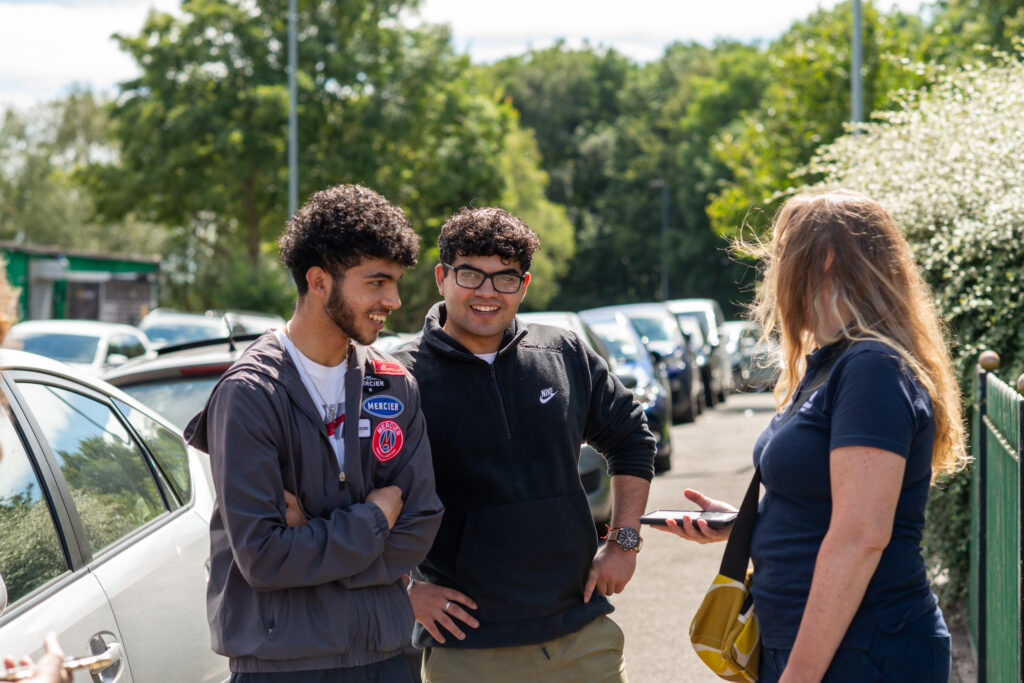
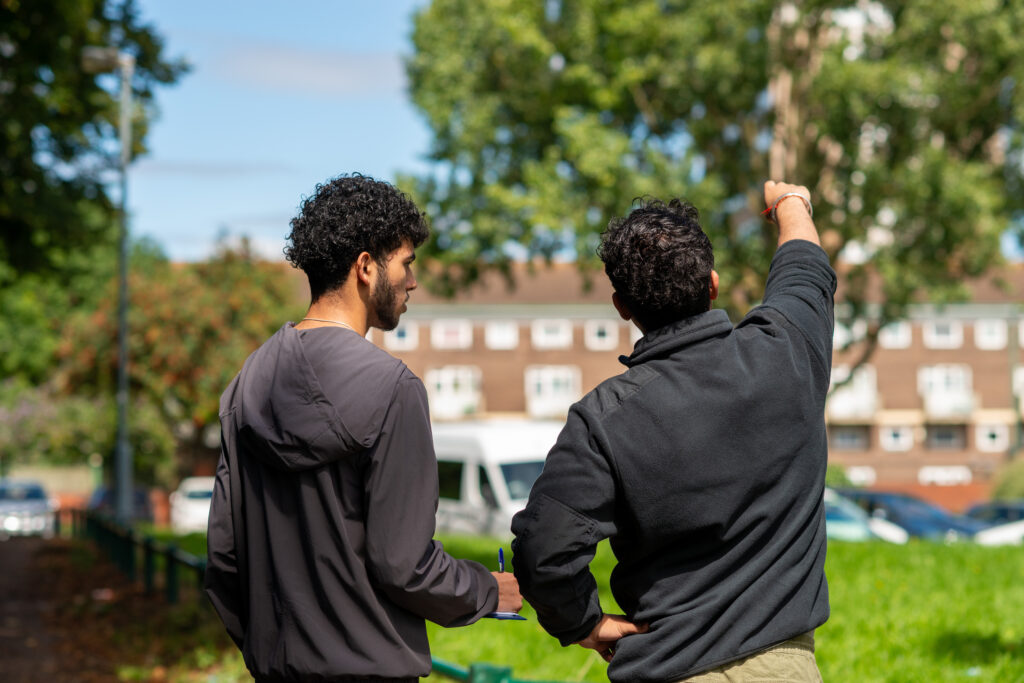
Charlotte McDermott, BTP’s Communications Officer, along with Krish Kumar and Raghav Kumar, took the lovely group from WT (Catherine, Amber, and Phil) to Nechells, one of our priority wards where we planted with the community last year, to capture many professional photos of good and bad tree equity, including our wonderful urban forest volunteers to be the face of the equity score campaign.
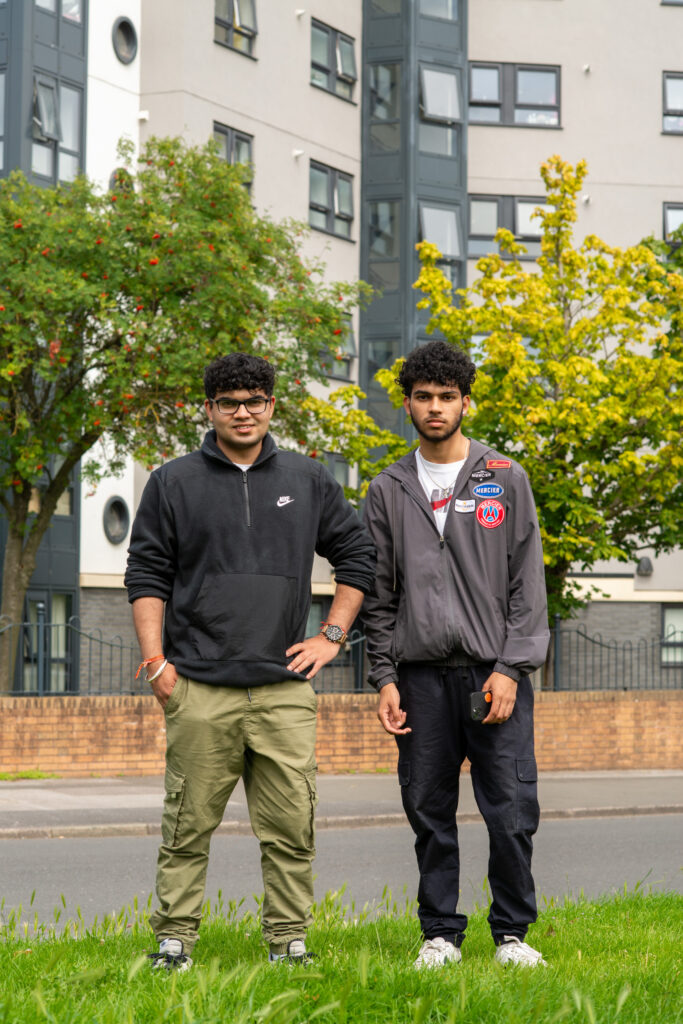
It was a hot summer day in Nechells, and we had a nice time at the photoshoot. Catherine interviewed our keen volunteers about their relationship with nature and why they volunteered, the young men also proved to be incredibly photogenic, and Raghav showed Phil (professional photographer) some of his amateur photography skills!
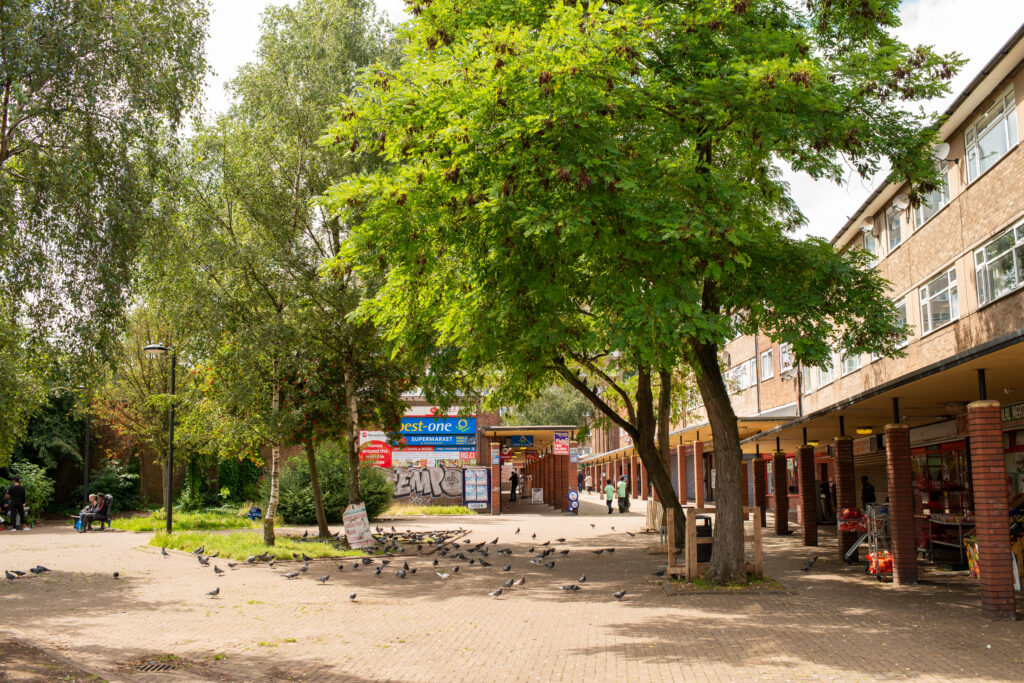
We would like to thank Andy Allison, BCC Tree Officer, for providing the planting maps that Charlotte used to show WT around Nechells and its specific the planting locations. Not only this time, but for every planting session! We look forward to working with our partners this year to propel our projects even further.
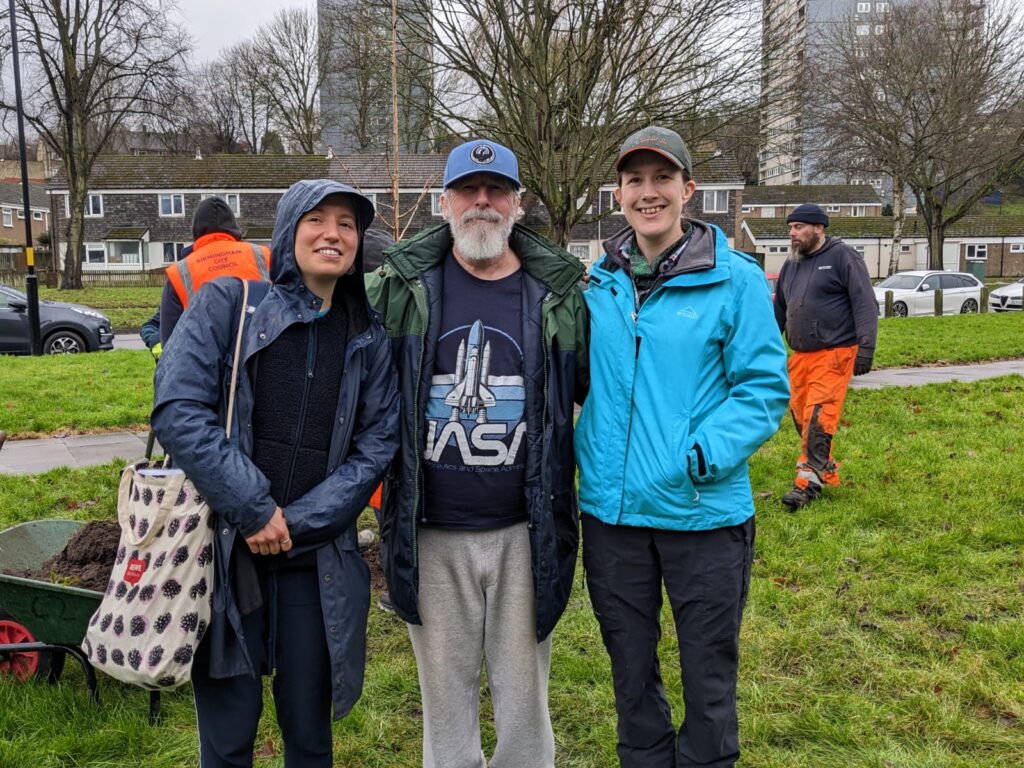
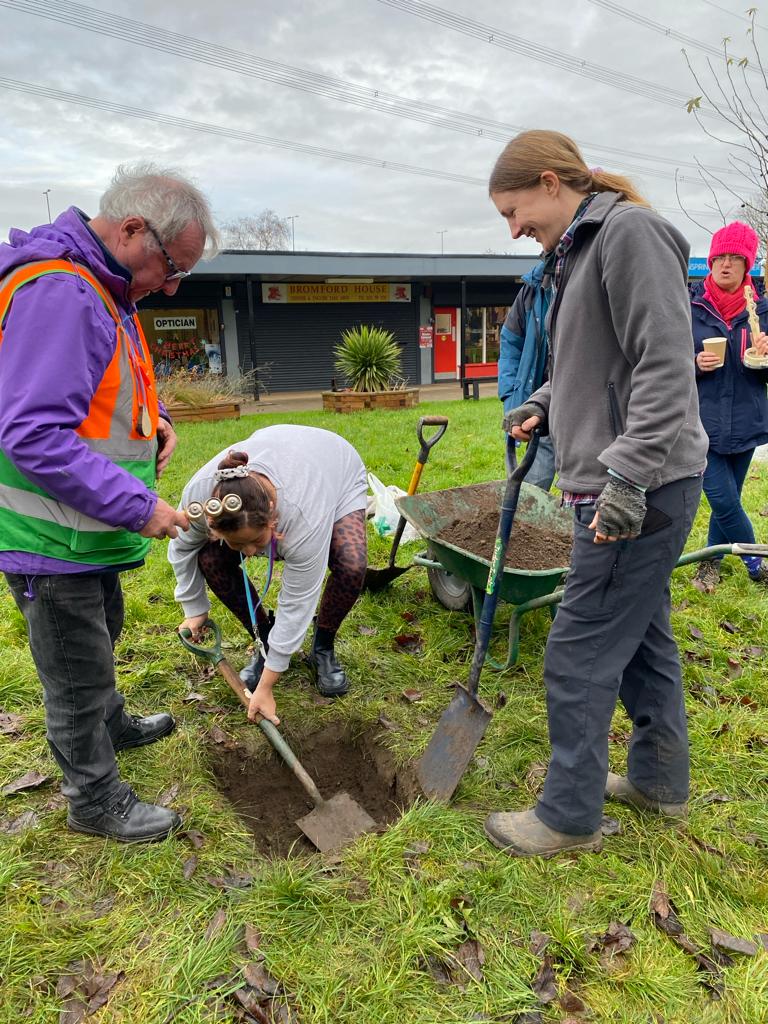

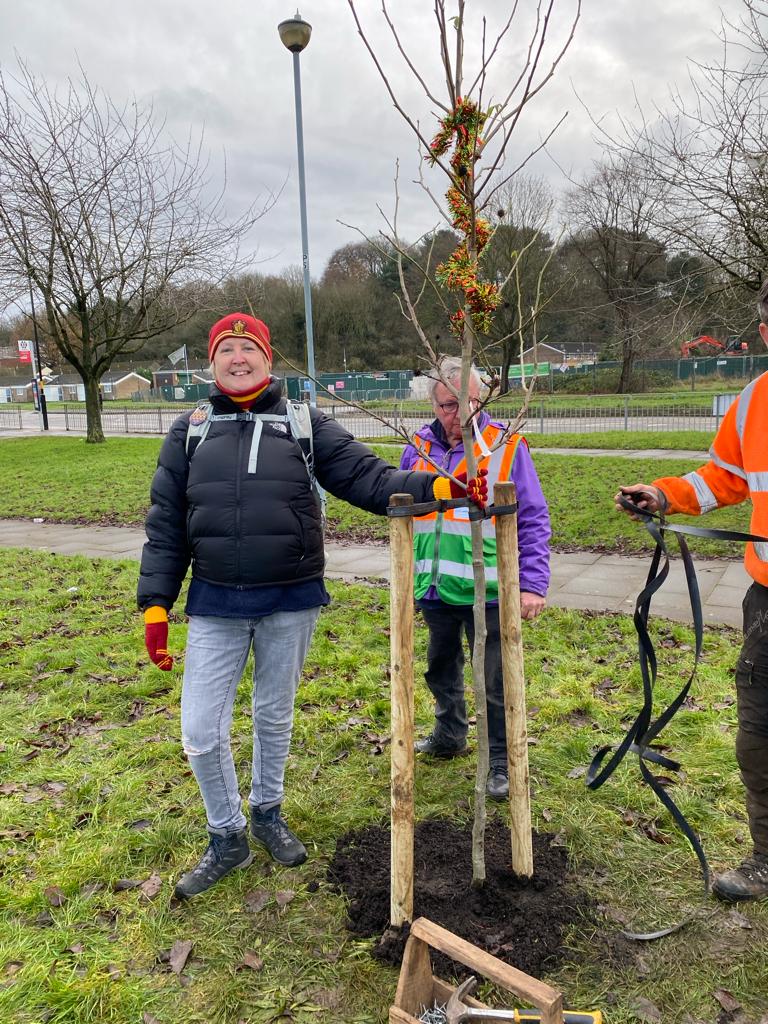
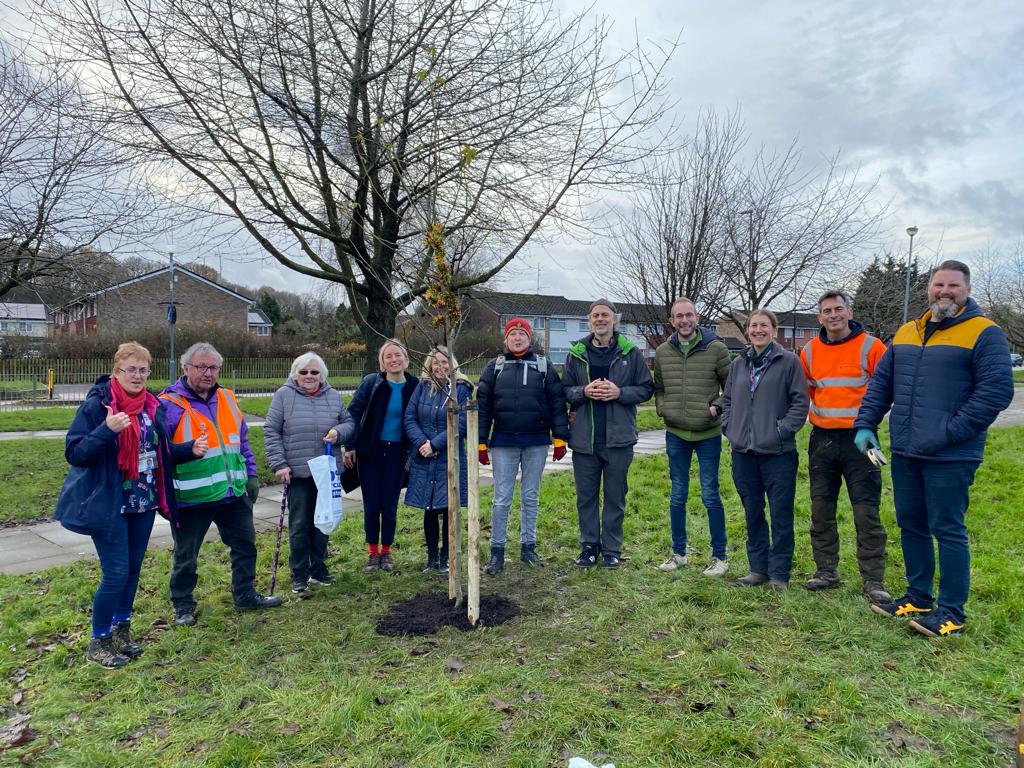
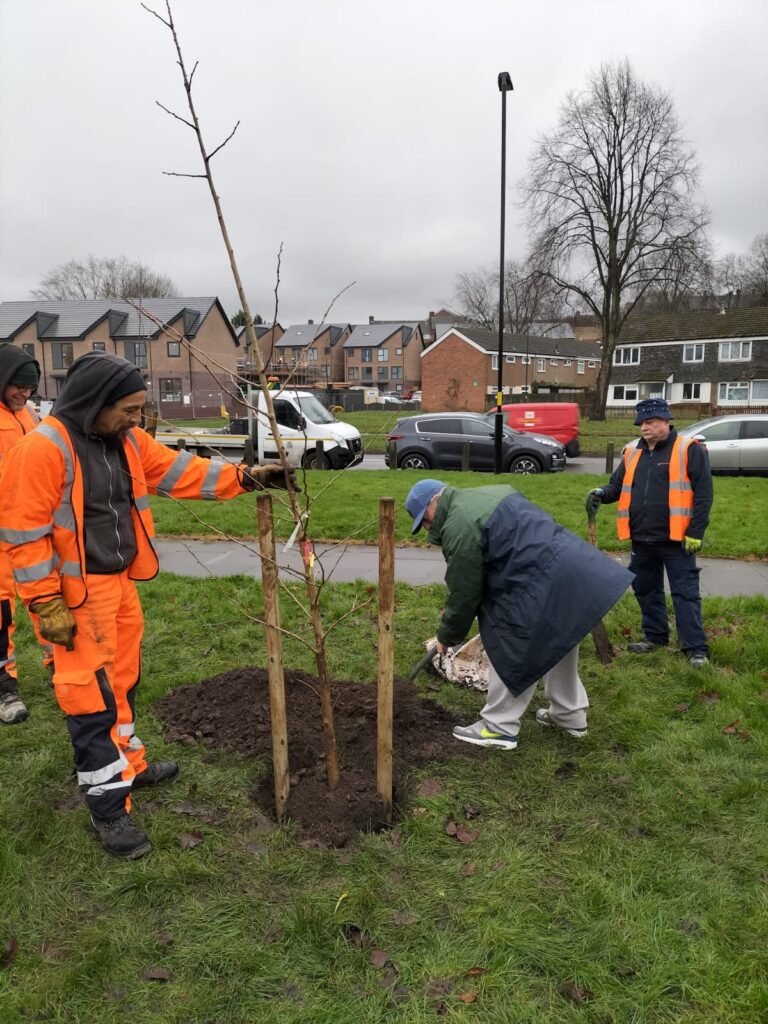
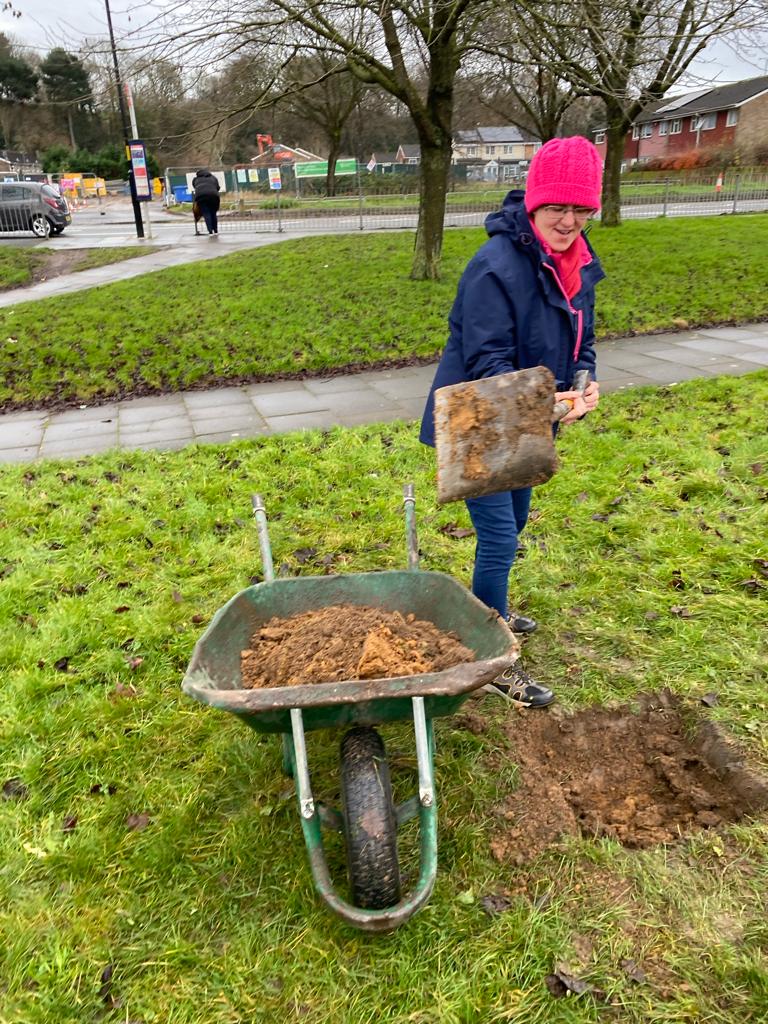
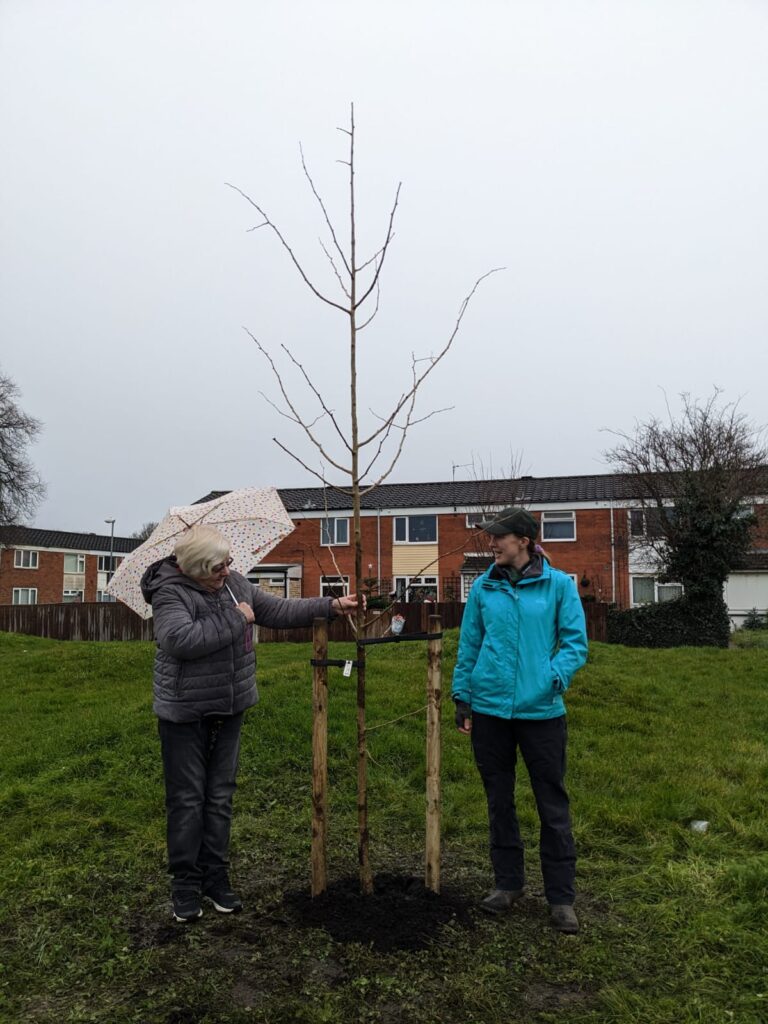
For the final community planting day of 2023, Bromford received a myriad of new trees. It was a warm and welcome occasion, even though it’s Winter now. We dug and planted trees alongside Birmingham City Council’s Woodland Team and a few Tree Officers, Open Door, and Friends of Hodge Hill Common. Our wonderful BTP team consisted of Katy Hawkins, Julianne Statham, and Steve Watson.
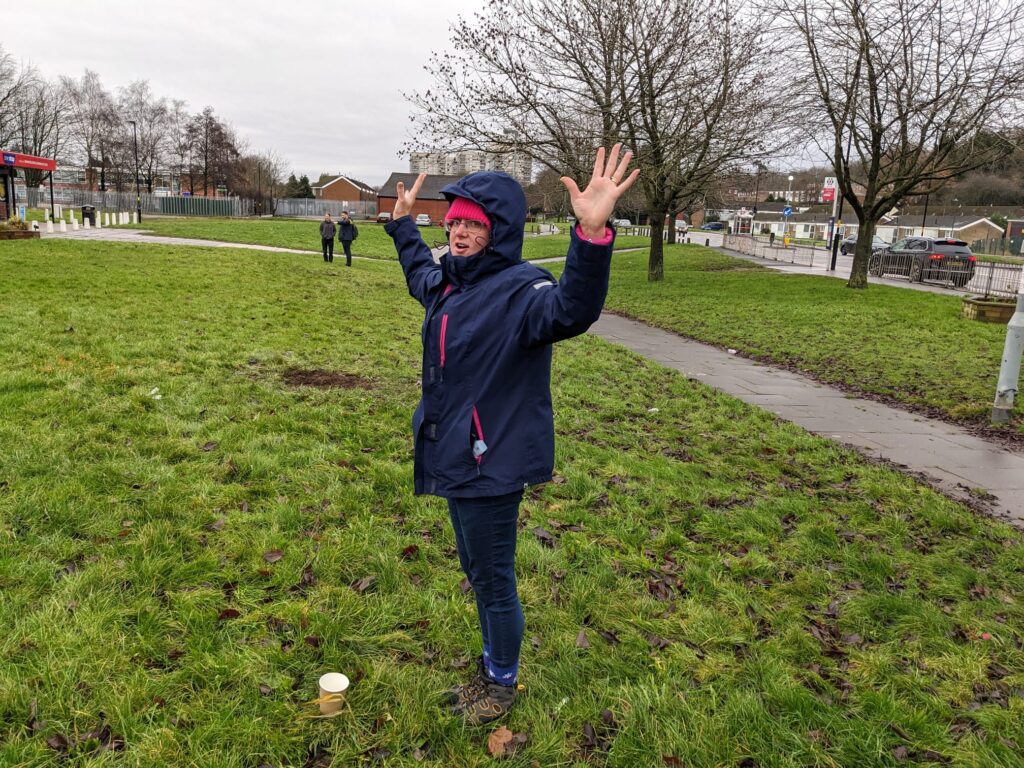
Hazel, a local resident, was able to have a gingko she chosen planted, and many other community members helped. Katy and Cath Fletcher (Open Door Green Connector) liaised to organise this special planting day across Bromford. Lisa Hodge and Jo Green from FOHHC were also present! Jo getting into the spirit by pretending to be a tree to mark the planting spot (image at the top).
In the spirit and ongoing theme of welcoming ceremonies, focusing on mindfulness and the connection between us and nature, the tree was lowered with the aid of instruments. They were also delicately decorated for Christmas, to celebrate together for our last community planting day for 2023. Laughs were had and songs were almost sung – well done everybody!